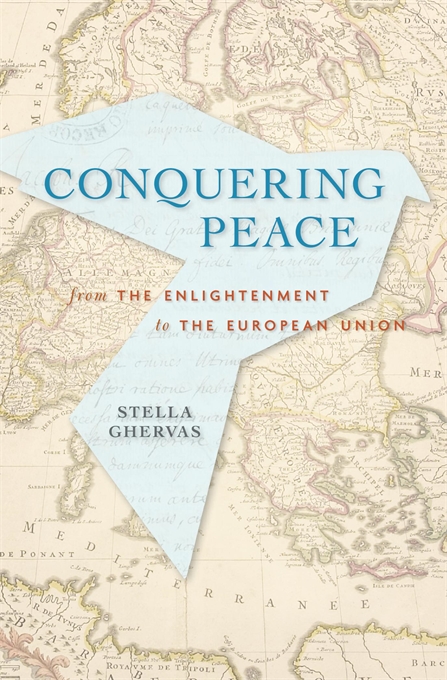
(Source: Storia del diritto medievale e moderno)
Click on the image above to enlarge.
(source: ESCLH Blog)



Abstract:
From the beginning of his public career almost to the end of his life, John Locke participated in a burgeoning contemporary culture of treaties. His lifetime almost exactly coincided with the emergence of a public culture of treaties in the late seventeenth century, exemplified by the proliferation of treaty collections, treaty prints and even treaty music. His early secretarial career involved him directly in treaty negotiations; his later administrative activities, especially in relation to English colonisation, regularly engaged him with treaty provisions. This paper argues that Locke's fifty-year interest in treaties and treaty-making can help to explain one of the enduring puzzles of his Second Treatise of Government: that is, why he separated the powers of government between the executive, the legislative and what he called, in a near-neologism, the "Federative," or "the Power of War and Peace, Leagues and Alliances, and all the Transactions, with all Persons and Communities without the Commonwealth". It concludes by inferring how Locke would have imagined that power, based on his decades-long knowledge and experience of the federative in practice.
Panel:
Speaker: Professor David Armitage (Harvard University). Chair: Dr Valerie Wallace (VUW History) Comment: Professor Mark Hickford (VUW Law)
More information here.
Prof. Anne Peters and dr. Tom Sparks convene an online workshop on the individual in itnernational law, with a copious programme.
Abstract:
The interrelationship between international law and the individual has been the subject of a great and growing interest by scholars in recent years. In many or most of international law’s subfields and specialisms, the appropriate relationship between the interests of individuals and those of other actors is the subject of important debates. On the other hand, we are currently witnessing a return to statist principles in the debate and practice of international law, with an emphasis on sovereignty, territory, and boundaries. Human rights and the idea of rights more generally are under attack. The individual’s position in international law, pushed and pulled by these factors, is in flux. However, analyses conducted of the individual’s position remain, in the main, examinations of the positive law. A number of questions thus remain to be answered which go beyond the individual’s treatment by various fields of international law in the present moment, in particular from the perspectives of history and theory.
Participation:
If you are interested in participating in the workshop as an engaged listener and thus in contributing to our discussions, please sign up via the links below. We particularly welcome the participation of early-career scholars, including pre- and post-graduate students, and from scholars working in institutions in the global south. Note that each link applies to only one day, and that those intending to attend the entirety of the workshop will need to register under both links. For further inquiries, or in case of technical difficulties, please contact Ms. Anette Kreutzfeld, via apeters-office@mpil.de.
Program and more information here.
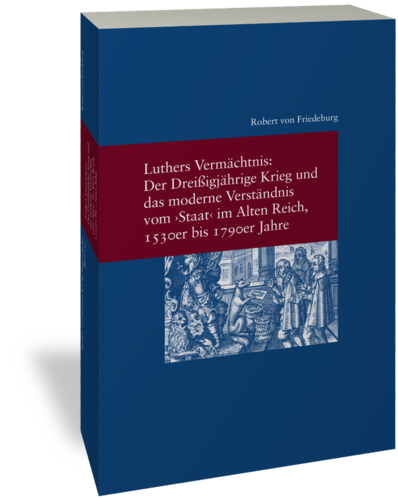
Klostermann Verlag published “Austria inventa? Zu den Anfängen der österreichischen Staatsrechtslehre” at the end of last year.
ABOUT THE BOOK
This is the first work of its kind devoted to Austrian constitutional law, which has so far received little attention in (legal) historical research. It examines its origins, its authors, its connection with the “Reichspublizistik”, its sources and methods as well as its contents and, last but not least, its role in university teaching. Of all the particular state rights in the Holy Roman Empire, its subject was probably the one most intensively discussed. In the second half of the 18th century, Austrian constitutional law was a flourishing genre of literature promoted by the Habsburg dynasty. This is accounted for by its main themes: It flanked the process of internal integration of the heterogeneous Habsburg ruling complex and aimed at the discursive and legal construction of an Austrian state as a whole and the legitimation of absolutism.
The table of contents can be found here
More info here
(source: ESCLH Blog)
First paragraph:
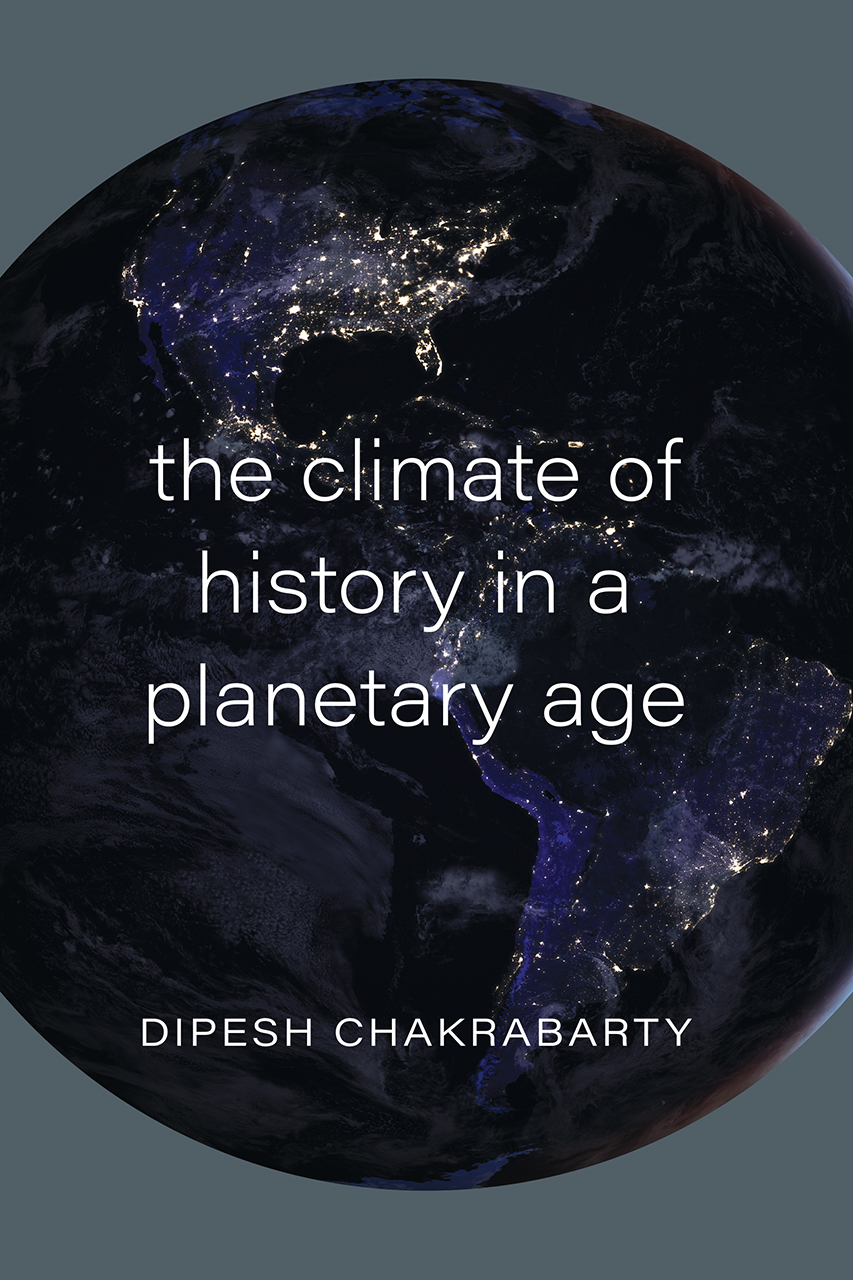
Au moment où nous commençons cette interview, le canal de Suez est bloqué depuis 48 heures par un énorme porte-conteneurs, qui bloque de facto 12 % du commerce mondial. Est-ce une simple anecdote ? Ou est-ce un symptôme de ce que vous analysez comme la crise de la mondialisation ? Ce n’est pas la première fois qu’un porte-conteneurs est au cœur d’un accident, ce qui ne devrait pas être une surprise puisque ces navires ont joué un rôle très important dans le processus de mondialisation. En tant que tels, ils ont participé au passage à l’Anthropocène en modifiant notre environnement à grande échelle. Pour qu’un porte-conteneurs s’équilibre, il doit absorber d’énormes quantités d’eau, qu’il transporte d’une région du monde à l’autre. Cela signifie qu’ils déracinent des espèces marines d’une partie du monde et les transportent vers une autre, introduisant ainsi des espèces invasives. La structure de ces navires, ainsi que l’intensification de la mondialisation qu’ils incarnent, ont joué un rôle déterminant dans la manière dont la mondialisation modifie la nature et l’environnement, faisant d’eux une partie intégrante de la crise environnementale.
Read further on Le Grand Continent.
First paragraph:
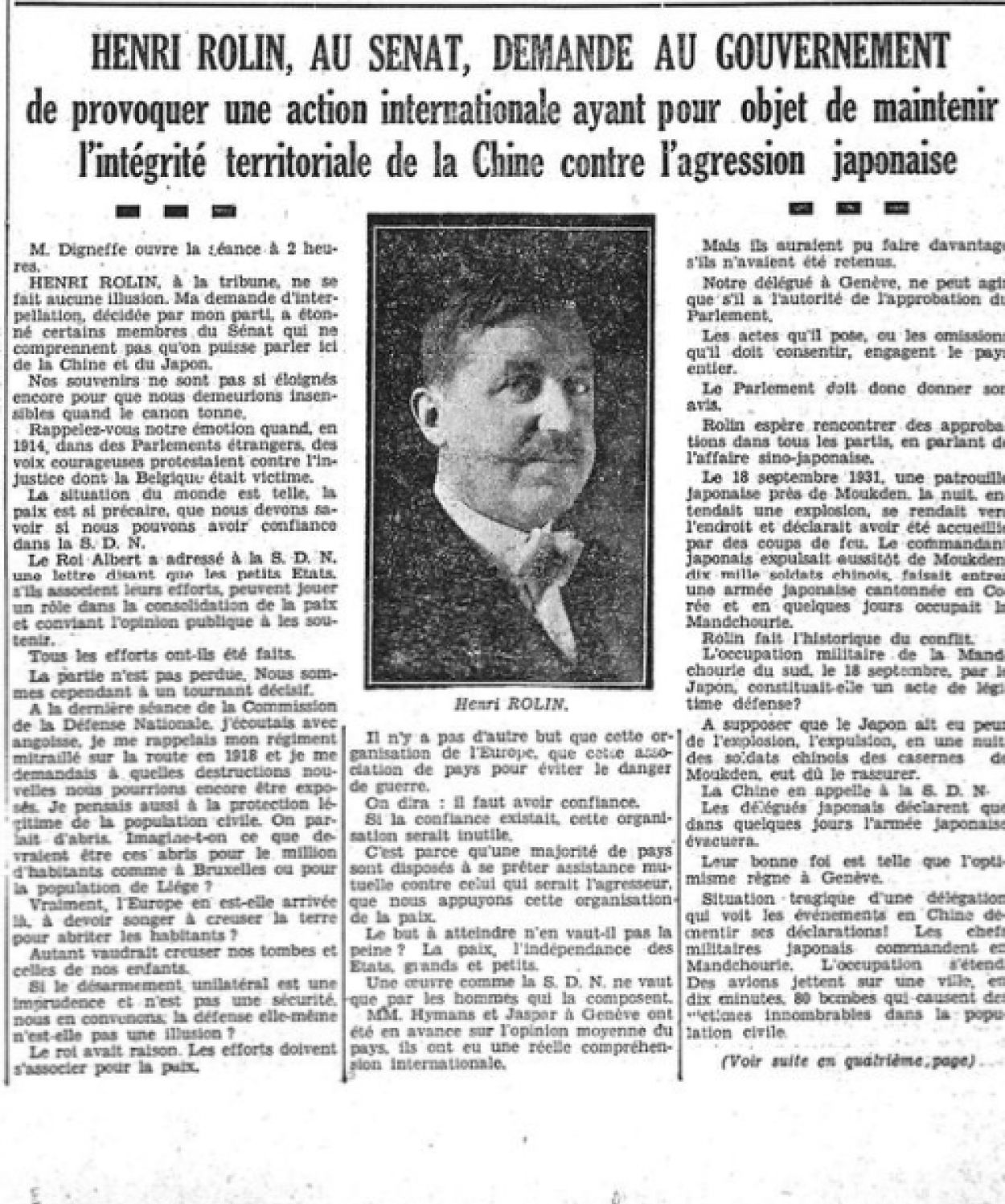
Beaucoup d’éléments rapprochent Henri Rolin et Paul-Henri Spaak : même milieu sociologique et culturel (la bourgeoisie francophone avec des racines flamandes), même profil politico-philosophique au départ et même itinéraire politique, du libéralisme progressiste au socialisme belge. Pourtant, le cheminement des deux hommes s’est révélé bien différent : d’une part l’idéalisme de Rolin, trouvant sa raison d’être dans le Droit international, d’autre part le pragmatisme de Spaak, détenant très longtemps le portefeuille des Affaires étrangères.
(source: BelgiumWWII)