ESIL Interest Group History of International Law

ESIL Interest Group History of International Law

Friday, 8 March 2019

BOOK: Anna CHADWICK, Law and the Political Economy of Hunger [History and Theory of International Law] (Oxford: OUP, 2019), 256 p. ISBN 9780198823940, 99 USD

(image source: OUP)

Book abstract:
This book is an inquiry into the role of law in the contemporary political economy of hunger. In the work of many international institutions, governments, and NGOs, law is represented as a solution to the persistence of hunger. This presentation is evident in the efforts to realize a human right to adequate food, as well as in the positioning of law, in the form of regulation, as a tool to protect society from 'unruly' markets. In this monograph, Anna Chadwick draws on theoretical work from a range of disciplines to challenge accounts that portray law's role in the context of hunger as exclusively remedial. The book takes as its starting point claims that financial traders 'caused' the 2007-8 global food crisis by speculating in financial instruments linked to the prices of staple grains. The introduction of new regulations to curb the 'excesses' of the financial sector in order to protect the food insecure reinforces the dominant perception that law can solve the problem. Chadwick investigates a number of different legal regimes spanning public international law, international economic law, transnational governance, private law, and human rights law to gather evidence for a counterclaim: law is part of the problem. The character of the contemporary global food system-a food system that is being progressively 'financialized'-owes everything to law. If world hunger is to be eradicated, Chadwick argues, then greater attention needs to be paid to how different legal regimes operate to consistently privilege the interests of the wealthy few over the needs of poor and the hungry.
On the author:
Anna Chadwick  is a Lord Kelvin Adam Smith Fellow at the University of Glasgow. She started her current job after completing a two-year Max Weber Fellowship at the European University Institute, in Florence. She was awarded her doctorate by the London School of Economics and Political Science (LSE) in November 2015, and holds a Masters Degree in Public International Law and International and UK Human Rights Law (LLM) from King's College London, and an LLB from the University of Leeds. Anna spent one year working for the legal charity, Reprieve, where she undertook investigation and research on death penalty cases. She is also part of a joint research initiative on food and finance. In 2017, she co-designed and taught a new Masters course 'Food, Law, and Finance' at International University College of Turin. Anna has also taught courses on International Human Rights Law, and World Hunger and the Global Legal Order.
(source: ESCLH Blog)

Thursday, 7 March 2019

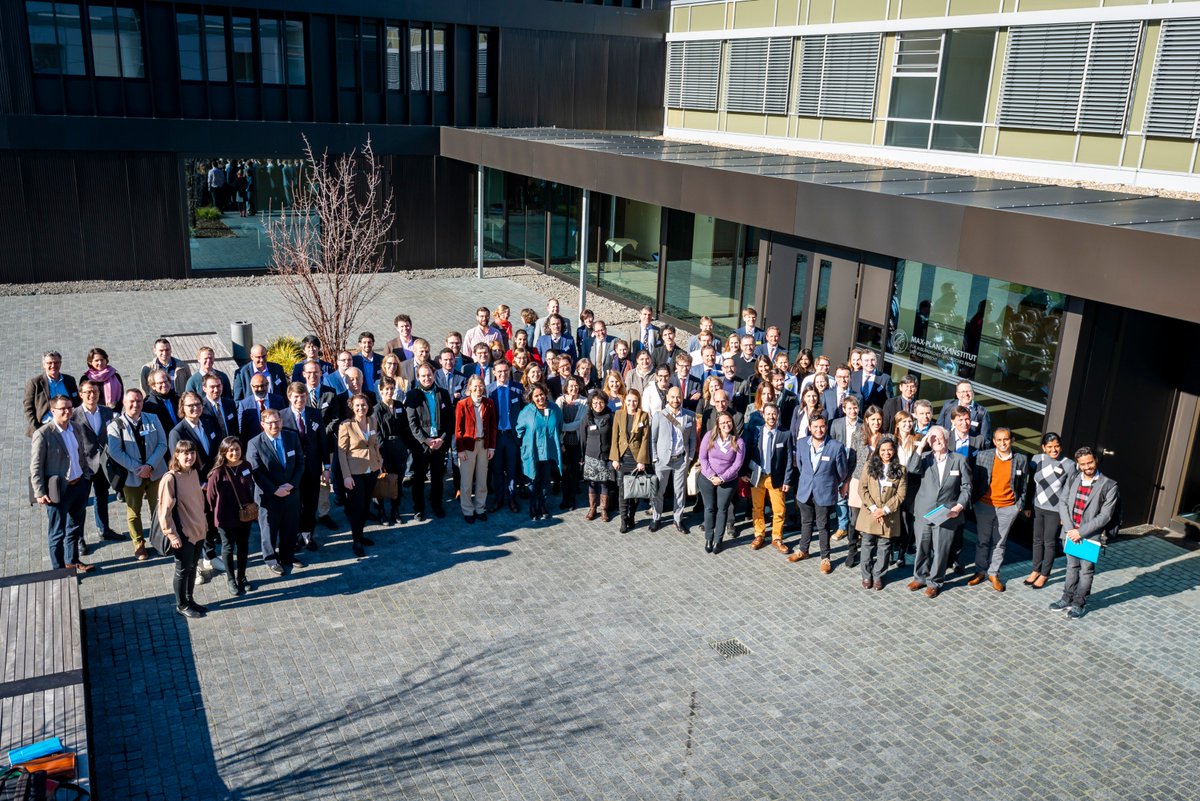
CONFERENCE REPORT: Politics and the Histories of International Law (Heidelberg, MPIL, 15-16 FEB 2019)

(image source: ESCLH Blog)

The ESCLH Blog published a conference report on the JHIL/MPIL conference Politics and the Histories of International Law (see programme earlier on this blog).

First paragraph:
Telling a history of international law is every time a mode of echoing oneself in the present. The danger of a single story and its oppressive force to identities and peoples that are misrepresented or not represented in it have been stressed in recent years by many scholars, but not only them. It was perhaps most remarkably and famously spelled out by the Nigerian novelist Chimamanda Ngozi Adichie in a TED talk already ten years ago: “I loved these American and British books I have read [as a child], they stirred my imagination and opened up new worlds for me. But their unintended consequence was that I did not know that people like me could exist in literature.”
Read more on the ESCLH Blog.

Wednesday, 6 March 2019

ADVANCE ARTICLE: Jason YACKEE, "Investor-State Dispute Settlement at the Dawn of International Investment Law: France, Mauritania, and the Nationalization of the MIFERMA Iron Ore Operations" (American Journal of Legal History 2019)

(image source: OUP)

Abstract:
The case for the desirability of the modern system of investment treaty arbitration rests on certain stylized historical claims. Those claims serve to demonstrate that the pre-modern system of dealing with investor – state disputes was inferior compared to current arrangements, which allow foreign investors to initiate highly legalized (or “depoliticized”) arbitration against host state governments for alleged violations of investment treaties. The implication of the historical comparison is that we should accept, and perhaps even expand, investment treaty arbitration to avoid a return to a more dangerous practice. This article challenges the historicity of this standard story through an in-depth examination of an important but understudied episode of expropriation from the 1970s, Mauritania’s seizure of the MIFERMA iron ore operations. As I show below, politicized dispute settlement need not entail, nor even risk, resort to force. It can even be successful, especially where home and host state governments and the investor perceive mutual gains from continued cooperation. More generally, the article suggests the utility of micro-historical analysis of investor – state disputes as a methodology for gaining a more realistic understanding of how legal and diplomatic dispute settlement methods can interact to support negotiated outcomes.
Read more here.

Tuesday, 5 March 2019

LECTURE: Hersch Lauterpacht Memorial Lecture 2019 – Professor Tom Ginsburg on “Democracies and International Law” (Cambridge, 12/13/14 March 2019)


(Source: Lauterpacht Centre)

As the Hersch Lauterpacht Memorial Lecture 2019, Professor Tim Ginsburg (UChicago) is holding a three-part lecture on how democracies have behaved in international law.

A series of three lectures by Professor Tom Ginsburg, Leo Spitz Professor of International Law, Ludwig and Hilde Wolf Research Scholar, Professor of Political Science, The University of Chicago Law School.

All lectures are held at the Lauterpacht Centre at 6 pm on Tuesday 12 March, Wednesday 13 March and Thursday 14 March with a Q&A at 1 pm on Friday 15 March (sandwich lunch from 12.30 pm).

Lecture summary: Since at least the time of Immanuel Kant, scholars and diplomats have speculated that democracies act differently on the international plane, with consequences for both international and domestic governance.  The most recent manifestation of this view is the so-called “liberal” theory of international law, prominent in the late 1990s and early 2000s, which argued that democracies were especially likely to cooperate with each other in deep and meaningful ways. Because electoral cycles introduce some uncertainty in policy, placing some issues “beyond the state” would allow for more stability in policy. International law was thought to be especially attractive to new democracies, as domestic institutions were weak and not likely to be particularly credible.

Liberal theory had something of a teleological quality in terms of its predictions.  As the number of democracies expanded, and as their economies became more integrated, it was assumed that there would be further incentive for other states to join the club.  The view suggested that international law would contribute to the expansion of democracy itself, a view that was advanced by Thomas Franck’s famous argument about an international right to democratic governance.  When viewed from our current moment, these aspects of liberal theory appear naive.  Most notably, we have been facing, in the rich industrial democracies of the world, a rise in populism, which has taken as its primary target the international institutions associated with globalization.  Brussels and Luxembourg are the bogeymen in Europe; the International Monetary Fund and the The Inter American Court of Human Rights are the targets in Venezuela and La Paz.  The anti-globalist backlash is, very largely, a backlash against international law and the imposition of norms that originate from outside the territorial nation state, to be deployed by cosmopolitan elites at the expense of the decisional freedom of the single sovereign people. 

In these lectures, I conduct a comprehensive empirical examination of whether and how democracies actually do behave differently with regard to the core activities of international law.  Next I examine whether and how international legal institutions actually are supporting democracies in an era of backsliding, in accord with the predictions of liberal theory.  Finally, I speculate on the implications of the above for the future of international law, by looking at recent examples of authoritarian use of international agreements.

The Hersch Lauterpacht Memorial Lecture is an annual three-part lecture series given in Cambridge to commemorate the unique contribution to the development of international law of Sir Hersch Lauterpacht. These lectures are given annually by a person of eminence in the field of international law. 

More info here
(source: ESCLH Blog)

Monday, 4 March 2019

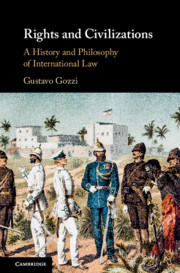
BOOK: Gustavo GOZZI, Rights and Civilizations : A History and Philosophy of International Law (Cambridge: Cambridge University Press, 2019). ISBN 9781108474238, £ 95.00


(Source: CUP)

Cambridge University Press is publishing a new book on the history of international law (translated from Italian)

ABOUT THE BOOK

Rights and Civilizations, translated from the Italian original, traces a history of international law to illustrate the origins of the Western colonial project and its attempts to civilize the non-European world. The book, ranging from the sixteenth century to the twenty-first, explains how the West sought to justify its own colonial conquests through an ideology that revolved around the idea of its own assumed superiority, variously attributed to Christian peoples (in the early modern age), Western 'civil' peoples (in the nineteenth century), and 'developed' peoples (at the beginning of the twentieth century), and now to democratic Western peoples. In outlining this history and discourse, the book shows that, while the Western conception may style itself as universal, it is in fact relative. This comes out by bringing the Western civilization into comparison with others, mainly the Islamic one, suggesting the need for an 'intercivilizational' approach to international law.

  • Proposes a comparison between Western international law and Islamic international law so readers can appreciate the Western-centric character of international law and how to analyze it critically
  • Shows how international law can be analyzed through its anthropological underpinnings, so readers can understand the relation between Western hegemony and the West's representation of the inferiority of 'the other'
  • Highlights the need to embrace a concept of international law that takes the plurality of civilizations into account
ABOUT THE AUTHOR

Gustavo Gozzi is full professor of the History of Political Doctrines and the History of International Law. He is currently Alma Mater Professor in Multiculturalism and Cultural Relativism at the University of Bologna. He is a member of the Advisory Board of the King Abdulaziz Chair for Islamic Studies at the University of Bologna. He has conducted research at the Max Planck Institut für europäische Rechtsgeschichte in Frankfurt am Main and has been visiting professor in Tunis, Istanbul, Tarragona, and Corinth. He is director of the series Democracies, Rights, Constitutions, and has founded a master's programme in International Cooperation on Human Rights and Intercultural Heritage.

TABLE OF CONTENTS

Preface to this English translation
Introduction
Acknowledgements
A note on the contents
Part I. Ius Gentium and the Origins of International Law:
1. The rights of peoples and ius gentium: The origins of the modern age
2. Hugo Grotius and the law of peoples
3. Samuel Pufendorf and Emer de Vattel: Kant's 'miserable comforters'
4. The rights of man and cosmopolitan law: Kantian roots in the current debate on rights
Part II. International Law and Western Civilization:
5. International law and Western civilization
6. International law, peace, and justice: Hans Kelsen's normativism
7. Realist perspectives: historiography, international law, international relations
8. Order and anarchy: the Grotian tradition
Part III. International Law, Islam, and the Third World:
9. The law of peoples and international law
10. Islam and rights: Islamic and Arab charters of the rights of man
11. The Third World and international law
Part IV. Conditions for Peace:
12. The foundation of human rights: an intercultural perspective
13. Parallel worlds: international governance and the (utopian?) principles of international law
Glossary of Arab terms
Index.

More information here
(source: ESCLH Blog)

Friday, 1 March 2019

JOURNAL: Journal of the History of International Law/Revue d'histoire du droit international XX (2018), Issue 4

(image source: Brill)

The Role of International Tribunals in the Development of Historical Narratives (Moshe Hirsh)
Abstract:
Collective memories are significant for both individuals and societies, as they play an important role in the construction of collective identities. This article focuses on the role of non-criminal international tribunals in the development of collective memories, asking whether it is desirable for such international tribunals to be involved in the construction of historical narratives. International tribunals have not adopted a consistent approach concerning the presentation of a case’s historical background in their judgments. The question of whether it is desirable for non-criminal tribunals to assume an active role in this sphere is analysed using three major sociological perspectives: the structural-functional approach, the symbolic-interactionist perspective, and the social conflict approach. The discussion regarding each theoretical approach is accompanied by illustrative examples from the case law of international tribunals. The conclusions drawn from this analysis integrate certain elements from each theoretical approach; but primarily draw on recommendations associated with the symbolic-interactionist perspective, and to a lesser extent on some recommendations associated with the social-conflict approach.

The Pirate and the Admiral: Europeanisation and Globalisation of Maritime Conflict Management (Louis Sicking)
Abstract:
Piracy holds a special place within the field of international law because of the universal jurisdiction that applies: any state may seize a pirate ship on the high seas and decide upon the penalties to be imposed, as is currently the case with Somali and West African pirates. Unlike today, piracy was the norm in pre-modern times. Maritime trade and piracy went hand in hand. At the same time, kings and emperors recruited their admirals from among pirates. This raises the question of how princes, states and cities distinguished between legal and illegal violence at sea. How did they deal with maritime conflict among themselves and among their respective subjects and citizens? This article puts maritime conflict management in a European, global and long term perspective while avoiding anachronistic and teleological approaches. Finally, it argues that pre-modern conflict management is relevant to understand maritime security in the twenty-first century.


Seeking Refuge: Grotius on Exile, Expulsion and Asylum (Marc De Wilde)
Abstract:
Hugo Grotius is often identified as the founder of the modern concept of asylum. This article argues that Grotius’s most innovative contribution was not his theory of asylum, but his concept of expulsion, and more particularly, his notion that a permanent refuge should be offered to foreigners who had been collectively expelled on religious grounds. The article shows that Grotius’s notion was informed by his own experiences as a lawyer advocating the admission of Sephardi Jews, who had been expelled from Spain and Portugal, to the Dutch provinces. More particularly, it was based on a reinterpretation of Francisco de Vitoria’s concept of the ‘law of hospitality’ and the duty to admit foreigners irrespective of their religious beliefs. Reinterpreting Vitoria’s concept, Grotius was the first to formulate a theory regarding the state’s responsibility to offer a permanent refuge to victims of (religious) persecution


The 150th Anniversary of the St Petersburg Declaration: Introductory Reflections on a Janus-Faced Document (Raphaël Schäfer)
Excerpt:
The Journal of the History of International Law celebrates the 150-year anniversary of the St Petersburg Declaration with a focus section in this issue. Of course, the mere fact of an anniversary of a document of international law is not – and can hardly be – its sole or even main purpose. While the focus section acknowledges the Declaration’s fundamental importance not only for the legal body which is today called international humanitarian law, its intent is to go beyond the standard textbook narrative of the Declaration and to explore its function and impact in a deeper context.

The 1868 St Petersburg Declaration on Explosive Projectiles: A Reappraisal (Robert Kolb & Momchil Milanov)
Excerpt:
There is hardly any study on the origins of international humanitarian law (IHL) which does not mention the 1868 St Petersburg Declaration. Yet, apart from a simple reference or a footnote, the actual impact of the Declaration on the formation of the IHL rules remains subject to debate. Some authors consider it ‘among the more important treaties relating to the law of war’1 while others emphasize the ‘rhetorics’ and the ‘exalted phraseology’ of the drafters to ‘embellish the prosaic, technical text they were adopting with an ornamental introductory piece’.2 This short

The Enduring Legacy of the St Petersburg Declaration: Distinction, Military Necessity, and the Prohibition of Causing Unnecessary Suffering and Superfluous Injury in IHL (Emily Crawford)
Excerpt:

The St Petersburg Declaration is a remarkably short instrument. Only eleven paragraphs long, six of which comprise the Preamble and introduction, the Declaration prohibits only one very specific type of projectile – bullets that weigh less than 400 grams, which are either explosive, or otherwise charged with fulminating or inflammable substances. The Declaration contains no provision regarding its implementation or enforcement, and no sanction for violation of its terms. Its scope is further limited in that, not only does it not apply to States not party to the agreement, but it will ‘cease to be obligatory...
Book reviews:
Völkerrechtsgeschichte(n). Historische Narrative und Konzepte im Wandel, edited by Andreas von Arnauld (Felix Lange)

The Hidden History of International Law in the Americas, written by Juan Pablo Scarfi (André Nunes Chaib)

(read more with Brill)

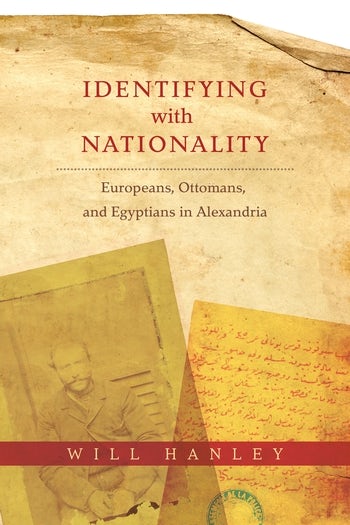
BOOK: Will HANLEY: Identifying with Nationality. Europeans, Ottomans, and Egyptians in Alexandria (New York: Columbia University Press, 2017), 416 p. ISBN 9780231177627, GBP 50

(image source: Columbia UP)

Book abstract:
Nationality is the most important legal mechanism sorting and classifying the world's population today. An individual's place of birth or naturalization determines where he or she can and cannot be and what he or she can and cannot do. Although this system may appear universal, even natural, Will Hanley shows that it arose just a century ago. In Identifying with Nationality, he uses the Mediterranean city of Alexandria to develop a genealogy of the nation and the formation of the modern national subject. Alexandria in 1880 was an immigrant boomtown ruled by dozens of overlapping regimes. On its streets and in its police stations and courtrooms, people were identified by name, occupation, place of origin, sect, physical description, and other attributes. Yet by 1914, before nationalist calls for independence and decolonization had become widespread, nationality had become the defining category of identification, and nationality laws came to govern Alexandria's population. Identifying with Nationality traces the advent of modern citizenship to multinational, transimperial settings such as turn-of-the-century colonial Alexandria, where ordinary people abandoned old identifiers and grasped nationality as the best means to access the protections promised by expanding states. The result was a system that continues to define and divide people through status, mobility, and residency.
On the author:
Will Hanley is assistant professor of history at Florida State University.
More information with the publisher.

(source: ESCLH Blog)