ESIL Interest Group History of International Law

ESIL Interest Group History of International Law

Thursday, 9 June 2016

BOOK: Benjamin Allen COATES, Legalist Empire: International Law and American Foreign Relations in the Early Twentieth Century. Oxford, OUP, 2016, 296 p. ISBN 9780190495954, $ 35

(image source: OUP)

The Legal History Blog signalled the publication of Legalist Empire: International Law and American Foreign Relations in the Early Twentieth Century by Benjamin Allen Coates (Wake Forest University).

Abstract:
America's empire expanded dramatically following the Spanish-American War of 1898. The United States quickly annexed the Philippines and Puerto Rico, seized control over Cuba and the Panama Canal Zone, and extended political and financial power throughout Latin America. This age of empire, Benjamin Allen Coates argues, was also an age of international law. Justifying America's empire with the language of law and civilization, international lawyers-serving simultaneously as academics, leaders of the legal profession, corporate attorneys, and high-ranking government officials-became central to the conceptualization, conduct, and rationalization of US foreign policy.

Just as international law shaped empire, so too did empire shape international law. Legalist Empire shows how the American Society of International Law was animated by the same notions of "civilization" that justified the expansion of empire overseas. Using the private papers and published writings of such figures as Elihu Root, John Bassett Moore, and James Brown Scott, Coates shows how the newly-created international law profession merged European influences with trends in American jurisprudence, while appealing to elite notions of order, reform, and American identity. By projecting an image of the United States as a unique force for law and civilization, legalists reconciled American exceptionalism, empire, and an international rule of law. Under their influence the nation became the world's leading advocate for the creation of an international court.
Although the legalist vision of world peace through voluntary adjudication foundered in the interwar period, international lawyers-through their ideas and their presence in halls of power-continue to infuse vital debates about America's global role.

 Table of Contents:
Acknowledgments
Introduction
Chapter 1: International Law in Europe and America to 1898
Chapter 2: Selling Empire, 1898-1904
Chapter 3: Legalism at Home: Professionalizing International Law, 1900-1913
Chapter 4: Legalism in the World, 1907-1913
Chapter 5: International Law and Empire in Latin America, 1904-1917
Chapter 6: Legalism, Neutrality, and the Great War, 1914-1918
Chapter 7: World War, Collective Security, and International Law, 1914-1941
Conclusion
List of Abbreviations
Notes
Bibliography
Index
More information at OUP.

Tuesday, 17 May 2016

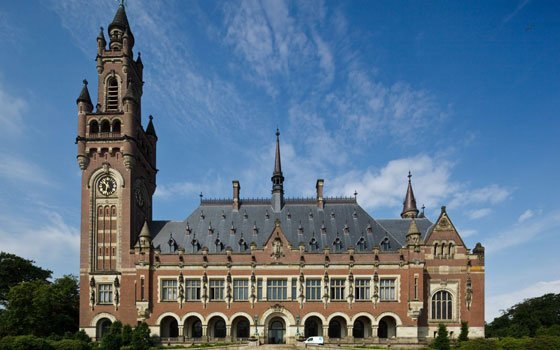
BOOK CHAPTER: Malgosia FITZMAURICE, "History of Article 38 of the Statute of the International Court of Justice", in: S. BESSON (ed.), Oxford Handbook of Sources of International Law (forthcoming)

 
(image source: holland.com)

International Law Reporter signalled the publication of Malgosia Fitzmaurice (Queen Mary)'s chapter on the history of article 38 of the International Court of Justice's Statute in the forthcoming Oxford Handbook of Sources of International Law (S. Besson, ed.).

Abstract:
This contribution to the Handbook presents and analyses history of Article 38 of the Statute of the International Court of Justice (the ‘ICJ’ or the ‘Court’). History of Article 38 is the starting point leading to reflections on how as it stands at present. Therefore, the main theme of this Chapter is to look at sources of international law through prism of their historical development. Such an approach also includes contenders to ‘new’ sources (acts of international organisations, unilateral acts of States, soft law) which have emerged long after the twelve ‘wise men’ (at times ‘angry twelve men’) of the Committee of Jurists have completed their task of drafting of this Article.
More information on SSRN.

OPEN ACCESS BOOK REVIEWS (Zeitschrift für Historische Forschung 2015 (3))


(image source: recensio.net)

 Recensio.net published two open access book reviews of potential interest to our members:

Guido Braun / Arno Strohmeyer (Hg.): Frieden und Friedenssicherung in der Frühen Neuzeit. Das Heilige Römische Reich und Europa, 2013 (Anuschka Tischer, in: Zeitschrift für Historische Forschung (ZHF), 42 (2015), 3), click here.

Markus Kremer (Hg.): Francisco Suárez: De pace – De bello / Über den Frieden – Über den Krieg, 2013 (Nils Jansen, in: Zeitschrift für Historische Forschung (ZHF), 42 (2015), 3), click here.

Thursday, 12 May 2016

BOOK: Emmanuelle TOURME-JOUANNET, Laurence BURGORGUE-LARSEN, Horatia MUIR WATT, Hélène RUIZ FABRI (dir.), Féminisme(s) et droit international. Études du réseau Olympe [Collection de l'Institut des sciences juridique et philosophique de la Sorbonne]. Paris: Société de Législation Comparée, 2016, 498 p. ISBN 978-2-36517-059-8, € 37

(image source: Multipol)
 
The Société de législation comparée published a collective work on feminism and (the history of) international law.

Abstract:
Féminisme(s) et droit international. Études du réseau Olympe est le premier ouvrage issu du programme de recherche du réseau Olympe d’études francophones féministes et de genre en droit international. Créé en 2014, ce programme a pour buts premiers de faire connaître les approches féministes du droit international, historiquement développées en langue anglaise, et d’y contribuer en français par divers projets de recherche, en sus de fournir une plateforme institutionnelle de mise en réseau des chercheuses et chercheurs intéressé-e-s. Recueil collectif, Féminisme(s) et droit international. Études du réseau Olympe réunit ainsi les contributions de 19 chercheuses et chercheurs dans le domaine et offre un salutaire premier panorama de l’état des recherches féministes sur le droit international en français.

Table of contents:
Emmanuelle Tourme Jouannet, Laurence Burgorgue-Larsen, Hélène Ruiz Fabri, Bérénice K. Schramm, Ouverture 
Bérénice K. Schramm, (Re)voir Phryné devant l’aréopage de Jean-Léon Gérôme (1861)  
Oriane-Jill Aoust, Droits des femmes et sphère privée en Afrique : le constat d’une défaillance des instruments régionaux africains 
Charalambos Apostolidis, Le marxisme et la cause féminine 
Rémi Bachand, Les apports de la théorie féministe du positionnement dans une théorie (critique) du droit (international) 
Laurence Burgorgue-Larsen, La lutte contre la « violence de genre » dans le système interaméricain de protection des droits de l’homme. Décodage d’une évolution politique et juridique d’envergure 
Anne-Marie D’Aoust et Anne Saris, Femmes, genre et sécurité en relations internationales et en droit international : un dialogue en construction 
Martin Gallié et Maxine Visotzky-Charlebois, Le droit des femmes tel qu’il a été enseigné par les Pères fondateurs du droit international public et leurs héritiers. Notes de lecture sur les ouvrages et les manuels du XVIe au XXIe siècle 
Dominique Gaurier, Quelle place faite aux femmes dans l’ordre international de l’Antiquité et du début de l’époque moderne 
Stéphanie Hennette-Vauchez et Diane Roman, Du sexe au genre : le corps des femmes en droit international 
Dzovinar Kévonian, L’histoire des femmes juristes en France jusqu’aux années 1960 : état des lieux et sources de recherche 
Anne Lagerwall, La prostitution, le port du voile et l’avortement devant la Cour européenne des droits de l’Homme : une affaire de femmes ? 
Isabelle Masson, (Re)penser les relations constitutives de la gouvernance néolibérale : quelques pistes de réflexion féministes pour les relations internationales et le droit international 
Frédéric Mégret, Féminisme et droit international : le « féminisme de gouvernance » à l’épreuve du « féminisme critique » 
Anne-Sophie Tabau, Féminismes et droit international de l’environnement 
Emmanuelle Tourme Jouannet, Les différentes étapes pour la reconnaissance des droits des femmes. Droits des femmes et droit international de la reconnaissance 
Anne-Charlotte Martineau, Odysée d’une toubabou

(source: Multipol)

Thursday, 21 April 2016

CONFERENCE: Experts et expertises en diplomatie. La mobilisation des compétences dans les relations internationales, du congrès de Westphalie à la naissance de l'ONU


(image source: CRHIA)


The University of Nantes, Centre for International and Atlantic History, organizes a two-day conference on "experts in diplomacy".

Conference abstract:
Depuis le XVIIe siècle, le champ de la diplomatie s’est considérablement élargi à mesure du développement et de la diversification des relations internationales. Les agents diplomatiques se trouvent dès lors confrontés à une grande diversité de sujets et de missions ce qui les amène à faire appel à des compétences et des savoirs extérieurs. Les ambassades, les congrès diplomatiques ou les grandes conférences internationales mobilisent des spécialistes chargés d’aider à la négociation sur des points particuliers. Dès le XIXe siècle, la mise en place de grandes organisations internationales impose la création d’organes d’expertise, permanents ou temporaires, chargés de travailler en amont sur les questions internationales....
Entrée libre et gratuite.
 Programme:

Jeudi 12 mai

Expertise et action diplomatique

9h15 : accueil des participants
9h30 : Introduction : Stanislas Jeannesson, Fabrice Jesné, Éric Schnakenbourg
Présidence de séance : Yann Lignereux, Université de Nantes

1. Qu’est-ce qu’un expert en diplomatie ? Une approche diachronique

  • 9h45 : Indravati Félicité (Université Paris-Sorbonne), « La préparation des "grandes ambassades" par les acteurs de second rang dans l'Europe des traités de Westphalie (mi XVIIe - début du XVIIIe siècle) ».
  • 10h10 : Virginie Martin (Université Paris 1 Panthéon-Sorbonne - IHMC / IHRF), « De "l’art de négocier" à la  "science diplomatique" : essor et institutionnalisation de l’expertise sous la Révolution française ».
10h35 : questions et discussion
11h : pause
  • 11h15 : Gérald Sim (Université de Nantes, CRHIA), « Les diplomates et consuls français aux États-Unis au XIXe siècle : des experts à part entière ».
  • 11h40 : Frédéric Dessberg (Université Paris 1 Panthéon-Sorbonne - CREC Saint-Cyr), « Les attachés militaires français dans l'Union soviétique des années 1930 : renseignement et expertise ».
12h05 : questions et discussion
12h30 : déjeuner
Après midi
Présidence de séance : Eric Bussière, Université Paris-Sorbonne

2. Les experts au service des diplomates

  • 14h15 : Ferenc Tóth (Centre de recherches en sciences humaines, Académie hongroise des sciences, Budapest), « Les drogmans et autres experts au service des ambassades à Constantinople au XVIIIe siècle ».
  • 14h40 : François Brizay (Université de Poitiers, CRIHAM), « Des experts au service de l’ambassadeur de France à Rome au début du XVIIIe siècle : l’exemple des consuls en poste à Naples et en Sicile ».
15h05 : questions et discussion
15h30 : pause

3. Les experts dans les conférences internationales

  • 15h45 : Guido Braun (Université de Bonn), « Le rôle des experts dans les négociations franco-impériales sur la cession de l’Alsace à la France, 1646-1648 ».
  • 16h10 : Stanislas Jeannesson (Université de Nantes, CRHIA), « Experts et diplomates aux conférences de La Haye (1899 et 1907) ».
  • 16h35 : Vincent Laniol (Université Paris 1 Panthéon-Sorbonne), « Être expert à la Conférence de la Paix de 1919 : tentative de comparaisons internationales ».
17h : questions et discussions

Vendredi 13 mai

Les champs de l’expertise diplomatique

9h15 : accueil des participants
Présidence de séance : Dominique Gaurier, Université de Nantes

4. L’expertise juridique

  • 9h30 : Jörg Ulbert (Université de Bretagne-Sud, UMR CNRS CERHIO), « Le recrutement du premier jurisconsulte du ministère des Affaires étrangères au début du XVIIIe siècle ».
  • 9h55 : Éric Schnakenbourg (Université de Nantes, CRHIA), « De la théorie du droit à l’action diplomatique : Martin Hübner et la défense de la navigation neutre pendant la guerre de Sept Ans ».
10h20 : questions et discussion
10h45 : pause
  • 11h : Philippe Rygiel (Université Paris-Ouest Nanterre La Défense), « Les conseillers juridiques au Quai d’Orsay, des années 1880 aux années 1920 ».
  • 11h25 : Louis Clerc (Université de Turku), « Le serviteur de deux maîtres ? Albert Geouffre de la Pradelle, expert juridique auprès du ministère des Affaires étrangères et défenseur de la cause des petites nations ».
11h50 : questions et discussion
12h15 : déjeuner
Après midi
Présidence de séance : Robert Frank, Université Paris 1 Panthéon-Sorbonne

5. L’expertise économique et financière

  • 13h45 : Antonella Alimento (Université de Pise), « Entre considérations dynastiques et développement  économique, le rôle de l’expertise économique dans la ratification des traités de commerce au XVIIIe siècle : le cas français ».
  • 14h10 : Fabrice Jesné (École française de Rome - Université de Nantes, CRHIA), « Les délégués italiens à la commission internationale de contrôle des finances grecques, 1897 - 1914 ».
  • 14h35 : Olivier Feiertag (Université de Rouen), « Le signe des temps : l'invention de l'expert financier international dans l'entre-deux-guerres ».
15h : questions et discussion
15h30 : pause

6. La diversification des champs de l’expertise dans la première moitié du XXe siècle

  • 15h45 : Michel Catala (Université de Nantes, CRHIA), « De nouveaux experts au service de la France ? Quelques exemples dans l'organisation de la propagande extérieure durant les deux guerres mondiales ».
  • 16h10 : Guillaume Tronchet (IHMC, École normale supérieure - Université Paris 1 Panthéon-Sorbonne), « L'expertise universitaire en diplomatie : entre valorisation sociale et assignation à résidence (1900-1940) ».
16h35 : questions et discussion
 (source: Calenda.org)

CALL FOR ABSTRACTS: (Dis)continuities in the Legal Protection of Refugees: comparing refuge for religious minorities in the 17th and 18th century with the Common European Asylum System (Amsterdam, 30 Sep 2016); DEADLINE 30 APR 2016


(image source: Wikimedia Commons)

VENUE: Paul Scholten Centre for Jurisprudence, University of Amsterdam, NL
DATE: Friday 30 September 2016
DEADLINE: Submission proposal 30 April 2016
ORGANIZERS:
- Maarten den Heijer (Amsterdam Center for International Law, University of Amsterdam)
- Geert Janssen (Amsterdam School of Historical Studies, University of Amsterdam)
- Gregor Noll (International Law, Lund University)
- Thomas Spijkerboer (Migration Law, Vrije Universiteit Amsterdam)
- Bas Schotel (Paul Scholten Centre for Jurisprudence, University of Amsterdam)

Theme
This workshop explores historical legal arrangements providing protection to refugees in order to better understand the structure of legal protection of refugees in Europe today. The workshop concentrates on how the protection of religious refugees in 17th and 18th century was legally structured. The historical legal mechanisms will be contrasted with the current European refugee regime, in particular the Common European Asylum System (CEAS).

Target audience and aim of the workshop
The workshop is aimed at scholars of early modern history, legal history and refugee law, with an interest in identifying (dis)continuities between historical and current legal mechanisms offering protection to refugees. Contributors are asked to consider afresh their existing research and knowledge of the sources with a view to identifying relevant (dis)continuities. The aim is to produce an edited volume or special issue with an expert journal of refugee law or refugee policy. This workshop is a first step in this process as the first draft papers should identify the (dis)continuities that can be fruitfully pursued.

Novelty
The novelty of the workshop is threefold. Firstly, while there is extensive scholarship on religious refugees in 17th and 18th century, it does not focus explicitly on the legal mechanisms offering protection to refugees directly or obliquely. Secondly, (dis)continuities between the historical and current refugee regimes will help legal experts of the CEAS better understand the conditions that foster or hamper legal protection of refugees today. Thirdly, the historical legal regimes may inspire legal experts to explore alternative routes for structuring and conceptualizing legal protection of refugees under the CEAS.

Relevance
The institutional framework that is supposed to deal with the current refugee crisis facing Europe is the CEAS. The central logic of the CEAS is one of unity: it aims to be a homogenous system that presents itself vis-à-vis refugees as a single jurisdiction. Furthermore, the official ideology underlying the current protective mechanism relies on human rights and equality. Yet, when it comes to refugees precisely in times of crises when protection is most needed unity, human rights and equality often fail to deliver. This workshop may help explore alternative routes of legal protection of refugees.

Deadlines
Paper proposals of no more than 500 words can be sent to Bas Schotel (b.schotel1@uva.nl) by 30 April. Decisions will be communicated by 15 May. First draft paper should be submitted by 16 September to be circulated in advance among participants.

Fees and catering
There will be no participation fee charged for the workshop. One lunch and one dinner will be offered to presenters and discussants. Participants should make their own travel and accommodation arrangements.

(source: Dutch-Flemish Association for Early Modern Historyà)

Monday, 18 April 2016

BOOK and CD-ROM: Dominique GAURIER, Commentary on the Peace of Konstanz (1183) by Baldus (Limoges: Presses universitaires de Limoges, 2016), 251 p. ISBN 9782842876814, € 22


 (image source: ESCLH blog)


Dominique Gaurier (Nantes), author of an elaborate Histoire du droit international (PURennes, second edition, 2014), published a commentary on an edition of the great Baldus' Commentary on the Peace of Konstanz (1183) (Limoges: Presses Universitaires de Limoges). This is the first translation into any European (living) language from the original Latin, available for only € 22.

Book presentation:
Traduit pour la première fois dans une langue européenne, le Commentaire de Balde sur la Paix de Constance (1183) arrive à un moment où les querelles de préséance entre le pape et l'empereur continuent et où l'empereur, qui possède une bonne partie du territoire de l'Italie, doit affronter la révolte des cités lombardes. Ces dernières demandent que leur soient accordés certains privilèges que cette Paix de 1183 va leur accorder. Balde en propose alors un commentaire fait de façon très classique, qui présente un aspect de l'enseignement qui pouvait être donné dans les universités médiévales. L'intérêt essentiel de cette traduction est de proposer au lecteur et à l'historien médiéviste la lecture intégrale de ce commentaire sur un texte important de l'histoire de l'Italie médiévale.
 Table of contents:
Introduction
Préface
Traité, ou Commentaire de Maître Balde degli Baldeschi de Pérouse, très illustre docteur dans les deux droits, sur la Paix de Constance (1183)
Table des matières
More information here.