ESIL Interest Group History of International Law

ESIL Interest Group History of International Law
Showing posts with label world history. Show all posts

Wednesday, 9 September 2020

ARTICLE: Liliana OBREGÓN, Peripheral Histories of International Law (Annual Review of Law and Social Science XV (2019), 437-451


(image source: wikimedia Commons)

 Abstract:

"Peripheral international legal histories are considered a new subfield of the discipline's historiography, though there is no defined canon, chronology, or accepted set of theoretical questions or conflicts. Despite the absence of an established literature, this review argues that peripheral histories of international law challenge the linear narrative that a European international legal system was unquestioned and easily incorporated by the new non-European states that surged in the nineteenth and twentieth centuries. This overview looks at several forms of approaching the literature that differ in methodology but share a (partial or complete) challenge to a coherent universal international law and a homogeneous forward-looking global project."

(source: Annual Review of Law and Social Science

Monday, 11 May 2020

BOOK: Matthew H. EDNEY & Mary SPONBERG PEDLEY (eds.), The History of Cartography, Volume 4. Cartography in the Enlightenment (Chicago: University of Chicago Press, May 2020), 1920 p., ISBN 9780226184753, 500 USD


Book description:
Since its launch in 1987, the History of Cartography series has garnered critical acclaim and sparked a new generation of interdisciplinary scholarship. Cartography in the European Enlightenment, the highly anticipated fourth volume, offers a comprehensive overview of the cartographic practices of Europeans, Russians, and the Ottomans, both at home and in overseas territories, from 1650 to 1800. The social and intellectual changes that swept Enlightenment Europe also transformed many of its mapmaking practices. A new emphasis on geometric principles gave rise to improved tools for measuring and mapping the world, even as large-scale cartographic projects became possible under the aegis of powerful states. Yet older mapping practices persisted: Enlightenment cartography encompassed a wide variety of processes for making, circulating, and using maps of different types. The volume’s more than four hundred encyclopedic articles explore the era’s mapping, covering topics both detailed—such as geodetic surveying, thematic mapping, and map collecting—and broad, such as women and cartography, cartography and the economy, and the art and design of maps. Copious bibliographical references and nearly one thousand full-color illustrations complement the detailed entries.
(source: University of Chicago Press)

Thursday, 13 February 2020

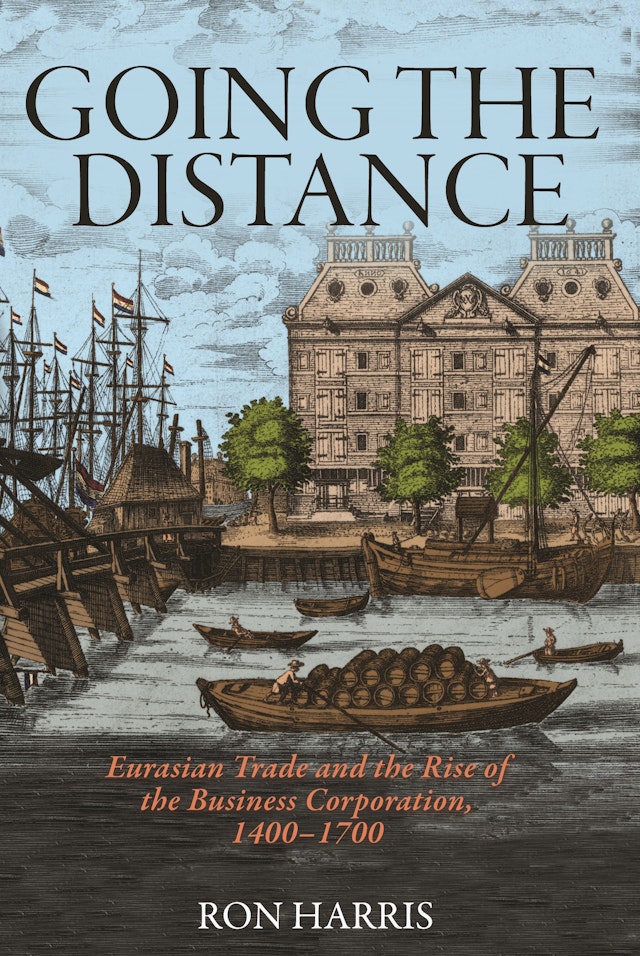
BOOK: Ron HARRIS, Going the Distance: Eurasian Trade and the Rise of the Business Corporation, 1400-1700 (Princeton: Princeton University Press, 2020). ISBN 9780691150772, £34.00


Princeton University Press is publishing a new book on Eurasian trade and the rise of the business corporation (1400-1700).

ABOUT THE BOOK

Before the seventeenth century, trade across Eurasia was mostly conducted in short segments along the Silk Route and Indian Ocean. Business was organized in family firms, merchant networks, and state-owned enterprises, and dominated by Chinese, Indian, and Arabic traders. However, around 1600 the first two joint-stock corporations, the English and Dutch East India Companies, were established. Going the Distance tells the story of overland and maritime trade without Europeans, of European Cape Route trade without corporations, and of how new, large-scale, and impersonal organizations arose in Europe to control long-distance trade for more than three centuries.

Ron Harris shows that by 1700, the scene and methods for global trade had dramatically changed: Dutch and English merchants shepherded goods directly from China and India to northwestern Europe. To understand this transformation, Harris compares the organizational forms used in four major regions: China, India, the Middle East, and Western Europe. The English and Dutch were the last to leap into Eurasian trade, and they innovated in order to compete. They raised capital from passive investors through impersonal stock markets and their joint-stock corporations deployed more capital, ships, and agents to deliver goods from their origins to consumers.

Going the Distance explores the history behind a cornerstone of the modern economy, and how this organizational revolution contributed to the formation of global trade and the creation of the business corporation as a key factor in Europe’s economic rise.

ABOUT THE AUTHOR

Ron Harris is professor of legal history and former dean of law at Tel Aviv University. He is the author of Industrializing English Law.

More info here

(source: ESCLH Blog)


Tuesday, 15 October 2019

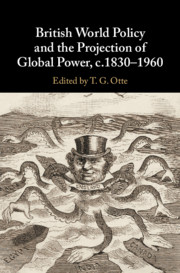
BOOK: Thomas G. OTTE (ed.), British World Policy and the Projection of Global Power, c.1830–1960 (Cambridge: CUP, 2019), ISBN 9781107198852, 75 GBP

(image source: CUP)

Book abstract:
A fundamental truth about British power in the nineteenth century and beyond was that Britain was a global power. Her international position rested on her global economic, naval and political presence, and her foreign policy operated on a global scale. This volume throws into sharp relief the material elements of British power, but also its less tangible components, from Britain's global network of naval bases to the vast range of intersecting commercial, financial and intelligence relationships, which reinforced the country's political power. Leading historians reshape the scholarly debate surrounding the nature of British global power at a crucial period of transformation in international politics, and in so doing they deepen our understanding of the global nature of British power, the shifts in the international landscape from the high Victorian period to the 1960s, and the changing nature of the British state in this period.
On the editor:
T. G. Otte is Professor of Diplomatic History at the University of East Anglia. Among his latest books are July Crisis: The World's Descent into War, Summer 1914 (2014), The Age of Anniversaries: The Cult of Commemoration, 1895–1925 (ed., 2018) and Statesman of Europe: A Life of Sir Edward Grey (forthcoming). 
(source: CUP)

Tuesday, 23 April 2019

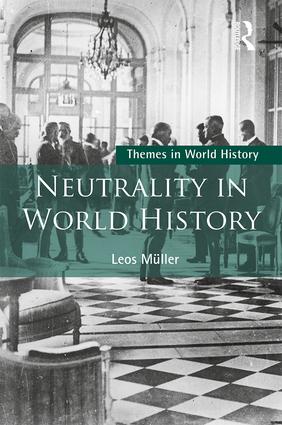
BOOK: Leos MÜLLER, Neutrality in World History (London: Routledge, 2018), 200 p. ISBN 9781351683067

(image source: Routledge)

Book abstract:
Neutrality in World History provides a cogent synthesis of five hundred years of neutrality in global history. Author Leos Müller argues that neutrality and neutral states, such as Switzerland, Sweden, Belgium have played an important historical role in implementing the free trade paradigm, shaping the laws of nations and humanitarianism, and serving as key global centers of trade and finance. Offering an intriguing alternative to dominant world history narratives, which hinge primarily on the international relations and policies of empires and global powers, Neutrality in World History provides students with a distinctive introduction to neutrality’s place in world history.
More information with the publisher.