Website of the European Society of International Law's Interest Group on the History of International Law.
ESIL Interest Group History of International Law
Tuesday, 17 August 2021
JOURNAL: Monde(s) 19 [La Société des nations. Une expérience de l'internationalisme, eds. Jean-Michel GUIEU & Stanislas JEANNESSON] (JUL 2021) (ISBN 9782753582682)
Tuesday, 20 April 2021
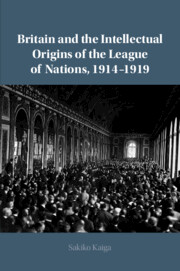
BOOK: Saikko KAIGA, Britain and the Intellectual Origins of the League of Nations, 1914–1919 (Cambridge: CUP, 2021), ISBN 9781108774130, 75 GBP
Book abstract:
In this innovative account of the origins of the idea of the League of Nations, Sakiko Kaiga casts new light on the pro-League of Nations movement in Britain in the era of the First World War, revealing its unexpected consequences for the development of the first international organisation for peace. Combining international, social, intellectual history and international relations, she challenges two misunderstandings about the role of the movement: that their ideas about a league were utopian and that its peaceful ideal appealed to the war-weary public. Kaiga demonstrates how the original post-war plan consisted of both realistic and idealistic views of international relations, and shows how it evolved and changed in tandem with the war. She provides a comprehensive analysis of the unknown origins of the League of Nations and highlights the transformation of international society and of ideas about war prevention in the twentieth century to the present.
On the author:
Sakiko Kaiga is a Research Fellow at the Institute of Social Science, University of Tokyo.
(source: CUP)
Friday, 9 April 2021
BOOK: P. SEAN MORRIS (ed.), The League of Nations and the Development of International Law. A New Intellectual History of the Advisory Committee of Jurists [Routledge Research in Legal History] (London: Routledge, SEP 2021), ISBN 9780367897536
(image source: Routledge)
Book abstract:
This volume examines the contributions to International Law of individual members of the Advisory Committee of Jurists in the League of Nations, and the broader national and discursive legal traditions of which they were representative. It adopts a biographical approach that complements existing legal narratives. Pre-1914 visions of a liberal international order influenced the post-1919 world based on the rule of law in civilised nations. This volume focuses on leading legal personalities of this era. It discusses the scholarly work of the ACJ wise men, their biographical notes, and narrates their contribution as legal scholars and founding fathers of the sources of international law that culminated in their drafting of the statute of the Permanent Court of International Justice, the forerunner of the International Court of Justice. The book examines visions of world law in a liberal international order through social theory and constructivism, historical examination of key developments that influenced their career and their scholarly writings and international law as a science. The book will be a valuable reference for those working in the areas of International Law, Legal History, Political History and International Relations.
Table of contents:
The "Wise Men" of the Advisory Committee of Jurists (ACJ) and Contemporary Legal Biography: An Introduction
P. Sean Morris
- The Legal Conscience of a Universal Man: Rafael Altamira y Crevea (1866 – 1951)
Yolanda Gamarra- National Political Ideologies and International Legal Practices: Raul Fernandes (1877 – 1968)
Arthur Roberto Capella Giannattasio- A Civilizational Pluralist and Inegalitarian: Mineichiro Adachi (1870 – 1934)
Tetsuya Toyoda- Francis Hagerup (1853 – 1921): A Norwegian Legal Internationalist
Dag Michalsen- Elihu Root (1845 – 1937): Architect and Advocate of the Permanent Court of International Justice
William G. Ross- Forgetting Albert Geouffre de Lapradelle (1871 – 1955) and Ignorance as Remembering
Toni Selkälä- Edouard Descamps (1847 – 1933): From Negative Neutrality to Positive Pacigerate
Frederik Dhondt- The Judicial-Churchman for Peace: Walter George Frank Phillimore (1855 – 1933)
P. Sean Morris- "Where is Your Tribunal?" Bernard Loder (1849 – 1935) and the Quest for International Justice
Freya Baetens and Veronica Lavista- The Italian Jurist and Diplomat at the Advisory Committee of Jurists: Arturo Ricci Busatti (1868 – 1923)
Elisabetta Fiocchi Malaspina
P. Sean Morris is a research fellow at the Faculty of Law, University of Helsinki, Finland.
(source: Routledge - DOI 10.4324/9781003020882)
Thursday, 11 March 2021
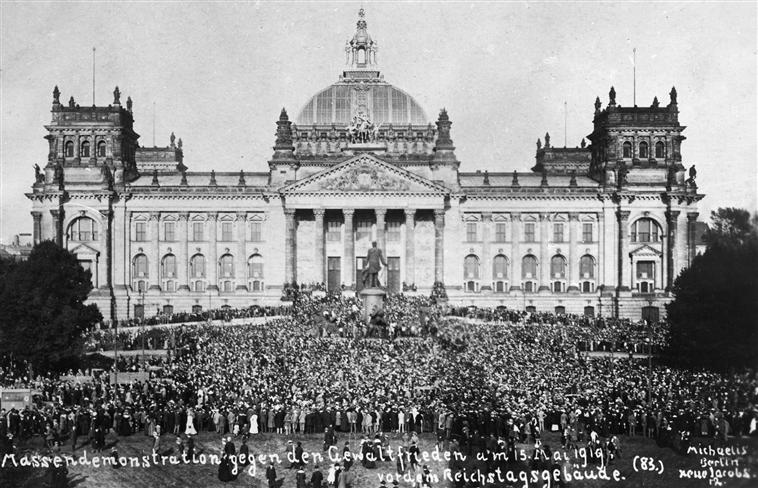
YEARBOOK: German Yearbook of International Law 62 (2019): Symposium on the Treaty of Versailles at 100
The German Yearbook of International Law devoted a focus section to the hundreth anniversary of the Peace of Versailles.
Table of contents:
Contents
Forum – Comparative Disciplinary Perspectives on the Challenges Facing the Human Rights Council
Rosa Freedman & Samuel Gordon
An International Law Perspective on the Challenges Confronting the Human Rights Council
11 Wolfgang S. Heinz
An International Relations Perspective on the Reform Needs of the Human Rights Council
43 Focus – The Treaty of Versailles at 100
Andreas von Arnauld
The Treaty of Versailles at 100: By Way of Introduction
83 Christian J. Tams
Experiments Great and Small: Centenary Reflections on the League of Nations
93 Thomas Kleinlein
The Versailles Peace Treaty Before the Permanent Court of International Justice: Tracing the Legalism of the Paris Settlement
129 Claus Kreß
The Peacemaking Process After the Great War and the Origins of International Criminal Law Stricto Sensu
163 Lauri Mälksoo
The Treaties of Brest-Litovsk, Versailles and Moscow: Contesting Sovereignty and Hegemony in Eastern Europe in 1918–1939
189 Jochen von Bernstorff
From Versailles to the Kellog-Briand Pact: Prohibiting and Justifying Aggression in the Interbellum
211 Markus P. Beham
A Forgotten Lighthouse of International Law: Heinrich Lammasch and the League of Nations
245 Magnan Johannes Mohr
Between Pacifism and Patriotism: Walther Schücking (1875–1935)
275 Walther Schücking Lecture
Alan Boyle
Progressive Development of International Environmental Law: Legislate or Litigate?
305 General Articles
James Gerard Devaney
Reapprasing the Role of Experts in Recent Cases Before the International Court of Justice
337 Nikolay Marin & Bilyana Manova
The Constraints of International Courts as a Tool for Resolving the Ukrainian-Russian Conflicts
371 Ulf Linderfalk
The Exercise of Discretion in International Law – Why Constraining Criteria Have a Proper Place in the Analysis of Legal Decision-Making
407 Bjørn Kunoy
Sharing is Caring: Transboundary Hydrocarbon Deposits on the Continental Shelf
431 Julian Scheu & Petyo Nikolov
The Incompatibility of Intra-EU Investment Treaty Arbitration With European Union Law – Assessing the Scope of the ECJ’s Achmea Judgment
475 Ilya Berlin
Western Sahara, Morocco, and the EU: Did the CJEU Get it Wrong? A Commentary of Advocate-General Wathelet’s Opinion and the CJEU Decision in the Western Sahara Campaign UK Case
505 German Practice
Alexander Grimmig
The German Constitutional Court’s Pronouncement on Self-Defence Against Non-State Actors in Syria
539 Leander Beinlich
Drones, Discretion, and the Duty to Protect the Right to Life: Germany and its Role in the United State’s Drone Programme Before the Higher Administrative Court of Münster
557 Liv Christiansen & Lilo Rösch
German Practice Concerning the Implementation of the 2015 Paris Agreement
581 Alexandra Lily Kather & Britta Redwood
Universal Jurisdiction in Germany: Framework and Practice Insights
599 Outstanding Theses
Andreas von Arnauld, Kerstin von der Decken & Nele Matz Lück
Editor’s Note
615 Laura Hering
The Consequences of Errors in the European Union’s Direct Administrative Proceedings: A Comparative Analysis of ‘Rectification’ and ‘Irrelevance’
617 Isabella Risini
The Inter-State Application Under the European Convention on Human Rights
621 Cornelia Kirchbach
The Right to Health Regulation in Investment Arbitration as Illustrated by the Example of Philip Morris v. Uruguay
625 Martin Jarret
Contributory Fault and Investor Misconduct in Investment Arbitration
629 José Guilherme Moreno Caiado
Commitments and Flexibilities in the WTO Agreement on Subsidies and Countervailing Measures: An Economically Informed Analysis
633 Sebastián Mantilla Blanco
Full Protection and Security in International Investment Law
635 Kevin Grimmeiß
Sezession und Reaktion. Zur völkerrechtlichen Regelung des Sezessionsvorgangs
639 Moritz von Rochow
Transnational Nomads in International Law – Borders and the Migration of Peoples
643 Book Reviews
W. A. Schabas: The Trial of the Kaiser (REIJNTJES) 649 Harold Hongju Koh: The Trump Administration and International Law (SLOSS) 651 Gina Heathcote: Feminist Dialogues on International Law: Success, Tensions, Futures
(O’DONOGHUE)656 Steven Wheatley: The Idea of International Human Rights Law (CHINEN) 658 Marco Longobardo: The Use of Force in Occupied Territory (BOTHE) 660 Shavana Musa: Victim Reparation Under the Ius Post Bellum: An Historical and
Normative Perspective (IVERSON)663 Russell Buchan: Cyber Espionage and International Law (DELERUE) 664 Alejandro Rodiles: Coalitions of the Willing and International Law: The Interplay
Between Formality and Informality (TONDINI)667 Cindy Wittke: Law in the Twilight: International Courts and Tribunals, the Security
Council and the Internationalisation of Peace Agreements Between State and Non-
State Parties (ZULUETA-FÜLSCHER)669 P. Chandrasekhara Rao and Philippe Gautier: The International Tribunal for the Law of
the Sea: Law, Practice and Procedure (SCHATZ)672 Lloyd Freeburn: Regulating International Sport. Power, Authority and Legitimacy
(TAMS)
Wednesday, 3 March 2021
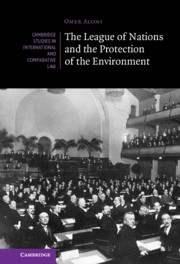
BOOK: Omer ALONI, The League of Nations and the Protection of the Environment [Cambridge Studies in International and Comparative Law] (Cambridge: CUP, JULY 2021), ISBN 9781108937399, 85 GBP
In the history of how the law has dealt with environmental issues over the last century or so, the 1920s and 30s and the key role of the League of Nations in particular remain underexplored by scholars. By delving into the League's archives, Omer Aloni uncovers the story of how the interwar world expressed similar concerns to those of our own time in relation to nature, environmental challenges and human development, and reveals a missing link in understanding the roots of our ecological crisis. Charting the environmental regime of the League, he sheds new light on its role as a centre of surprising environmental dilemmas, initiatives, and solutions. Through a number of fascinating case studies, the hidden interests, perceptions, motivations, hopes, agendas and concerns of the League are revealed for the first time. Combining legal thought, historical archival research and environmental studies, a fascinating period in legal-environmental history is brought to life.
On the author:
Omer Aloni is Research and Postdoctoral Fellow in the Faculty of Social Sciences, University of Bar-Ilan, Ramat-Gan, Israel. He received his Ph.D. from Tel-Aviv University (Faculty of Law). He holds research affiliations with the University of Potsdam, the Rachel Carson Center for Environment and Society (LMU Munich) and the Max Planck Institute. He was awarded the Tallinn Prize by the European Society for Environmental History for the best research in 2018 and 2019.
(source: CUP)
Wednesday, 27 January 2021
BOOK: Peter BECKER & Natasha WHEATLEY (Eds.), Remaking Central Europe - The League of Nations and the Former Habsburg Lands (Oxford: Oxford University Press, 2021). ISBN 9780198854685, 99.00 USD
Oxford University Press has published a new book on the new international order after World War I in the former Habsburg lands.
ABOUT THE BOOK
Over the last two decades, the "new international order" of 1919 has grown into an expansive new area of research across multiple disciplines. With the League of Nations at its heart, the interwar settlement's innovations in international organizations, international law, and many other areas shaped the world we know today.
This book presents the first study of the relationship between this new international order and the new regional order in Central and Eastern Europe after the collapse of the Habsburg empire. An analysis of the co-implication of these two orders is grounded in four key scholarly interventions: understanding the legacies of empire in international organizations; examining regionalism in the work of interwar international institutions; creating an integrated history of the interwar order in Europe; and testing recent claims of the conceptual connection between nationalism and internationalism.
With chapters covering international health, international financial oversight, human trafficking, minority rights, scientific networks, technical expertise, passports, commercial treaties, borders and citizenship, and international policing, this book pioneers a regional approach to international order, and explores the origins of today's global governance in the wake of imperial collapse.
ABOUT THE EDITORS
Peter Becker is Professor of Austrian History in the Department of History at the University of Vienna. Before moving to Vienna, he held a professorship at the European University Institute in Florence, where he started his research on the history of modern state and governance especially of the Habsburg monarchy and on the cultural history of public administration.
Natasha Wheatley is an Assistant Professor in the Department of History at Princeton University. Prior to joining the Princeton faculty, she completed her PhD at Columbia University and was an ARC Postdoctoral Research Fellow at the University of Sydney.
TABLE OF CONTENTS
Introduction: Central Europe and the New International Order of 1919, Peter Becker and Natasha Wheatley
1. Habsburg Histories of Internationalism, Glenda Sluga
Part One: Remaking Actors and Networks
2. Clemens Pirquet: Early Twentieth-Century Scientific Networks, the Austrian Hunger Crisis, and the Making of the International Food Expert, Michael Burri
3. Reinventing International Health in East Central Europe: The League of Nations, State Sovereignty, and Universal Health, Sara Silverstein
4. The Polycentric Remaking of International Participation after World War I: (Post-)Imperial Agents from Eastern Europe in and around the League of Nations' Secretariat, Katja Naumann
5. Austria, the League of Nations, and the Birth of Multilateral Financial Control, Nathan Marcus
6. Hungary and the League of Nations: A Forced Marriage, Zoltan Peterecz
7. On the Fraught Internationalism of Intellectuals: Alfons Dopsch, Austria, and the League's Intellectual Cooperation Program, Johannes Feichtinger
Part Two: Remaking Territories and Borders
8. Remaking Mobility: International Conferences and the Emergence of the Modern Passport System, Peter Becker
9. International Commerce in the Wake of Empire: Central European Economic Integration between National and Imperial Sovereignty, Madeleine Lynch Dungy
10. Fighting the Scourge of International Crime: The Internationalisation of Policing and Criminal Law in Interwar Europe, David Petruccelli
11. Nation, Internationalism, and the Policies against Trafficking in Girls and Women after the Fall of the Habsburg Empire, Martina Steer
12. The League of Nations and the Optants Disputes of the Hungarian Borderlands: Romania, Yugoslavia, and Czechoslovakia, Antal Berkes
13. Non-Territorial Autonomy in Interwar European Minority Protection and Its Habsburg Legacies, Börries Kuzmany
14. Beyond the League of Nations: Public Debates on International Relations in Czechoslovakia during the Interwar Period, Sarah Lemmen
An Epilogue to the Making and Unmaking of Central Europe and Global Order, Patricia Clavin
More info here