ESIL Interest Group History of International Law

ESIL Interest Group History of International Law

Friday, 23 December 2022

CALL FOR PAPERS: "The Evolution of the Global Payments System", Oxford University (DEADLINE: 2 January 2023)


Image source: GloCoBank website

Description:

Conference: The Evolution of the Global Payments System

A GloCoBank Project Event | 23-24 March 2023 | St Hilda’s College | University of Oxford

DEADLINE EXTENSION: Deadline for proposals: 2 January 2023

The global payments system represents the underlying plumbing of globalisation, determining the efficiency and security of cross-border payments for goods and services. Despite its fundamental importance surprisingly little is known about the evolution of this system, especially the dynamics of the network of bilateral bank relationships used for cross-border settlements across the past 150 years.

The European Research Council funded ‘Global Correspondent Banking 1870–2000’ project would like to invite proposals from researchers at all levels for a conference on the evolution of the global payments system during the 19th and 20th centuries. Topics may include, but are not limited to:

  • Correspondent banking, international banking networks and the development of the global payments system
  • The changing shape, patterns and dynamics of international banking networks, and the impact of financial crises, world events and regulatory changes
  • Banking technologies and the ‘plumbing’ of the international payments system, e.g. bills of exchange, ICT innovation
  • Bank internationalisation strategies

The conference will be held at St Hilda’s College, Oxford on Thursday 23rd and Friday 24th March 2023.

Submission details:

Proposed titles and paper abstracts of c. 300 words, along with a short biography of the author, should be submitted to glocobank@history.ox.ac.uk by Monday 2 January 2023. Participants will be notified in early January if their proposal has been accepted.

Conference organisers:

Professor Catherine R. Schenk; Dr Marco Molteni; Dr Alena Pivavarava | GloCoBank Project

About GloCoBank:

‘Global Correspondent Banking 1870–2000’ (GloCoBank) is a 5-year research project funded by the European Research Council (ERC) which seeks to identify and analyse the international network of correspondent banking relationships across the 20th century. Read more about the project.

Source: Legal History Blog


Thursday, 22 December 2022

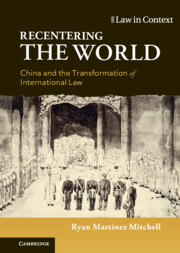
BOOK: Ryan Martinez MITCHELL, "Recentering the World: China and the Transformation of International Law" (Cambridge University Press, 2022)

Image source: CUP

Description:

Recentering the World recovers a richly contextual, detailed history of Western-imposed legal structures in China, as well as engagements with international law by Chinese officials, jurists, and citizens. Beginning in the Late Qing era, it shows how international law functioned as a channel for power relations, techniques of economic domination, as well as novel forms of resistance. The book also radically diversifies traditionally Eurocentric accounts of modern international law's origins, demonstrating how, by the mid-twentieth century, Chinese jurists had made major contributions to international organizations and the UN system, the international judiciary, the laws of armed conflict, and more. Drawing on extensive archival research, this book is a valuable guide to China's often conflicted role in international law, its reception and contention of concepts of sovereignty, property, obligation, and autonomy, and its gradual move from the 'periphery' to a shared spot at the 'center' of global legal order.
Table of contents: 
Introduction: 'In the Nineteenth Century, There was No International Law'
Part I. Preserving Stateliness, 1850–1894:
1. Universal Prosperity
2. Synarchy
3. Vast Imperium
Part II. Asserting Sovereignty, 1895–1921:
4. The Public Law of Planet Earth
5. The Problem of Equality
6. Reconstituted Hierarchies
Part III. Internationalisms, 1922–2001:
7. Changing Circumstances
8. New Orders
9. Perpetual Peace
Conclusion: From Object to Subject? – China in a World of Institutions
Glossary of Chinese and Japanese Names
Bibliography
Index
About the author: 
Ryan Martínez Mitchell is an associate professor at the Faculty of Law of the Chinese University of Hong Kong. He holds a J.D. from Harvard Law School and a Ph.D. in Law from Yale University. His scholarship on China and international law has appeared in a number of leading scholarly journals.
More information can be found here.  

(Source: ESCLH blog)

Tuesday, 20 December 2022

CONFERENCE CALL: "The Tangier Statute Centenary Conference", KULeuven (DEADLINE: 15 MAY 2023)

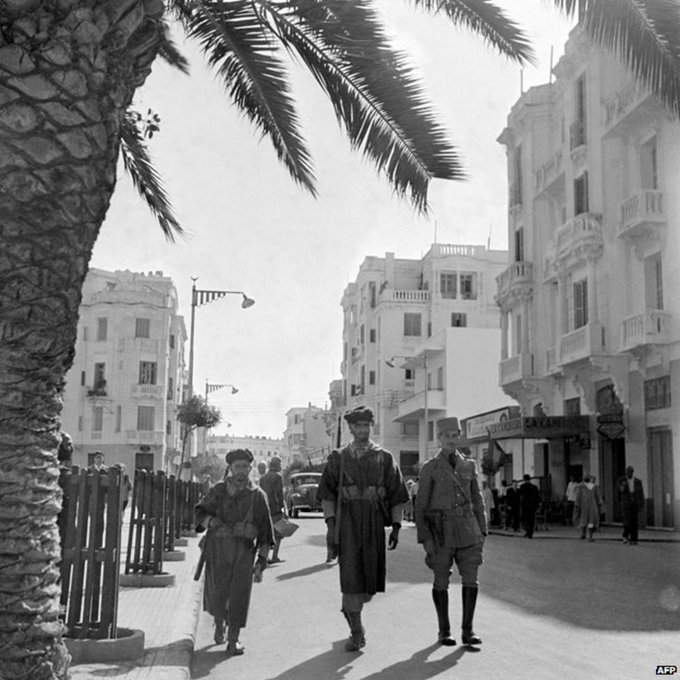
Image source: website Geert van Calster


Description:
The Tangier Statute Centenary Conference, 18th December 2023

Organised by Willem Theus (KU Leuven – UCLouvain), Dr. Michel Erpelding (University of Luxembourg), Prof. Dr. Francesco Tamburini (University of Pisa), Prof. Dr. Fouzi Rherrousse (University of Oujda), Prof. Dr. Geert Van Calster (KU Leuven).

The full call for papers in English is available here, but a French, Arabic, Italian and Spanish version are available as well. The deadline to submit an expression of interest is the 15th of May 2023.

---

On 18 December 2023 (i.e. a year from now), Willem Theus (KU Leuven – UCLouvain), Dr Michel Erpelding (University of Luxembourg), Prof Dr Francesco Tamburini (University of Pisa), Prof Dr Fouzi Rherrousse (University of Oujda), and myself are organising a conference to celebrate the centenary of the Statute of Tangier, signed at Paris. Credit for kicking off the process goes to Willem.

This treaty, signed between France, Spain and the United Kingdom, and later joined by Sweden, Belgium, the Netherlands, Portugal and Italy, provided for the creation of a new legal entity: the International Zone of Tangier. Established by 1925, the Tangier Zone was formally an integral part of Morocco, but subject to a special regime that left most of its institutions under the joint administration of several Western powers. This special regime would last until Morocco’s independence in 1956, with some international elements remaining in place under a Royal Charter until 1960.

Thinking about the Zone triggers an extravaganza of thoughts on international commercial courts, conflict of laws, history of law and so much more. The call asks for papers on

The Politics of Individual Powers Towards/Within the Zone
Moroccan Attitudes and Policies Towards/Within the Zone and Its Institutions
The Interzonal and Foreign Relations of the International Zone17
Politics in the International Legislative Assembly
The Veto-Role of the Committee of Control
The Zone’s Legal System/Codes
The Operation, Case Law and Reforms of the Mixed Court
The Bar of the International Zone

Careers of Individual Lawyers/Officials/Businessmen/Intermediaries
The Tangier Banking System
The Ecclesiastical, Jewish and Sharia Courts
The Working and Case Law of the American Consular Court
The Spanish Civil War and its Impact on the Zone
The Architecture of the International Administrative Buildings of the Zone
Smugglers and the Law; and
The Legal System of the Transition Period (1956–1960)

Thursday, 15 December 2022

CALL FOR PAPERS: "Treaties and Literature", Diplomatica: A Journal of Diplomacy and Society (DEADLINE: 15 February 2023)

Image source: Brill

Description:

Treaties and Literature

(Diplomatica special issues)

Deadline for submissions: 15 February 2023

For two special issues of Diplomatica we invite proposals for essays on (1) the history and culture of diplomatic treaties; and (2) aspects of diplomacy’s relationship to literature. Essays may cover any historical period up to the present-day. The central questions that the special issues pose are:

(1) Treaties

– How and why have diplomatic texts evolved?

– How has their hermeneutics changed over time?

– Are treaties better understood as literary artifacts or as socio-political constructs?

– What can the evolution of treaties tell us about the evolution of diplomacy and the diplomatic profession?

(2) Literature

– How does literary skill manifest itself in diplomatic practice?

– How do diplomatic ‘narratives’ shape actual diplomacy?

– Are there particular diplomatic ‘genres’ and, if so, how are they best understood?

Possible topics include:

– histories and/or literary comparisons of particular treaties;

– case studies of literary diplomats and/or diplomatic works;

– semiotic analyses of particular treaties or other agreements;

– visual, musical, and cinematic depictions of literature in diplomatic contexts.

Please send expressions of interest, or abstracts of 500 words and a brief bio-note to the issue editors, newdiplo@gmail.com by 15 February 2023. Please quote ‘Treaties’ or ‘Literature’ in the subject line.

Notification of acceptance will be no later than 1 March 2023. If accepted, full essays (of 7000 to 9000 words) will be due by 15 December 2023.

Review essays and interviews pertinent to the special issue are also very welcome. Please contact the journal editors with any questions.

Source: Diplomatica newsletter

Friday, 9 December 2022

PODCAST: TRADE TALKS, "Did Britain’s slave trade help drive its industrial revolution?"


Image source: Trade Talks website

Description:

Economic historians have had a long-running debate as to whether Britain's involvement in the transatlantic slave trade and its holding of the enslaved on colonial plantations contributed to its industrial revolution.

Discussions over reparations also benefit from improved understanding of the extent to which some countries, especially enslaving countries like Britain, benefited from this horrendous practice.

Stephen Redding joins this week to explain some new research that quantifies just how big those benefits were, both for local industrial development in Britain and for the British economy as a whole.

    ---

Host: Chad Bown (Peterson Institute)

Guest: Stephen Redding (Princeton University) explains new research that reveals how Britain’s historical economic development benefited tremendously from the country’s involvement in the brutal transatlantic slave trade and its slave holdings (26:53).

References

Heblich, Stephan, Stephen J. Redding, and Hans-Joachim Voth. 2022. Slavery and the British Industrial Revolution. NBER Working Paper No. 30,451, September.

Nunn, Nathan and Leonard Wantchekon. 2011. The Slave Trade and the Origins of Mistrust in Africa. American Economic Review 101(7): 3221-3252.

Solow, Barbara L. 1985. Caribbean slavery and British growth: The Eric Williams hypothesis. Journal of Development Economics 17 (1–2): 99-115.

Williams, Eric. 1944. Capitalism and Slavery. UNC Press Books.

   More information and a transcript are available on the podcast website of Trade Talks.

PODCAST: BORDERLINE JURISPRUDENCE, "Martti Koskenniemi on Philosophy, History, and International Legal Scholarship"

Image source: Apple Podcasts

Description:

Imagine there is a podcast on hardcore philosophy and jurisprudence of international law. Imagine there are people geeky enough to be ready to talk about this non-stop. That’s right. That’s "Borderline Jurisprudence". By Başak Etkin and Kostia Gorobets.

Professor Martti Koskenniemi (University of Helsinki) joins us to discuss philosophy and history of international law, international legal scholarship, and the Helsinki school. 

Publications referred to in the episode:
Koskenniemi, Martti. From Apology to Utopia: The Structure of International Legal Argument. Cambridge: Cambridge University Press, 2006.
Koskenniemi, Martti. The Gentle Civilizer of Nations: The Rise and Fall of International Law 1870–1960. Cambridge: Cambridge University Press, 2001.
Koskenniemi, Martti. To the Uttermost Parts of the Earth: Legal Imagination and International Power 1300–1870. Cambridge: Cambridge University Press, 2021.
Powers, Richard. The Overstory. New York: W.W. Norton & Co., 2018.

Tuesday, 6 December 2022

CALL FOR APPLICATIONS: TWAIL 2023 Summer Academy (DEADLINE: 29 January 2023)


Image source: TWAILR

TWAIL 2023: Democratizing International Law
Summer Academy – Call for Applications
Universidad de los Andes, Bogotá, Colombia, 17-21 July 2023

Applications are invited for the inaugural TWAIL Summer Academy taking place from 17 to 21 July 2023 at the Universidad de los Andes in Bogotá, Colombia. Third World Approaches to International Law (TWAIL) is a movement encompassing scholars and practitioners of international law and policy who are concerned with issues related to the Global South. The scholarly agendas associated with TWAIL are diverse, but the general theme of its interventions is to unpack the colonial legacies of international law and engage in decolonizing efforts.
The Academy will unite international law scholars and practitioners from across the globe in Bogotá to address some of the most pressing global challenges of our time: conflict, mass displacement, economic inequality, and environmental injustice, all of which have disproportionate impact across the global South and particular significance for Colombia. This Academy is part of a growing number of TWAIL initiatives working together to democratize international law. The Academy will consist of lectures, discussions and writing workshops where emerging scholars, graduate students, and legal practitioners have the opportunity to learn about the TWAIL movement, share their unique perspectives, and receive feedback on scholarly projects through writing workshops. It provides an opportunity for productive collaborative exchange amongst participants from across the Global South and North and leading TWAIL scholars from around the world.
The Academy is organized under the auspices of the TWAIL Review (TWAILR) and hosted by the Universidad de los Andes Faculty of Law in partnership with the University of Windsor Faculty of Law and Maynooth University School of Law & Criminology, with the support of the Canadian Social Sciences and Humanities Research Council (SSHRC) and Afronomicslaw. The objectives of the Academy are three-fold:
1. To provide participants the opportunity to share Third Worldist perspectives rooted in histories of colonialism and imperialism, and the uses of TWAIL for more effective knowledge production, policymaking, and teaching across the Global South and beyond.
2. To build solidarity and connection among junior and senior scholars across the Global South and North, with particular attention to the Latin American scholarly community, especially those left out of knowledge mobilization activities due to financial resources.
3. To create opportunity for scholars from the Global South to produce innovative knowledge freely accessible around the world.
With these goals in mind, all applicants must submit an abstract for a paper that will be considered for publication in the TWAIL Review or Afronomicslaw. The Academy’s writing workshops will be a space to test out your ideas and receive feedback. All Summer Academy activities will be conducted in English, but we have some capacity in Spanish. We welcome applicants from all over the world and priority will be given to applicants from the Global South. If you are an applicant from the Global South that requires funding support for your travel and accommodation, please let us know. We ask those seeking funding to be reflexive and set out their location and subject position.
Applicants must submit:
– An abstract (maximum 250 words) in English that is relevant to the Academy’s themes.
– A letter of interest (maximum one page) in English or Spanish setting out any funding needs and how the Academy will enhance your scholarship, practice, and praxis.
– Short current CV.
– The names and email addresses of 2 referees.
Please submit applications to TWAILR.SummerSchool@gmail.com by 29 January 2023.