ESIL Interest Group History of International Law

ESIL Interest Group History of International Law

Wednesday, 11 March 2020

SYMPOSIUM: AJIL Ubound on Prosper Weil's Analysis of Normativity (OPEN ACCESS)

(image: Prosper Weil; Source: Académie des Sciences Morales et Politiques)

The American Journal of International Law has published a symposium on Prosper Weil's famous article 'Towards Relative Normativity in International Law' ? (1983).

The introduction by Karen Knop can be found here.
The contribution of Pierre-Marie Dupuy is here.
The contribution of José E. Alvarez is here.
The contribution of Paola Gaeta is here.
The contribution of Monica Garcia Salmones-Rovira is here.
The contribution of John Tasioulas is here.
The contribution of Sienhoo Yee is here.

Tuesday, 10 March 2020

WEBSITE: Kelsen Online (Digitale Akademie, Mainz)

(image source: Wikimedia Commons)

Project abstract:
Hans Kelsen (1881–1973), im k.u.k.-Österreich-Ungarn geborener und 1933 von den Nationalsozialisten aus Deutschland vertriebener Wissenschaftler jüdischer Herkunft, der im US-amerikanischen Exil seine neue Heimat fand, gehört im globalen Maßstab auch mehr als 40 Jahre nach seinem Tod zu den meistdiskutierten Rechtstheoretikern. Er zählt zu den ganz wenigen Rechtswissenschaftlern, die außerhalb ihres muttersprachlichen, nämlich deutschsprachigen Kreises weltweit Anerkennung gefunden haben und den rechtswissenschaftlichen Diskurs sowohl in Ost- als auch Südeuropa, sowohl in Ostasien als auch in Lateinamerika nachhaltig und selbst in der Anglosphere mehr als nur vernachlässigbar beeinflusst haben.
See project website.

Monday, 9 March 2020

SEMINARS: Prof. David Armitage on 18th and 19th century Law of Nations

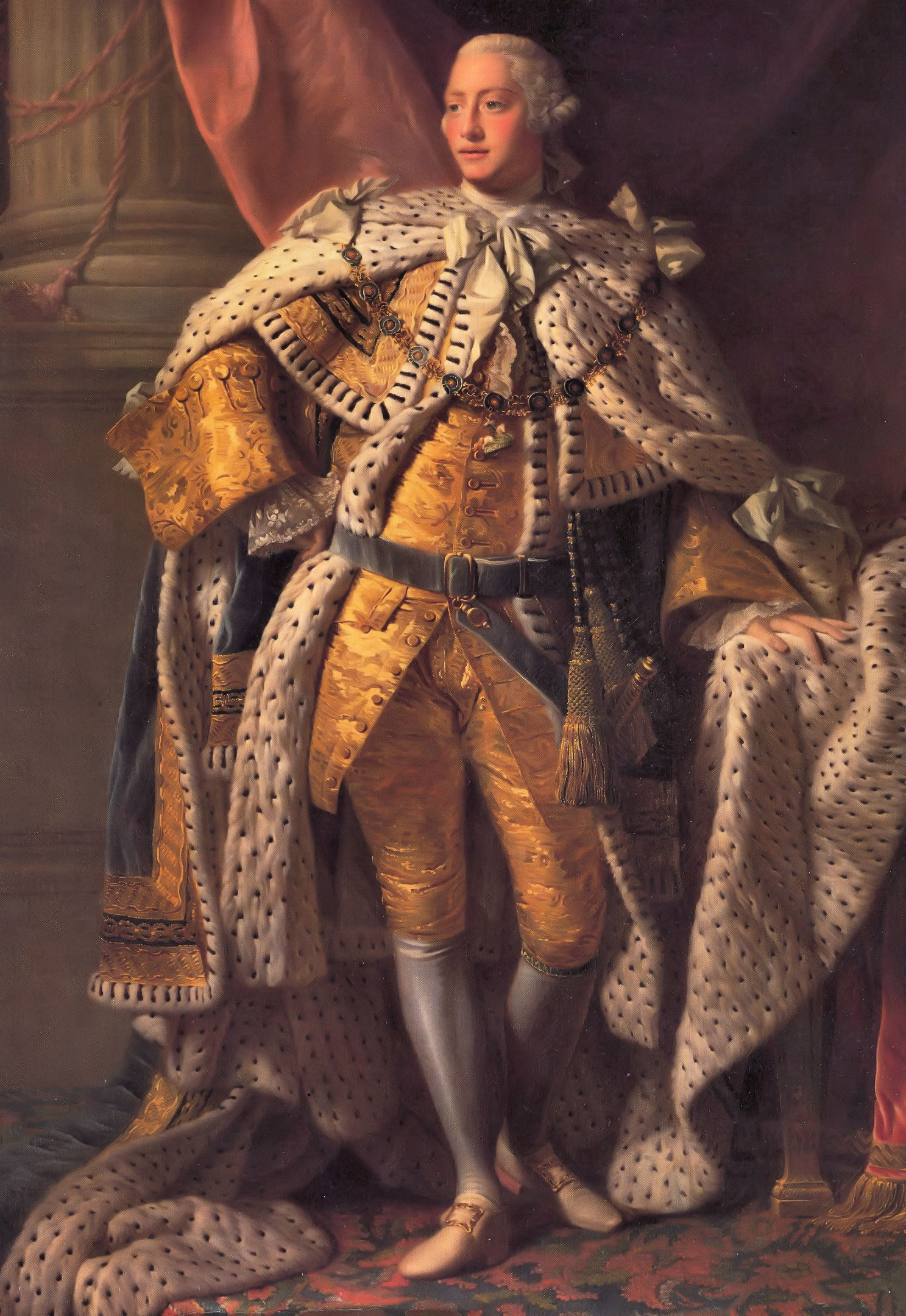
(image: George III; source: Wikimedia Commons)

Two events have been announced involving Prof. David Armitage and British conceptions of international law in the 18th and 19th centuries.

First among equals? Rethinking global royal encounters in the 18th and 19th centuries (King's College London, 17 March, 11:15-13:30)
On 17 March 2020 David Armitage will deliver the annual Sons of the American Revolution Georgian Papers Programme Lecture at King’s College London. His topic will be George III and the Law of Nations. He will examine how George III was educated in constitutionalism and the law of nations, how he gathered and processed information about imperial and international affairs, and how this constitutional and juridical knowledge shaped his understanding of international relations. To accompany the lecture, Professor Armitage will lead a workshop earlier in the day which will explore the encounter between the British crown and extra-European polities. The diplomatic history of European monarchies is a familiar topic, but their global encounters have largely been approached within frames of exploration, conquest, or expropriation. This workshop will tilt that framework, probing the interpersonal and reciprocal aspects of three different British royal encounters – with India, America, and China. Priya Atwal, Charles Prior, and Henrietta Harrison will each deliver short papers, Professor Armitage will respond, and we will then open up the discussion to everyone. We hope to engage a variety of perspectives – from political and cultural history, to the history of political thought, global history, and the history of empires and colonialism -- in what should be an ideal preparation for the evening’s lecture, which all are also invited to attend. The workshop should be of interest to MA and PhD students working in all these fields.
(see here for more information)

First among equals? Rethinking global royal encounters in the 18th and 19th centuries (King's College Londen, 17 March, 18:30-21:00)
This lecture examines how George III, from his early years as Prince of Wales in the 1750s through to the twilight of his active rulership in the early nineteenth century, was educated in constitutionalism and the law of nations, how he gathered and processed information about imperial and international affairs, and how this constitutional and juridical knowledge shaped his understanding of international relations, the American Revolution, and the abolition of slavery, among other pressing contemporary questions. From an examination of the Georgian Papers at Windsor Castle and the King’s Library at the British Library, a new picture emerges of George III as an unusually thoughtful, engaged, and at times surprisingly radical student of Montesquieu and Blackstone, and hence as a modernising monarch uniquely well equipped to reflect on the changing nature of sovereignty in an age of revolutions.  
(see here for more information)

On Prof. Armitage:
David Armitage is the Lloyd C. Blankfein Professor of History at Harvard University and an Affiliated Faculty Member at Harvard Law School. He is also an Honorary Professor of History at both the University of Sydney and Queen’s University Belfast and an Honorary Fellow of St Catharine’s College, Cambridge. He is the author or editor of eighteen books, among them The Ideological Origins of the British Empire (2000), The Declaration of Independence: A Global History (2007), Foundations of Modern International Thought (2013), The History Manifesto (2014, co-auth.), and Civil Wars: A History in Ideas (2017). He has held fellowships and visiting positions in Australia, Britain, China, France, Germany, South Korea, and the United States, and this academic year he is the Sons of the American Revolution Visiting Professor at King’s College London in association with the Georgian Papers Programme and the Royal Archives.

Friday, 6 March 2020

BOOK: Edgar BONJOUR, Swiss Neutrality. Its History and Meaning (transl. Mary HOTTINGER) [Routledge Revivals] (London: Routledge, 2018), ISBN 9781138552159, 120 GBP

(image source: Routledge)

Abstract:
Up to a generation ago, the Swiss citizen lived with a feeling of security in foreign relations which we can hardly credit today. Neutrality has come to be taken so much for granted as the fundamental principle of the Federal constitution, and had been so generally recognized in Europe, that it seemed unthreatened and even inviolable. It blended with the republican and democratic ideal to form a national myth of almost religious sanctity. As the axiom of Swiss foreign policy, it had certainly suffered attack both in theory and in fact, but since such crises had always been successfully overcome, Switzerland’s faith in the inviolability of her neutrality had merely been confirmed. It was as if the country were girdled with high, protecting ramparts, behind which its people could go about their lawful occasions unmolested. It was in this period of calm in Switzerland’s foreign relations that international law assiduously sought a formula for the theory of neutrality.
(source: Routledge)


Thursday, 5 March 2020

BOOK: Mark SWATEK-EVENSTEIN, A History of Humanitarian Intervention (Cambridge: Cambridge UP, 2020), 286 p. ISBN 9781107061927, 85 GBP

(image source: CUP)

Abstract:
The question of 'humanitarian intervention' has been a staple of international law for around 200 years, with a renewed interest in the history of the subject emerging in the last twenty years. This book provides a chronological account of the evolution of the discussion and uncovers the fictional narrative provided by international lawyers to support their conclusions on the subject, from justifications and arguments for 'humanitarian intervention', the misrepresentation of great power involvement in the Greek War of Independence in 1827, to the 'humanitarian intervention that never was', India's war with Pakistan in 1971. Relying on a variety of sources, some of them made available in English for the first time, the book provides an undogmatic, alternative history of the fight for the protection of human rights in international law.
On the author:
Mark Swatek-Evenstein is a scholar and lawyer specializing in criminal law, immigration and refugee law. He is a member of the International Network of Genocide Scholars and has taught courses on The Holocaust and The Law. His current research focuses on the minority experience in international law. 
(source: CUP)

Wednesday, 4 March 2020

VACANCY: Historian for the Research Project DIGICOLJUST: Colonial Violence, Subaltern Agency and Shared Archival Heritage: A Digital Platform of Colonial Judiciary Sources, 2 Years (Brussels: State Archives/VUB-ULB, DEADLINE 1 APR 2020)

(image: Leopold II, King of the Belgians; souce: Wikimedia Commons)

Project abstract:
DIGICOLJUST – Colonial Violence, Subaltern Agency and Shared Archival Heritage: A Digital Platform of Colonial Judiciary Sources Funded by the BELSPO program BRAIN-be2.0 and based on a partnership between AGR/ARA, ULB and VUB, DIGICOLJUST is a two-year digitizing and scientific project starting from a poorly-known archival collection of strategic importance for the history of Belgian colonialism in Central Africa and for the Belgian State Archives collections: the archives of the trial records of the court martials of the Congo Free State (1885-1908) and of the Belgian Congo (1908-1960). This project aims to make these records accessible and to explore new research agendas related to controversial issues of colonial violence and repression as well as to African agency and its modes of expression in colonial courtrooms. DIGICOLJUST will work on three levels: (1) identification and inventory of sources; (2) digitization and preservation; (3) digital dissemination and scientific valorization.

(more information here)

Tuesday, 3 March 2020

PRE-CONFERENCE EVENT: The Founding of Solidarity in the International Community (ESIL Research Forum, Catania, 23 APR 2020)

(image source: Wikimedia Commons)

2020 ESIL RESEARCH FORUM
RECTORATE BUILDING, PIAZZA UNIVERSITÀ, CATANIA


09.30-11.00 – Session One

‘Interdisciplinary Research Between History and Law’, Markus Beham (Passau)

‘Views in the Literature on Interdisciplinary Research Between History and Law’, Jaanika Erne (Tartu)

‘Louis Bara (1821-1857) and the Liberal-scientific Restatement of International Law in the Nineteenth Century Peace Movement’, Wouter De Rycke (Brussels)

Comments


————


11.00-11.30 – Coffee break


————


11.30-13.00 – Session Two

‘The Role of the Brazilian Academic Elite in the “Civilization Project” during the XIX Century: An Analysis from the Example of the Whitening of the Population’, Luisa Cortat Simonetti Goncalves-Renato Coutinho (Maastricht)

‘Utopian Prohibition: Elihu Root, James Brown Scott and the Roots of the First International Drug Laws’, Kojo Koram (UCL)

Comments

————


13.00 – Conclusion

Discussion of Future IG Events


————

The European Society of International Law Interest Group on the History of International Law Steering Committee:
Markus Beham – Frederik Dhont – Jaanika Erne – Jan Lemnitzer – John Mors