ESIL Interest Group History of International Law

ESIL Interest Group History of International Law

Monday, 7 June 2021

BOOK REVIEW: Wolfgang REINHARD (Freiburg im Breisgau) on Irene DINGEL et al. (eds.), Handbook of Peace in Early Modern Europe (Berlin: DeGruyter Oldenbourg, 2021) (Sehepunkte, MAY 2021)


(image source: Sehepunkte)

First paragraph:

Ein Werk wie dieses war längst überfällig. Zwar wurde der Friede schon immer gepriesen und hat im 20. Jahrhundert moralisch sogar die Oberhand gewonnen. Der Krieg wurde verboten. Es gibt heute keine Kriegsminister mehr, sondern nur noch Verteidigungsminister und auch so gut wie keine ordnungsgemäß mit Kriegserklärung begonnenen und mit Friedensschluss beendeten Kämpfe alten Stils. Die Wirklichkeit ist freilich nichtsdestoweniger kriegerischer denn je. Auch die Wissenschaft interessiert sich demgemäß lieber für Krieg als für Frieden. Faktisch gilt eben immer noch die Feststellung von Nietzsches Zarathustra "der gute Krieg ist es, der jede Sache heiligt" (97). Sogar die Menschenrechte müssen heute den Krieg "heiligen". Anthropologisch gesehen ist es ja viel einfacher, einen Konflikt auszulösen und durchzufechten als ihn beizulegen und zu beenden. Entsprechend schwer tut sich die Friedensforschung mit der Gewalt und entsprechend verdienstvoll ist der Versuch dieses Buches, hier mit historischer Friedensforschung massiv wissenschaftlich gegenzusteuern.

Read the full review here.

See earlier on this blog for the book. 

Wednesday, 2 June 2021

WEBINAR: Grotian Theory Talks with Nehal BHUTA (Heidelberg: MPIL, 11 JUN 2021)


(image source: Twitter)

The MPIL in Heidelberg hosts the 'Grotian' Theory Talks. Prof. Nehal Bhuta (Edinburgh) is announced for the 11 June at 15:00 CET.

More information by clicking on the image.

Tuesday, 1 June 2021

ONLINE WORKSHOP: Luis de Molina et l'esclavage africain - regards croisés (Paris: Université Paris Nanterre, 4 JUN 2021)


(click on image to enlarge)

Luis de Molina (1535-1600) est l’un des plus célèbres jésuites espagnols du XVIe siècle, appartenant à la dite « École de Salamanque ». Alors qu’il est aujourd’hui connu des théologiens, surtout pour la question de l’exercice du libre arbitre en relation avec la prédétermination de la volonté divine, tout comme des économistes, pour sa théorie de la valeur subjective du prix, Luis de Molina reste encore largement méconnu chez les juristes.


Cette journée d’étude se concentrera sur le deuxième traité de son

De iustitia et iure, publié en 1593 et dans lequel Molina s’intéresse à la justice commutative des biens, c’est-à-dire à la légitimité du commerce, offrant par-là une analyse théologico-juridique détaillée des pratiques commerciales menées par les marchants portugais et espagnols dans la seconde moitié du XVIe siècle. L’une de ces pratiques était l’acquisition et la vente d’esclaves. Est-il juste, demande Molina, que les marchands portugais aillent en Afrique pour y acheter des esclaves et ensuite les revendre aux marchands espagnols ? Sur la base de quels titres et dans quelles conditions ces échanges peuvent-ils avoir lieu ?


Les longs développements élaborés par Luis de Molina pour répondre à ces questions auront une influence décisive ; les théologiens et juristes qui lui succéderont ne feront que reprendre et synthétiser ses réflexions, renforçant la légitimité de l’esclavage et les modalités dans lesquelles était réalisée la traite africaine.


Les participant.e.s à cette journée d’étude proviennent de champs disciplinaires variés, tels que le droit et l’histoire, mais aussi la philosophie politique et l’anthropologie. L’objectif est d’offrir un regard croisé, novateur et critique sur les réflexions de Luis de Molina en matière d’esclavage africain, afin de mieux comprendre leur contenu et leur portée.


Cette journée d’étude organisée par Anne-Charlotte Martineau est rendue possible par le soutien de la Mission de recherche Droit et Justice et du Centre de Théorie et d’Analyse du Droit (UMR7074).


Cette journée d’étude est ouverte à tous.tes. Pour toute demande d’inscription à la visioconférence, remplissez ce formulaire


Programme :


11h


Anne-Charlotte Martineau  : « Propos introductifs »


11h30-13h


Martti Koskenniemi : « Scholastic ius gentium: The Persistent Power of a Middle Concept »


Matthias Kaufmann : « Molina : l’esclavage entre la moralité, le droit et l’économie »


Jean-Louis Halpérin : « Droit, justice et équité dans l’approche de Molina sur l’esclavage »


14h00-15h30


Luisa Brunori : « Droit et économie dans l’œuvre de Luis de Molina »


Arnaud Paturet : « L’idée de dominium dans De iustitia et iure à la lumière des conceptions juridiques romaines antiques »


Danaë Simmermacher : « Slaves as Owners »


16h00-17h30


António de Almeida Mendes : « Le statut des esclaves africains et de leurs descendants en Europe du Sud passé au filtre de la traite transatlantique »


Carlos Zeron : « Inventer et inventorier la traite légitime »


José Luis Egío García : « Quelques éléments de continuité et de rupture avec la tradition salmantine et le derecho indiano »


17h30  Anne-Charlotte Martineau : « Conclusion »


Affiliations :


Anne-Charlotte Martineau est chargée de recherche au CNRS et rattachée au Centre de Théorie et d’Analyse du Droit de l’université de Nanterre.  Martti Koskennniemi est professeur émérite de droit international à l’université de

Helsinki. Matthias Kaufmann est professeur émérite d’éthique à l’université de Halle-Wittenberg. Jean-Louis Halpérin

est professeur d’histoire du droit à l’École normale supérieure de Paris. Luisa Brunori est chargée de recherche au CNRS et rattachée au Centre d’Histoire Judiciaire de l’université de Lille. Arnaud Paturet est chargé de recherche au CNRS et rattaché au Centre de Théorie et d’Analyse du Droit de l’université de Nanterre. Danaë Simmermacher est docteure en philosophie et rattachée à l’université de Halle-Wittenberg. Carlos Alberto de M.R. Zeron est professeur d’histoire à l’université de São Paulo. António de Almeida Mendes est maître de conférences en histoire moderne à l’université de Nantes. José Luis Egío García est docteur en philosophie et affilié à l’Institut Max Planck de Francfort (Max Planck Institute for Legal History and Legal Theory).

Thursday, 27 May 2021

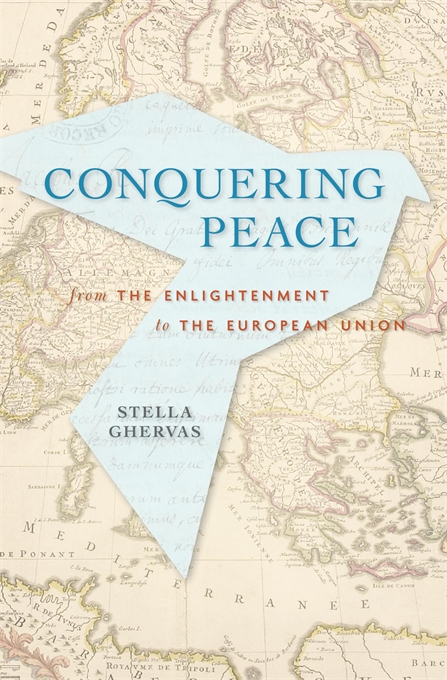
BOOK LAUNCH: Stella GHERVAS, Conquering Peace. From the Enlightenment to the European Union (Harvard UP, 2021)


(image source: twitter)

On Monday 1 June, 17:00, Prof. Stella Ghervas (Newcastle) will present her recent book Conquering Peace. From the Enlightenment to the European Union (Harvard University Press, 2021) and engage in a discussion with Randall Lesaffer (KU Leuven/Tilburg) and Frederik Dhondt (Vrije Universiteit Brussel), moderated by Raphaël Cahen (Vrije Universiteit Brussel).

More information and RSVP here.

Wednesday, 26 May 2021

ZOOM LECTURE: David ARMITAGE on "John Locke, Treaties and the Two Treatises of Government" (VUW Faculty of Law-VUW History Programme, 28 MAY)


(image source: Wikimedia Commons)

Abstract:

From the beginning of his public career almost to the end of his life, John Locke participated in a burgeoning contemporary culture of treaties. His lifetime almost exactly coincided with the emergence of a public culture of treaties in the late seventeenth century, exemplified by the proliferation of treaty collections, treaty prints and even treaty music. His early secretarial career involved him directly in treaty negotiations; his later administrative activities, especially in relation to English colonisation, regularly engaged him with treaty provisions. This paper argues that Locke's fifty-year interest in treaties and treaty-making can help to explain one of the enduring puzzles of his Second Treatise of Government: that is, why he separated the powers of government between the executive, the legislative and what he called, in a near-neologism, the "Federative," or "the Power of War and Peace, Leagues and Alliances, and all the Transactions, with all Persons and Communities without the Commonwealth". It concludes by inferring how Locke would have imagined that power, based on his decades-long knowledge and experience of the federative in practice.

Panel: 

Speaker: Professor David Armitage (Harvard University). Chair: Dr Valerie Wallace (VUW History) Comment: Professor Mark Hickford (VUW Law)

More information here. 

Tuesday, 25 May 2021

CALL FOR ENGAGED LISTENERS: The Individual in International Law. History and Theory (MPIL Heidelberg, Zoom, 17-18 JUN 2021)


(image source: Wikimedia Commons)

Prof. Anne Peters and dr. Tom Sparks convene an online workshop on the individual in itnernational law, with a copious programme.

Abstract:

The interrelationship between international law and the individual has been the subject of a great and growing interest by scholars in recent years. In many or most of international law’s subfields and specialisms, the appropriate relationship between the interests of individuals and those of other actors is the subject of important debates. On the other hand, we are currently witnessing a return to statist principles in the debate and practice of international law, with an emphasis on sovereignty, territory, and boundaries. Human rights and the idea of rights more generally are under attack. The individual’s position in international law, pushed and pulled by these factors, is in flux. However, analyses conducted of the individual’s position remain, in the main, examinations of the positive law. A number of questions thus remain to be answered which go beyond the individual’s treatment by various fields of international law in the present moment, in particular from the perspectives of history and theory.

Participation:

 If you are interested in participating in the workshop as an engaged listener and thus in contributing to our discussions, please sign up via the links below. We particularly welcome the participation of early-career scholars, including pre- and post-graduate students, and from scholars working in institutions in the global south. Note that each link applies to only one day, and that those intending to attend the entirety of the workshop will need to register under both links. For further inquiries, or in case of technical difficulties, please contact Ms. Anette Kreutzfeld, via apeters-office@mpil.de.

 Program and more information here.