ESIL Interest Group History of International Law

ESIL Interest Group History of International Law

Tuesday, 22 January 2019

BOOK: Antonio R. PARRA, The History of ICSID, 2nd ed. (Oxford: Oxford University Press, 2018). ISBN 9780198834083, $38.95


(Source: OUP)

Oxford University Press has recently published the paperback version of “The History of ICSID”

ABOUT THE BOOK

Now available in paperback, the second edition of The History of ICSID details the history and development of the International Centre for Settlement of Investment Disputes (ICSID) and its constituent treaty, the Convention on the Settlement of Investment Disputes between States and Nationals of Other States.

Antonio Parra, the first Deputy Secretary-General of ICSID, traces the immediate origins of the Convention, in the years 1955 to 1962, and gives a stage-by-stage narrative of the drafting of the Convention between 1962 and 1965. He recounts details of bringing the Convention into force in 1966 and the elaboration of the initial versions of the Regulations and Rules of ICSID adopted at the first meetings of its Administrative Council in 1967. The four periods 1968 to 1988, 1989 to 1999, 2000 to 2010, and 2011 to 2015 are covered in separate chapters which examine the expansion of the Centre's activities and changes made to the Regulations and Rules over the years. There are also overviews of the conciliation and arbitration cases submitted to ICSID in the respective periods, followed by discussions of selected cases and key issues within them. A concluding chapter discusses some of the broad themes and findings of the book, examines how ICSID might meet several large new challenges facing it, and outlines several possible further changes of its rules and procedures
The book offers unique insight into the establishment and design of ICSID, as well as into how the institution evolved and its relationship with the World Bank over the 50 years since the establishment of ICSID. It is essential reading for those involved in this field.

ABOUT THE AUTHOR

Antonio R. Parra, Consultant with the Corporate Secretariat of the World Bank

Antonio R. Parra served as the first Deputy Secretary-General of the International Centre for Settlement of Investment Disputes (ICSID) from 1999 to 2005 and was Legal Adviser at ICSID from 1990 to 1999. His earlier positions include Senior Counsel, ICSID; Counsel, Office of the Senior Vice President and General Counsel, World Bank; Counsel, Policy and General Affairs, World Bank; Assistant Legal Counsel, OPEC Fund for International Development; and Research Staffer, OPEC Secretariat. At the World Bank's Legal Vice Presidency and ICSID, Mr Parra worked on the establishment of the Multilateral Investment Guarantee Agency and the preparation of the World Bank Guidelines on the Treatment of Foreign Direct Investment. He is an Honorary Secretary-General of the International Council for Commercial Arbitration (having been Secretary General from 2004 to 2010) and a Fellow of the Chartered Institute of Arbitrators.

TABLE OF CONTENTS

1. Introduction
2. Origins of the Convention
3. Broches's "Working Paper"
4. The Preliminary Draft of the Convention
5. Finalizing the Text of the Convention
6. Establishment and Launch of the Centre
7. ICSID's First Two Decades
8. Aspects of the Early Cases
9. ICSID from 1989 to 1999
10. ICSID from 2000 to 2010
11. "The Premier International Arbitration Facility in the World"
12. Conclusion

More information here
(source: ESCLH Blog)

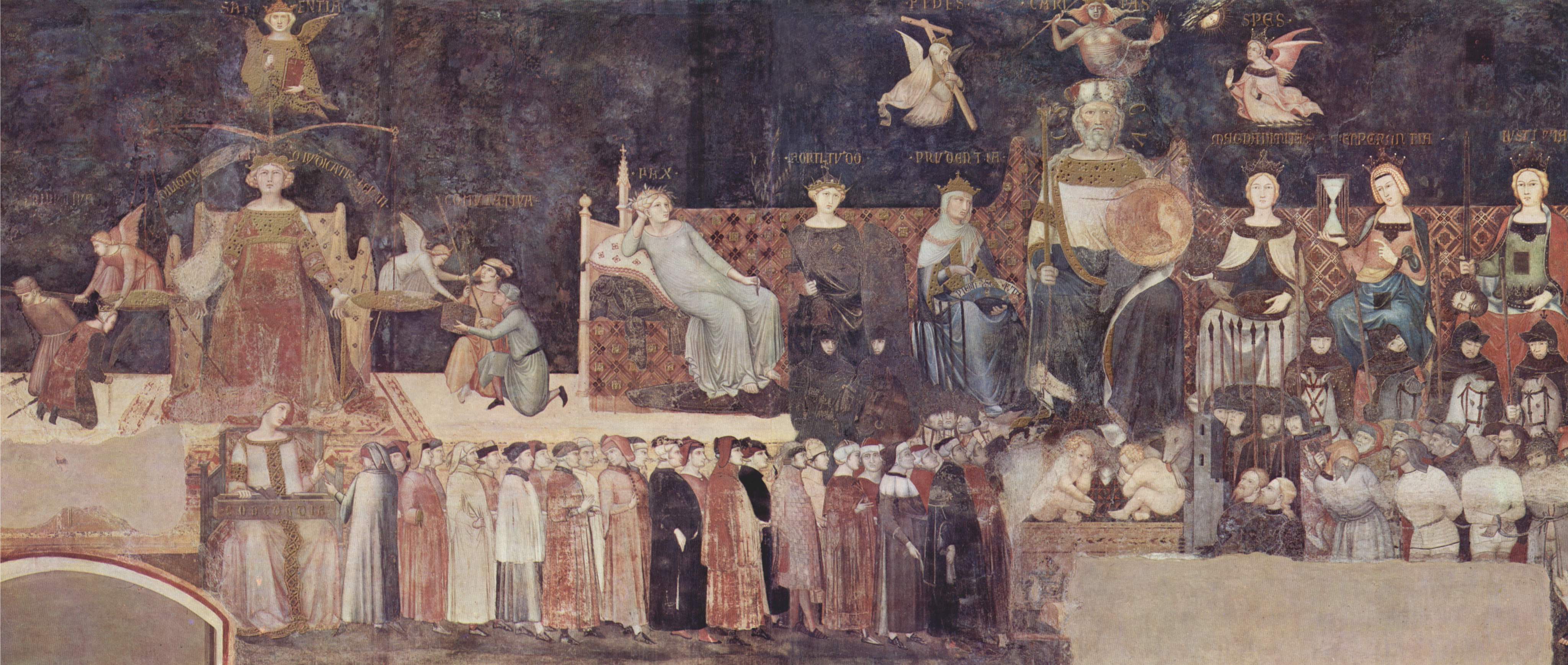
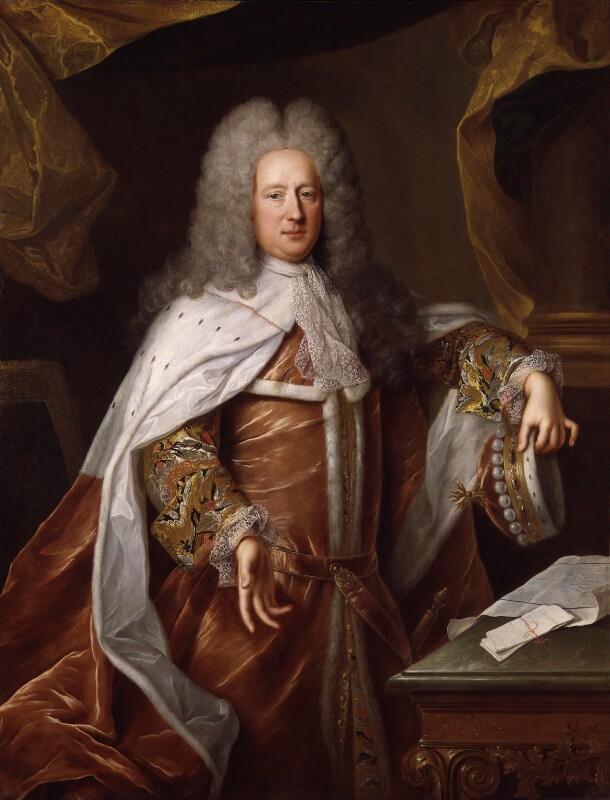
CONFERENCE VIDEOS: "État, pouvoirs et contestations politiques dans les colonies françaises et britanniques d’Amérique (vers 1640-vers 1780)" (Le Mans: Association des historiens modernistes des universités françaises, 9 NOV 2018)

(image source: Wikimedia Commons)

Programme (with video links):
Jean-Marie Constant, Université du Mans : « Nouvelles perspectives de recherches et d’interprétations concernant la Fronde ».Gauthier Aubert, Université de Rennes : « Les révoltes du Papier timbré et des Bonnets Rouges (1675) »Stéphane Haffemayer, Université de Rouen : « La révolution anglaise des années 1640 et les mutations de la communication politique ».Stéphane Jettot, Sorbonne Université : « Algernon Sidney et Lord Bolingbroke : deux figures emblématiques du renouveau de l’histoire politique britannique (1640-1780) ».Edmond Dziembowski, Université de Besançon : « Du Country Party au radicalisme (vers 1670-vers 1780): anatomie de la contestation politique en Grande-Bretagne. »Paul Vo-Ha, Université Paris I : « Les soldats protestants dans l’armée royale à l’heure de la Révocation ».Pierre Serna, Université Paris I : « Ni Etats, ni pouvoirs : une Révolution de 140 ans ».
(Source: AHMUF)

Monday, 21 January 2019

REVIEW ARTICLE: Jeremy BLACK, "The First World War Reconsidered" (European History Quarterly XLIX (2019), No. 1 (Jan))

(image source: Sage)

Prof. Jeremy Black (Exeter), a prolific scholar of IR history, has published a review article on the First World War in the journal European History Quarerly (Sage). The article reviews five books:

  • Bruno Cabanes, August 1914 (Yale UP, 2016)
  • Tim Gale, The French Army's Tank Force (Ashgate, 2013)
  • William Mulligan, The Great War of Peace (Yale UP, 2014)
  • Thomas Otte, July Crisis (CUP, 2014)
  • Thomas Otte, An Historian in Peace and War (Ashgate, 2014)

Read more here.

Friday, 18 January 2019

ESIL IGHIL Pre-Conference Workshop: The Rule of Law in Historical Perspective, ESIL Research Forum Göttingen, 3 APR 2019


Denise Wohlwend (University of Firbourg (CH)), The Rule of Law in the Debates of the Sixth Committee of the United Nations General Assembly – Reflections on the Evolution and Universality of the Concept
Abstract:

The rule of law provides that people should be ruled by the law. Despite its prominence in today’s legal and political discourse on a global scale, the exact content of the rule of law remains contested. Legal scholars commonly distinguish between formal and substantive conceptions of the rule of law, which are often associated with positivistic and naturalistic accounts of law, respectively. Within the United Nations (UN), an “autonomous notion” of the rule of law has been emerging since the 2000s. Importantly, in 2005 the UN member states recognized the rule of law as one of the organization’s “core values and principles”, as well as “the need for universal adherence to and implementation of the rule of law at both the national and international levels”. In 2006, the UN General Assembly decided by resolution A/RES/61/39 to include in the provisional agenda of its sixty-second session the item “The rule of law at the national and international levels”. Since then, it has debated the topic, selecting different subtopics, through its Sixth Committee. This has resulted in the adoption of annual resolutions reaffirming the UN member states’ commitment to the rule of law at the national and international levels. Despite multiple references to the rule of law contained in UN documents, it is not entirely clear what the rule of law at both the national and international levels amounts to within the UN. The UN member states disagree about its exact content. True, frequent reference has been made to the definition of the rule of law put forward by the UN Secretary-General in his 2004 Report “The Rule of Law and Transitional Justice in Conflict and Post-Conflict Societies”. Moreover, it has been held that over the years, the member states of the UN have settled on this conception of the rule of law. However, so far, a comprehensive analysis of the debates about the rule of law at the national and international levels within the Sixth Committee is missing. In this paper, I aim to fill this gap. I intend to analyze the discussions about the rule of law at the national and international levels conducted by the representatives of UN member states within the Sixth Committee, from 2006 until today. I examine (1) whether the expressed views reflect the conventional distinction between formal and substantive conceptions of the rule of law, and (2) whether a single or common conception of the rule of law may be deemed to have emerged. I shall then use the findings of the analysis as a starting point for a more general reflection on the issue of the universality of the concept of the rule of law. In short, the rule of law can be deemed universal as long as there are common elements that make it the same concept, in spite of differences in its parochial interpretation. Conversely, if there are no such elements, the universal character of the rule of law may be questioned. Of course, a consideration of the universality of the rule of law concept requires a clarification of the (possible) meaning(s) of universality. Moreover, in the paper, I shall also deal with the question of whether, and if so how, the issue of the universality of the concept of the rule of law is connected to positivistic and naturalistic approaches to the concept of law.
Premislaw Tacik (Jagellionian University, Krakow),
The Evolution of the Rule of Law in the Framework of the European Convention on Human Rights
Abstract:

The presentation aims to reconstruct the outline of history of how the concept of the rule of law was understood and applied in the regime of the European Convention on Human Rights, particularly in regard to ECtHR’s and EComHR’s jurisprudence. Even though the maintenance of the rule of law is one of the goals of the Council of Europe and part of the ECHR’s preamble, historically it was not understood as a source of directly enforceable rights. As stated by the ECtHR in an early judgement in Golder v. the UK, it was, however, a point of reference in interpretation of particular rights and freedoms enshrined in the Convention, particularly when their limitations were at stake. Through this linkage, the ECtHR made some cautious steps to make the rule of law a living and effective concept. It influenced the establishment of standards concerning the quality of laws limiting rights and freedoms (as in Tourancheau et July v. France case) and shaped the understanding of the position of the judiciary under the ECHR. In the latter regard, the ECtHR for a long time displayed a restrained approach and gave a significant leeway to the states in regulating the status and nomination of judges. Nonetheless, in the recent years a different trend might be observed. It seems that the ECtHR developed the standards of the rule of law in the response to the illiberal backlash. The Baka v. Hungary case might be interpreted as a milestone in this regard: the ECtHR declared the violation of Art. 6 § 1 ECHR consisting in terminating the status of a judge via targeted legislation, by which Hungarian authorities wanted to prevent the president of the Hungarian Supreme Court to continue his term. In this ruling, the concept of the rule of law links the standards of the independence of the judiciary – now influenced by soft law of the CoE – with requirements of proper legislation. Moreover, by breathing a new life into Article 18 in the Merabishvili v. Georgia case the ECtHR seems to notice that the rule of law must be defended by preventing the states from executing their illegitimate goals in restricting rights and freedoms. All in all, it might be argued that the approach to the rule of law under the ECHR is in dynamic transformation: the Court seems to pass from restrained interpretation to active support of the rule of law in confrontation with the rise of illiberalism.

Alan Nissel, Capitalism and the Evolution of State Responsibility: How US Law became Binding upon New States and, Ultimately, Everyone Else
Abstract:
Since the late nineteenth century, Anglo-American lawyers have employed domestic standards of property protection to hold Latin American governments responsibility for injuries suffered by Western aliens. Barely hidden behind this rule of law mask was a capitalist structure of economic expectations that favored Western over local individuals. The doctrine of state responsibility emerged, historians explain, as a mechanism for fostering the peaceful resolution of international claims. The idea was that arguing over legal norms – by professional lawyers in third party courts and tribunals – was certainly preferable to diplomatic and military alternatives. There is data to point to that indicates a happy correlation: the establishment of state responsibility has coincided with the rise of international arbitration and the demise of force interventions. This result has convinced many that international law, despite its lack of any police force, can finally be described as positive law. Because there are legal consequences for international breaches, international law must be binding. Today, state responsibility is the sacred cow of international lawyers, assuring us of the reality of their cause. However, the doctrine of state responsibility is not just a legal norm of peaceful dispute resolution; neither is it is simply a neutral procedure of international arbitration. It is a framework of capitalist values that was imposed by Anglo-American diplomats to provide better than local protection to their nationals residing in Latin America. The evolution of state responsibility is a story of Anglo-American triumph in the international debates over the international minimum standard of care and about the normative basis for recognizing States, of admitting nations to international organizations and of identifying them as international personalities. The historic success of State responsibility is, thus, not just a rule of law narrative; it is continued evidence of how Western imperial values underpins the primary enforcement regime of international law: State responsibility.

Ryan Mitchell (Chinese University of Hong Kong), International Rule of Law and the Problem of Legal Sanction: War and the Zwangsordnung
Abstract:
The project of using international law to prohibit wars of aggression grew steadily in importance from the Hague Conference era through World War One, culminating with the Kellogg-Briand Pact of 1928. While there has been much recent discussion of the Pact, and debates about its role in originating the crime of aggression (most recently consolidated via the Kampala Amendments to the Rome Statute), there has been less detailed examination of the specific contemporary debates as to the legal validity of the Pact's norm seeking to prohibit aggression. The views of prominent legal scholars of the time can be distinguished into three main contending positions, each of which then had significant influences upon the subsequent theory and practice of public international law. These three perspectives can be summarized as positing either that 1) the Pact independently abolished the validity of all wars per the principle pacta sunt servanda or as an element of customary international law (the view of Quincy Wright, Hersch Lauterpacht, and others); 2) the Pact had no meaningful legal effect due to its broad exceptions and reservations, as well as the fundamental impossibility of restricting states’ traditional rights to wage war (Carl Schmitt's view); or 3) the existing jus ad bellum could not in fact be revised by the Pact per se, but only by an international organization exercising an effective monopoly on the legitimate use of force (Kelsen's view). This paper explains the evidence, methodology, and theoretical implications of each of these perspectives, including the context of the scholars and states who were their respective advocates. It concludes by endorsing the third view, exemplified by Hans Kelsen in his critical analysis of legal prohibitions of war, arguing that the mere disavowal by states of their rights to wage war (as reflected in the Pact) does not equate to a legal prohibition of war under international law unless there is a centralized sanctioning authority enforcing that prohibition, as was introduced under the UN Charter in 1945. This view, while conservative in some ways, also provides the foundation for Kelsen's related claim that international law as a "Zwangsordnung," or sanction-based order, is potentially as robust and enforceable a system of legal norms as is any domestic legal system.

Andre Nunes Chaib (MPI Luxemburg), The Various Sides of a Coin: Ideas of Rule of Law in the Ideology of International Adjudication
Abstract:

International courts have been both the object of praise and criticism throughout their existence. It is also well-known that their creation, as well as the use of international arbitration, was also always replenished with controversies. Nevertheless, despite controversies, international courts and international arbitration made their way into the life of states and individuals during the last century and had come to be accepted as important institutions in international life. Much of the backlash and the critique on international adjudication nowadays come from a tension existing between the various ideologies pervading the imaginary that informs the work of international courts. This tension finds its origin in the historical debates at the turn of the 19th to the 20th century involving international lawyers and diplomats, mainly from Europe and the United States about the concept of the rule of law at the international law and what role should arbitration or permanent international courts should have in enforcing it. In light of these debates, this paper will look into the ideologies that informed these debates and how this tension – resulting in utopic positions but also in stark criticisms – created the legal and political imaginary for international adjudication until today. Much has been written and said about the role of US international lawyers, such as Elihu Root, in pushing forward the movement towards the creation of permanent international adjudicatory mechanisms and the resistance some of them faced by European international lawyers, fearful of what courts at the international level might do to their then still strong empires’ sovereignty. Although these two sides are revealing of a particular ideal of the international rule of law, it does not tell the whole story. Therefore, this paper hopes to shed light to other ideas coming from other parts of the world, which particularly during the Second Hague Conference in 1907, influenced and impacted the ideology of international adjudication and the ideal of international rule of law that was formed at that time and that remains pervasive to these days. Individuals, such as the Brazilian Ruy Barbosa, were known to have been staunch defenders of sovereign equality and offered specific ideas about the nature and function of a potential international court. This paper hopes to clarify these different positions that were put forward at that time by not only US or European lawyers, but also by individuals of the Global South. In doing so, it hopes to show how specific ideas regarding the international, advanced by cosmopolitan thinkers such as Jeremy Bentham and Immanuel Kant, but also lawyers such as Andres Bello and Carlos Calvo were decisive in the formation of the ideology of modern international adjudication. Such an inquiry should also reveal the origins of the tensions existing nowadays regarding international adjudication and aid in the understanding of its criticism.
The conveners of the Steering Committee for the ESIL Interest Group History of International Law:
Jan Lemnitzer (Southern Denmark)
Markus Beham (Passau)
Martin Clark (LSE)
Frederik Dhondt (Brussels/Antwerp)
Hossein Piran (US/Iran Claims Tribunal)

Thursday, 17 January 2019

DEADLINE EXTENDED: Identity, Citizenship and Legal History. XXVth Annual Forum of Young Legal Historians (Brussels, 5-8 JUN 2019); DEADLINE 15 FEB 2019

Identity, Citizenship and Legal History

XXVth Annual Forum of Young Legal Historians
Brussels, 5 – 8 June 2019

(image source: Wikimedia Commons)

Historically, the concept of citizenship encompassed three distinct, yet interconnected dimensions. The first and foremost dimension was of a legal nature: citizenship was a legal status which allowed one to act freely in accordance with the law and, when necessary, to claim its protection. In its second dimension citizenship presupposed one’s active participation in society’s political institutions. And last, though certainly not least, citizenship was closely linked to membership of a specific community that provided a distinct source of identity. All three dimensions were closely related to each other. This can perhaps be most aptly exemplified in the ancient boast of ‘Civis romanus sum!’, which encapsulated simultaneously a plea for legal rights, a republican sense of duty, and a distinctly Roman feeling of the imperial pride. Since the nineteenth century, these dimensions have been linked predominantly to the modern nation-state, a model which is nowadays increasingly challenged on the internal as well as the external level. Internally, many states are seen to be struggling with federalism, separatist movements, legacies of colonialism and right-wing identity politics. Externally, today’s governments are confronted with issues, such as climate change, demographic shifts, migration streams and a global and interdependent economic system, that require international cooperation or even supranational institutions.

The XXVth Annual Forum of the Young Legal Historians aims to shed light on these questions by looking at the legal history of the closely intertwined concepts of citizenship and legal history. Throughout history, citizenship and identity has been defined in different ways and at different levels. For instance, in antiquity the often smallish Greek poleis could hardly be compared to the expansive Roman Empire. Medieval life in Europe consisted of a feudal patchwork of kingdoms, principalities and free city-states, yet all were considered part of Christendom. Identity could also be determined by social class (e.g. aristocratic families) or by profession (e.g. the guilds). The nineteenth century saw the rise of nationalism and revolution, whilst at the same time European powers expanded their colonial empires. Despite these evolutions, it cannot be denied that there is also much continuity to be found. Although diversity and globalisation have reached an unprecedented scale and form today, these phenomena are not entirely new. Each era has had its international relations, its trades, wars, economic discrepancies, migrants and refugees.

There is, in short, enough reason to expect that we can learn from history. Such an endeavour necessitates a multidisciplinary approach since legal constructions can be fully appreciated only when combined with insights from the related fields of history, philosophy, political science and sociology. Therefore, the organizers welcome both traditional approaches in legal history and methodologically innovative research.


If you would like to present a paper during the conference, please send an application including an abstract of not more than 250 words and your CV to aylh2019@gmail.com before 15 February 2019. It is also possible to apply for a full panel. In that case, your proposal should also include, in addition to individual paper proposals, an abstract introducing the theme of the panel. Presentations have to be in English and should not exceed 20 minutes each. The conference fee will be € 100,- and does not include accommodation. Further information about the upcoming forum can be found at the website of the conference. Information about the Association of Young Legal Historians and the past Annual Forums is available at the AYLH-website.

CALL FOR PAPERS: The Crimean War, the first european modern war? (Paris, 7-9 NOV 2019); DEADLINE 30 JAN 2019

(image source: Wikimedia Commons)

Summary:
The Crimean War marked, with the Civil War (1861-1865), a great historical and anthropological turning point in military history, witnessing profound transformations not only in the way of fighting, but also in the relations between societies and war, during and after the conflict. This conference will aim in putting the Crimean War in this new historiographical approach to military conflicts by highlighting three fundamental aspects: The anthropological approach, the transnational dimension, the sociocultural dimension of the conflict, and its memory.

Announcement:
This International conferenc is organized by the 19th century history center, the LabEx EHNE and the Slavs history research center (UMR SIRICE) and will be held at Paris-Sorbonne from 7 to 9 November 2019.
ArgumentSo far, the Crimean War has been rather neglected in French military history. It has only been the subject of a synthesis, quite traditional in its views, and was associated with the Second Empire whose trace, according to the historiography of the Third Republic, was to be erased. The strongest and most recent study was written by Alain Gouttman. However, although this work is very scientific and objective, it remains deeply marked by a tropism for the history of the battle. This situation is all the more regrettable as today the Crimean War is being rewritten in other countries, particularly in Britain, in the context of a revised history of conflicts, increasingly studied in a multidisciplinary approach.Indeed, the Crimean War marked, with the Civil War (1861-1865), a great historical and anthropological turning point in military history, witnessing profound transformations not only in the way of fighting, but also in the relations between societies and war, during and after the conflict.This conference will aim in putting the Crimean War in this new historiographical approach to  military conflicts by highlighting three fundamental aspects:1) The anthropological approach to modern warfare as a key to understand struggles, strategies, experiences and feelings of combatants and the relationship between war and societies.2) The transnational dimension, introducing a comparison of the conflict history. The confrontation of cross-sources  will make it possible to leave the compartmentalization imposed by purely  national approaches. Above all, the Crimean War should not be seen from the West and has to be  evaluated, regarding  its perception and its repercussions,  in the Russian world as well as in the Ottoman one.3) The sociocultural dimension of the conflict, and its memory. The Crimean War influences the society also because of medical, economical and symbolical involvement of State, army and citizens.Having in mind this  methodological approach,  the conference will be structured along four major topics:I) Diplomacy and warHere, it will be about the origins of the war, belligerents’ motivations and consequences of the conflict on diplomacy. The Crimean War will be replaced in a double context that is the one of the so-called “concert of nations” and the other around the Eastern Question. If the religious origins of the conflict may have been overestimated, on the contrary, economic reasons and the control of the Straits, (generally underestimated) could be replaced in the core of European diplomacy issues.II) Experiencing the warThe Crimean War marks important upheavals in the soldiers’ experience of fights. New weapons and techniques (striped cannon rifle, explosive shells..) and military strategy evolutions (appearing of trench war) increase risks, corporal infringements and lethality. New injuries appear, while the cholera decimates troops. This new context gives birth to new medical structures and initiatives (as shown by role of Florence Nightingale, Valérie de Gasparin and Elena Pavlovna). People were also mobilizing at the back, as demonstrated by the numerous subscriptions raised for helping the families of dead and injured soldiers in France and England or by Anatole Demidov’action in favor of war prisoners in Europe.III) Economy, society and public opinionThe Crimean War impact exceeds very far away the frame of the military operations. A  War economy develops thanks to loans and the rise of war contractors. In the Ottoman case, the military involvement gives birth to the creation of the Ottoman Imperial Bank and then to the the tutelage of European powers on the overindebted Sublime Porte. Societies also live at the rhythm of the war. A real « sacred union » appeared in all the States, well powered by governments who try to mobilize their public opinion against the enemy. Indeed, public opinion is playing an increasing role, reinforced by telegraph and photography.IV) Pictures, representations and memoryNew Perceptions and representations of war emerge and it is  useful to refer to cultural  and art history and well as to history of collective and social imaginaries. During and after the war, although the heroical officer cult (Saint-Arnaud in France, Gorchakov in Russia) is maintained, ordinary troop soldiers are honored,  as demonstrated by numerous monuments dedicated to them. Last the Crimean War has also a very strong memorial dimension, as expressed by toponymy and its place in historical references of nowadays different political leaders.Submission guidelinesA paper proposal with a title, a short summary (2000 signs), and a curriculum vitae must be sent to this address : francfigeac@yahoo.frbefore January 30, 2019Languages of the conference : French, EnglishImportant Datesa) Submission of paper proposals: 30 January 2019.b) Responses : February-march 2019.c) Notification of the final programme : 15 May 2019.d) Conference: 7-9 November 2019.Organization committee
  • Marie-Pierre Rey (Université Panthéon-Sorbonne, SIRICE)
  • Éric Anceau (Sorbonne Université, LabEx EHNE)
  • Jean-François Figeac (Sorbonne Université, Centre d’histoire du XIXème siècle)
Scientifiv committee
  • Éric Anceau (Sorbonne Université, LabEx EHNE),
  • Jacques-Olivier Boudon (Sorbonne Université, Centre d’histoire du XIXème siècle),
  • Yves Bruley (Ecole pratique des hautes études),
  • Walter Bruyère-Ostells (IEP d’Aix-en-Provence),
  • Lorraine de Meaux (Université Panthéon-Sorbonne),
  • Hervé Drévillon (Université Panthéon-Sorbonne, directeur de la recherche historique au SHD),
  • Anne-Laure Dupont (Sorbonne Université, Centre d’histoire du XIXème siècle),
  • Edhem Eldem (Collège de France, chaire d’histoire turque et ottomane),
  • Jean-François Figeac (Sorbonne Université, Centre d’histoire du XIXème siècle),
  • Orlando Figes (Birkbeck College de Londres),
  • Hubert Heyriès (Université Paul Valéry/ Montpellier III),
  • Catherine Horel (Université Panthéon-Sorbonne, SIRICE),
  • Dominique Kalifa (Université Panthéon-Sorbonne, Centre d’histoire du XIXèmesiècle),
  • Jean-Noël Luc (Sorbonne Université, Centre d’histoire du XIXème siècle),
  • Silvia Marton (Université de Bucarest),
  • Nicolae Mihai (Université de Craiova),
  • Catherine Mayeur-Jaouen (Sorbonne Université, Centre d’histoire du XIXème siècle),
  • Marie-Pierre Rey (Université Panthéon-Sorbonne, SIRICE),
  • Odile Roynette (Université Bourgogne Franche-Comté),
  • Özgür Türesay (Université de Galatasaray).
Research centers
  • Centre d’histoire du XIXème siècle, LabEx EHNE
  • Centre de recherches en histoire des Slaves (UMR SIRICE)
Partners
  • Fondation Napoléon, Service historique de la Défense
(source: Calenda)

Wednesday, 16 January 2019

SSRN PAPER: Oona HATHAWAY & Scott SHAPIRO, "International Law and Its Transformation Through the Outlawry of War", forthcoming in International Affairs

(image source: Wikimedia Commons)

Abstract:
The First World War was the last great war of what we have called the “old world order” — the legal regime that European states adopted in the seventeenth century and spent the next three centuries imposing on the rest of the globe. This order formed the basis of what scholars call “classical international law.” But this body of rules differed starkly from the ones that governs today: The old world order did not just sanction war, it relied on and rewarded it. States were permitted to wage war to right any legal wrong, and the right of the victors to extract territory and treasure from the losers was legally guaranteed. That all began to change when the nations of the world decided to outlaw war in the 1928 Kellogg-Briand treaty. As a result, the rules governing international behaviour have transformed radically — indeed, they are the polar opposite of what they once were. This article describes the decision to outlaw war and the transformation it unleashed in the world order generally, and in international law specifically. We argue that a simple but perplexing fact—that modern international law prohibits states from using force to enforce international law — is key to understanding international law and state behavior in the modern era.
Download the fulltext here.

(source: Legal History Blog)