ESIL Interest Group History of International Law

ESIL Interest Group History of International Law

Saturday, 7 October 2017

ARTICLE: Oona A. HATHAWAY, William HOLSTE, Scott J. SHAPIRO, Jacqueline VAN DE VELDE & Lisa LACHOWICZ, War Manifestos (U Chicago Law Review)


International Law Reporter references the following article:

This Article is the first to examine “war manifestos,” documents that set out the legal reasons sovereigns provided for going to war from the late-fifteenth through the mid-twentieth centuries. We have assembled the world’s largest collection of war manifestos — over 350 — in languages as diverse as Classical Chinese, German, French, Latin, Serbo-Croatian and Dutch. Prior Anglophone scholarship has almost entirely missed war manifestos. This gap in the literature has produced a correspondingly large gap in our understanding of the role of war during the period in which manifestos were commonly used. Examining these previously ignored manifestos reveals that states exercised the right to wage war in ways that would be inconceivable today. In short, the right to intervene militarily could be asserted in any situation where a legal right had been violated and all peaceful channels had been explored and exhausted. The Article begins by describing war manifestos. It then explores their history and evolution over the course of five centuries, explains the purposes they served for sovereigns, shows the many “just causes” they cited for war, and, finally, considers the lessons they hold for modern legal dilemmas. The discovery of war manifestos as a set of legal documents offers lawyers and legal scholars something rare: a new window into the international legal universe of the past. That is not only valuable in itself, but it also casts entirely new light on several long-standing legal debates.

More information on SSRN.

DISCOUNT: 25% off Hague Academy publications at Brill

Brill offers a reduction of up to 25% on several titles in the publications of the Hague Academy of International Law Series. The rebate expires on 15 December 2017.

More information with the publisher here.

Tuesday, 3 October 2017

E-LECTURE SERIES and Bibliography: I-HILT (Tilburg University)

(image source: tilburguniversity.edu)

Dra. Ana Delic spread the following message from the Institute for the History of International Law at Tilburg University:

The Institute for the History of International Law@Tilburg (I-HILT)  is organizing a series of lectures on international legal history and you are cordially invited! We kick off the program with Prof. Randall Lesaffer presenting 'Aggression before Versailles' on 25 October 3-4 pm (M 020). See the exciting list of speakers in the 2017-2018 program attached.  Are you unable to attend? The lectures will subsequently be available for streaming on the I-HILT webpage under the E-LECTURES tab: https://www.tilburguniversity.edu/research/institutes-and-research-groups/i-hilt/electures/ Also, I-HILT's bibliography of crucial primary and secondary sources of international legal history has just been updated. The bibliography is available in pdf and endnote (with a useful search option):https://www.tilburguniversity.edu/research/institutes-and-research-groups/i-hilt/i-hilt-bibliography/

The attachment in question can be consulted here.

CALL FOR PAPERS: Hegemony in the International Order (Rome, 11-12 Jun 2018); DEADLINE 31 Mar 2018

“Hegemony in the International Order”
June 11-12, 2018
University of Rome Tor Vergata, Rome
Co-Sponsored by the Transnational Theory Network (TLPT-Network), the Italian Society of Political Philosophy (SIFP) and the European Society of International Law (ESIL)
(image source: Wikimedia Commons)

Post WWII international law and politics has promised a more just and free world. Liberal values of equality, human rights and freedom have shaped international relations, infusing also the ‘ethical turn’ of international law with the human rights revolution and the formalization of jus cogens peremptory norms. Regional orders like the EU have grown both in terms of centralized competences and in the possibility of allowing higher circulation of goods and people. The international political system as a whole has seen one of its greatest times of rights consolidation and economic fluxes which have certainly favored wide cultural contaminations.

Yet, more recent developments of international politics show some of the drawbacks of such epochal shift, raising demands of democratic governance, individual interests representation etc. Lack of political participation at the transnational level, the North-South and the East-West divides, migratory flows altogether signal a disconnection and a persistent friction between economic, legal and political sectors. What takes the appearance of a wide share of goods and benefits brought about by globalization turns into unequal forms of redistributory patterns, unmasking the reality of power-control and dominance of single actors, either in the form of a super-state or a multinational corporation.

Hegemonic entities seems therefore to have taken advantage of those spaces of economic and legal freedom that progressive liberalism has opened up and used them to the advantage of limited beneficiaries, exploiting the opportunities created therewith.

The workshop wants to investigate the contemporary significance of hegemony in the international realm. More specifically its aim is to assess whether and to what extent neo-Gramscian, neo-hegemonic or, alternatively, post-hegemonic forms of power help understanding law and politics in regional and global contexts.

Since hegemony requires support and complicity also by subordinated groups, how does this concept differ from the notion of imperialism and that of unilateralism? What forms of ideological solidarities as well as material and military alliances are necessary for hegemonic effectiveness?
Furthermore, are there hegemonic phases that have accompanied the so-called “human rights revolution” since the aftermath of WWII? In what ways, eventually, it is possible to trace a counter-history to the mantra of a global constitutional progression and peace?
Papers in philosophy, law or politics addressing any of the issues above or suggesting relevant insights into the topic. In order to allow time for adequate presentation and discussion only a limited number of people will be selected (approx.10).

Abstract Submission

Abstracts between 700-1000 or more should be submitted by 31 March 2018 to Claudio.Corradetti@uniroma2.it

(source: International Law Reporter)

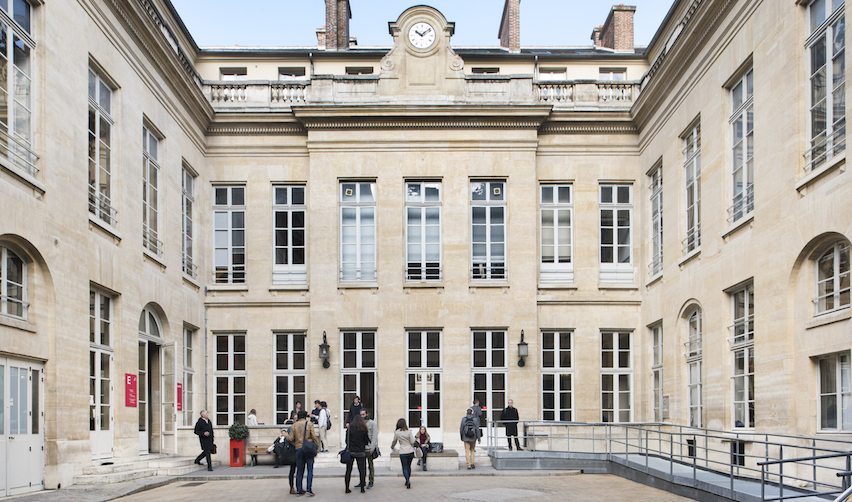
CALL FOR PAPERS: Young Scholars Conference: 'Historical Capitalism and International Law' (Paris, Sciences Po Law School, 18-19 Jan 2018); DEADLINE 15 OCT 2017

(image source: Sciences Po)

« HISTORICAL CAPITALISM AND INTERNATIONAL LAW »
CALL FOR CONTRIBUTIONS TO YOUNG SCHOLARS’ CONFERENCE
Sciences Po Law School, Paris, 18 and 19 January 2018

From the refugee crisis to climate change, from international terrorism to the ascent of extreme right governments, from increasing inequalities to new identity-based conflicts: the promises of liberal economic globalisation seem to be under attack all over. As a result, reflections on the relations between economy and society are increasingly present in the public debate, notably from the perspective of a more radical critique of the very basis of the capitalist system. This renewed interest is echoed for example in (yet another) return to Karl Marx’s writings, particularly in the German, French and Anglo-American press, in response to the now famous critiques of economic inequalities in liberal-democratic and market-driven societies, such as those raised by Thomas Piketty.
In the academic debate, although an increasing number of international lawyers have recently made historical interventions in their discipline in search of new possible futures, from a legal perspective in-depth analyses of the origins and functioning of the capitalist system remain limited. On the contrary, many historians have been focusing on the subject of capitalism and have developed analytical tools to critically analyse it, without however giving full importance to the constitutive role of law in the functioning of the capitalist system. 
The young scholars’ conference which will take place on 18 and 19 of January 2018 at Sciences Po Law School, Paris, as part of CIERA’s programme colloques juniors will explore the topic “Historical Capitalism and International Law” and try to fill some of these gaps. We borrow the notion of historical capitalism from Immanuel Wallerstein (Le Capitalisme historique, La Découverte, 2011) who points towards an analysis of the capitalist system as a specific historical process based on the principle of the continuous accumulation of capital. Originally historical, this definition underlines the particularities of capitalism as a social construction embedding several economic, social, political and cultural dimensions, all of which can be further articulated through analysing the legal dimension. Hence, this kind of analysis allows the elaboration of interdisciplinary perspectives, which depart from the material reality of capitalism to analyse its origins, functioning, current challenges and the prospect of its potential future developments. This conference will focus on the nature and evolution of economic and social institutions, their role in the exchanges and movement of peoples, ideas and commodities, as well as the way through which encounters, confrontations and interactions have shaped them in turn.

An interest in this particular dialogue lies principally in the perception of law as a social product which enjoys a relative autonomy in relation to other economic, social and cultural disciplines. Since law itself produces its own concrete realities and at the same time is an instrument around which various social actors struggle, it should not be analysed in complete isolation from other social processes. The interplay of voices coming from different disciplines is therefore central to grasping the specificity of law in the production of historical capitalism; particularly if one wants to avoid falling into analytical traps, such as the tendency to reduce law to a superstructure or on the other hand the reduction of histories and analysis of law to elements separated from the functioning of society. The conference will hence gather lawyers and historians, as well as social science scholars, appealing to the diverse and complementary approaches of each discipline in order to understand the forms of organisation which capitalism has taken in different times, in different places and at different scales. Each session will involve discussions between lawyers and historians working on related topics.
Contributions to the conference should explore one of the three following subject areas: 1) international law and the histories of capitalist expansion; 2) the history of international law and political conflicts in capitalism; 3) histories of international law and narratives of capitalist modernity. The publication of a special issue of the Journal of History of International Law is also being considered and would incorporate certain contributions from the conference.

Abstracts from 300 to 500 words shall be submitted indicating the subject area of the proposed contribution, along with a CV by 15 October 2017 to capitalismehistorique.di@gmail.com. Successful applicants will be notified by 5 November 2017 at the latest. English will be the main working language during the conference.
We encourage applications from the members of the HeiParisMax network, of the Collège doctoral franco-allemand en droit public comparé européen and of scholars affiliated to history centres connected to CIERA. There will be an equal number of contributions from both men and women, participants from French and German institutions, and those proposing historical or legal approaches. Applications from other areas of the world are also accepted and encouraged. A portion of the travel and accommodation expenses of selected participants will be covered by the conference.

Scientific Committee:
Lisa Herzog (Institut für Sozialforschung der Johann Wolfgang Goethe-Universitat)
Claire Lemercier (Centre de Sociologie des Organisations de Sciences Po)
Anne Peters (Max-Planck-Institut für ausländisches öffentliches Recht und Völkerrecht)
Emmanuelle Tourme-Jouannet (Ecole de droit de Sciences Po)

Organisational Committee:
Filipe Antunes Madeira da Silva (Ecole de droit de Sciences Po)
Robin Caballero (Humboldt Universität zu Berlin/ Université Paris 1 Panthéon-Sorbonne)
Alberto Rinaldi (Ecole de droit de Sciences Po)
Milan Tahraoui (Université Paris 1 Panthéon-Sorbonne/ Max Planck Institut für ausländisches Recht und Völkerrecht)
Leonie Johanna Vierck (Max-Planck-Institut für ausländisches öffentliches Recht und Völkerrecht)


With the Support of:
Centre interdisciplinaire d’études et de recherches sur l’Allemagne (CIERA)
Collège doctoral franco-allemand en droit public comparé européen
Ecole doctorale de Sciences Po
Ecole de droit de Sciences Po
Max-Planck-Institut für ausländisches öffentliches Recht und Völkerrecht
HeiParisMax – Partenariat académique franco-allemand

CALL FOR PAPERS: The Paris Peace Conference and the Challenge of a New World Order (Paris, June 2019); DEADLINE 1 JUNE 2018

                                              (Source: H-Net)

A call for papers has been announced at H-Announce for a conference on "The Paris Peace Conference and the Challenge of a New World Order", to be held in Paris in June 2019.

Type: 
Call for Papers

Date: 
September 26, 2017 to June 1, 2018

Location: 
France

Subject Fields: 
Colonial and Post-Colonial History / Studies, Diplomacy and International Relations, Nationalism History / Studies, Women's & Gender History / Studies, World History / Studies

The Peace Conference held in Paris in the aftermath of the Great War remains among the most important yet also most controversial events in modern history. Although it is often considered to have made a second global war all but inevitable, it has also been praised for providing the basis for an enduring peace that was squandered recklessly by poor international leadership during the 1930s.
A major international conference will take place in Paris in June 2019 to commemorate the centenary of the 1919 Conference from a global perspective. The purpose of this event is to re-examine the history of the Peace Conference through a thematic focus on the different approaches to order in world politics in the aftermath of the First World War. A remarkably wide range of actors in Paris - from political leaders, soldiers and diplomats to colonial nationalist envoys and trade unionists, economists, women's associations and ordinary citizens - produced a wide array of proposals for a future international and, indeed, global order. These proposals were often based on vastly different understandings of world politics. They went beyond the articulation of specific national security interests to make claims about the construction and maintenance of peace and the need for new norms and new institutions to achieve this aim. To what extent the treaties and their subsequent implementation represented a coherent world order remains a question of debate. 

By 'order', we mean in the first instance, the articulation and development of systematic ideas, institutions and practices aimed at promoting a durable peace that would deliver security, economic recovery and social justice. This distinguishes thinking about 'order' from discussions of 'national interests' - though there was of course overlap between these two modes of thinking about future international relations. Second, we are interested in 'order' as an analytical concept in its own right. This encourages historians to identify, as Paul Schroeder has argued, the shared rules, assumptions and understandings about a particular set of political relations and to show how specific decisions reflect the norms of the order.

Emphasising the preoccupation of peace-makers with the problem of world order broadens the scope of the familiar questions and debates that have dominated the literature on the Peace Conference. It also opens the way for posing new questions and for thinking about more familiar questions in new ways. We therefore invite papers addressing the following questions:

  1. What were different conceptions of political, economic and social order advocated at the Paris Conference? What was the relationship between different ideas about the international order, such as a system based on national self-determination and one based on the rule of law? Were there broad over-arching conceptions of an international order, such as liberal and socialist internationalism, that could accommodate more narrowly focused ideas such as free trade or labour rights? How did people conceive of the relationships between self-interest and order? What role did power politics play in conceptions of international order? Were the absentees from Paris - notably the Germans and the Bolsheviks - able to shape the debate about the emerging international order?
  2. What were the origins of these different ideas about order? Why was there such an interest in the systematic development of particular orders both during and after the war? Who produced ideas about order, and why? What was in particular the role of NGOs and ordinary citizens? Can an approache based on different 'generations' of international actors illuminate this problem in new ways? Was the idea of 'order' a reaction to international politics before and during the war? Or did it represent a continuity with certain strands of thinking about international politics that pre-dated the outbreak of war in 1914? What was the relationship between the articulation of war aims and ideas about post-war order?
  3. To what extent did contending visions of an international order shape the peace treaties? Did the organization and proceedings of the Conference reflect tensions between the national, the regional and the global? What was the role of regional orders in shaping broader conceptions of a new world order? To what extent did discourses concerning new regional orders reflect fundamental changes in the conceptualization of world politics? To what extent were they a repackaging of the more familiar themes of empire or spheres of influence?
  4. How were the peace treaties legitimated to domestic and international audiences? Were subsequent negotiations on the implementation and revision of the peace treaties shaped by the profound debates about international politics that took place before and during the Peace Conference? Were conceptions of international order systematically subordinated to concerns about national security? Conversely, to what extent can it be argued that the Paris Peace Conference produced or contributed to a disorder in European politics that led ultimately to the Second World War?
  5. What was the impact of the Paris Peace Conference on views of world order based on gender, class and race? How did women, workers and colonial subjects respond to the peace conference and what was its impact on the emergence of alternative voices in international affairs? Whose voices were heard at Paris in 1919 and whose remained silent or were silenced?
  6. What political and diplomatic practices were implied in these various conceptions of international order? To what extent did these practices shape the course of international relations in 1919? Did the intellectual debate and political experience of the Paris Peace Conference play a role in shaping a future generation of leaders (such as Jean Monnet and John Foster Dulles)?
Paper proposals
The conference organisers aim to ensure the conference provides a global perspective on the Paris Peace Conference. We are therefore particularly keen to receive proposals from scholars working on topics pertaining to the non-western world.

The conference languages will be English and French
Regardless of language, all proposals will receive serious consideration.

The deadline for proposals is: 1 June 2018
Please send your proposal (abstract in English or French of no more than 500 words) and short CV to Axel Dröber: ADroeber@dhi-paris.fr.

Conference Steering Committee
Laurence Badel (Université de Paris I Panthéon-Sorbonne)
Eckart Conze (Philipps-Universität Margurg)
Norman Ingram (Concordia University)
Peter Jackson (University of Glasgow)
Stefan Martens (Deutsches Historisches Institut, Paris)
Matthias Schulz (Université de Genève)
William Mulligan (University College Dublin)

Comité scientifique
Andrew Barros (Université de Québec à Montréal)
Carl Bouchard (Université de Montréal)
Eric Bussière (LABEX EHNE)
Michael Clinton (Gwynedd Mercy University)
Olivier Compagnon (Paris III - Sorbonne Nouvelle)
Beatrice de Graaf (Utrecht)
Vincent Dujardin (Université catholique de Louvain)
Olivier Forcade (Université de Paris - Sorbonne)
Erik Goldstein (Boston University)
Jean-Michel Guieu (Université de Paris I - Panthéon-Sorbonne)
Talbot Imlay (Université Laval)
Stanislas Jeannesson (Université de Nantes)
John Keiger (Cambridge University)
William Keylor (Boston University)
Antoine Marès (Université de Paris I - Panthéon-Sorbonne)
Holger Nehring (University of Stirling)
Jennifer Siegel (The Ohio State University)
Glenda Sluga (University of Sydney)
Georges-Henri Soutou (Collège de France)
Christian Tams (University of Glasgow)
Hugues Tertrais (Commission of History of International Relations - ICHS)
Martin Thomas (University of Exeter)
Antonio Varsori (University of Padua)
Hirotake Watanabe (Tokyo University of Foreign Studies)

Xu Guoqi (University of Hong Kong)

CONFERENCE: A legal history conference: Russian Revolution in the Nordic perspective (7 Nov 2017, Oslo, Oslo University)

This conference aims at discussing the history, legal implications, and legacy of the 1917 Russian Revolution.
Illustration: Reidar Aulie: Tendens (copyright BONO).
In February and October 1917 Revolutions took place in Russia, bringing about dramatic changes in the society and the legal system. Did the Russian Revolution(s) have any impact on the Nordic countries? What legal transformations did the Revolution(s) bring about for Russia and for the Nordic countries?
Without understanding the legal and political transformations which occurred in Russia 100 years ago, we may not fully understand the legal system of Russian law in the later Soviet and post-Soviet period, and the implications for the Nordic countries.
This conference will be of interest not only for legal historians. We invite legal scholars, practitioners, students and everyone interested in history of Russia and the Nordic states, international and comparative law and Russian law.

PROGRAM

9:00-9:15 Coffee
9:15-9:30 Welcome: Professor Dag Michalsen, Dean of the Law Faculty / Professor Alla Pozdnakova
9:30 Professor William E. Butler (Penn State University): Key note speech

Chair: Professor Marit Halvorsen
10:00 History of 1917 Russian Revolution(s): Professor Emeritus Åsmund Egge (UiO)
10:25 Young Marx and why Revolutionists did not like him: Professor Christoffer Conrad Eriksen (UiO)
11:50 Coffee break
11:15 Comparative Law in Russia: Historical traces of influence: Irina Fodchenko, PhD candidate (UiO)
11:15 Revolutionary Law in Russia: Continuity and change: Dr. Tatiana Borisova (HSE St. Petersburg)
11:30 Questions and discussion
          12:15-13:00 Lunch break

Chair: Professor Gentian Zyberi
          13:00 Fisheries in Finnmark – relationship with Russia in legal history perspective: Professor Emeritus Kirsti Strøm Bull (UiO)
13:20 Right to state and other property  after the revolution and/or recognition of new government in Russia, contra Russian recognition of the Norwegian government in 1905: Professor Ola Mestad (UiO)
13:40 Real property law in pre- and post-soviet Russia: Has the Revolution altered Russia's legal regime? Professor Tina Hunter (University of Aberdeen)
14:00 How Russia became a market economy - or did it? Professor Kaj Hobér (University of Uppsala; Stockholm Chamber of Commerce)
14:30 Questions and discussion
14:50 Commentary/ Professor William E. Butler
15:00 - 15:15 Coffee break

Chair: Professor Alla Pozdnakova
15:15 The Martens Clause and Its Importance for the Development of International Humanitarian Law, Professor Gentian Zyberi (NCHR)
15:35 The Soviet Union and the negotiation of the UN Charter and universal human rights, 1941-1948: Professor Emeritus Åsbjørn Eide
15:50 Turbulent times: Finnish independence and civil war in a comparative context: Professor Jukka Kekkonen (University of Helsinki)
16:20 "Latvian Socialist Soviet Republic or so called "Stuchka’s Republic" (December 1918 – January 1920) as a Latvian statehood alternative and social experiment": Dr.iur. Elīna Grigore-Bāra (University of Latvia)
16:40 Commentary / Professor William E. Butler
17:00 Questions and round-up

(source: University of Oslo)