ESIL Interest Group History of International Law

ESIL Interest Group History of International Law
Showing posts with label diplomacy. Show all posts

Tuesday, 2 November 2021

BOOK: Miroslav ŠEDIVÝ, Si vis pacem, para bellum. The Italian Response to International Insecurity 1830-1848 [International History - Internationale Geschichte; 7] (Wien: ÖAW Verlag, 2021), 346 p. ISBN 978-3-7001-8705-9, € 79

(image source: OEAW)

Book description:
It was not after 1848 but actually before this revolutionary year that Europe witnessed the abusive proceedings perpetrated by the great powers which undermined the functionality of the post-Napoleonic international order. Even worse, their abuse of power in European and overseas affairs provoked a feeling of mistrust, pessimism and fear and led to discussions about the disappearing justice from the world among a considerable number of Europeans. By the 1840s, under the influence of various crises and conflicts members of the educated middle and upper middle classes in particular changed the way they judged and approached issues of international politics, justice, security and nation building. This process was all the more important in Italy since the search for greater security against external threats became the driving force in the spread of the idea to unite her politically from the Alps to Sicily. This unity, along with well defensible frontiers, a strong army and navy and good material resources including colonial ones, was to ensure a more secure position within the system of European politics and thereby better prospects for a peaceful future according to the phrase Si vis pacem, para bellum. However, this power-oriented response to insecurity had devastating consequences for the generally shared desire to live in peace with other nations, represented by another aspiration deeply rooted in the national movement: to establish a better international order. To reveal this important process of pan-European dimension is the principal aim of this book, and the Italian arena of politics in 1830–1848 has been chosen to clarify this sea change in political behaviour.

On the author:

Is professor at the Institute of Historical Sciences at the Faculty of Arts and Philosophy at the University Pardubice.

(source: OEAW, DOI 10.1553/978OEAW87059)

Friday, 22 October 2021

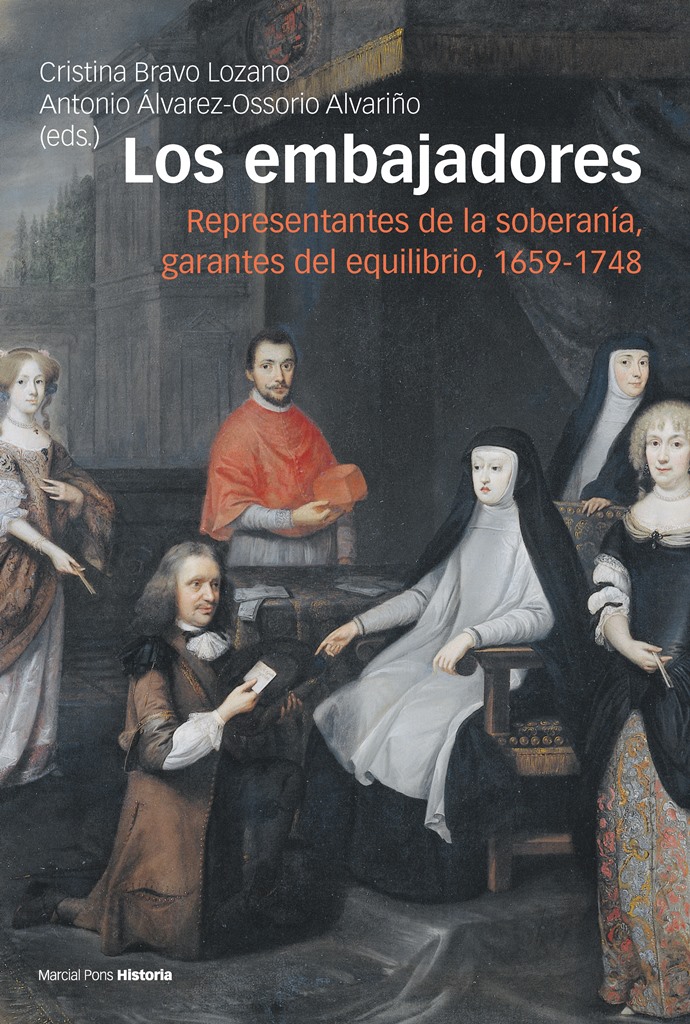
BOOK: Cristina BRAVO LOZANO & Antonio ÁLVAREZ-OSSORIO ALVARIÑO (eds.), Los embajadores. Representantes de la soberanía, garantes del equilibrio, 1659-1748 (Madrid: Marcial Pons, Historia, 2021), 472 p., ISBN 9788417945497, € 32,3


(image source: Marcial Pons)

Book abstract:

La figura del embajador es considerada una de las más destacadas en la cultura cortesana en la Edad Moderna. Los estudios sobre la diplomacia vienen experimentado un notable dinamismo en las últimas décadas. Trascendiendo su práctica negociadora, el papel ejercido por estos legados se dirigió hacia la representación de la soberanía y los intereses de príncipes, repúblicas e, incluso, corporaciones provinciales, y a la búsqueda del mantenimiento de hegemonías en nombre de un supuesto equilibrio entre potencias. Desde distintas perspectivas, tomando como ámbito de referencia la monarquía de España, esta obra aborda la singularidad de tan polifacético ministro para arrojar luz sobre su protagonismo en la transformación de Europa y su proyección en otros continentes durante la transición de los siglos XVII y XVIII. A lo largo de sus contribuciones se destacarán su «cursus honorum» y la instrumentalización del rango como plataforma de ascenso político y social, los valores, virtudes y obligaciones inherentes en el cargo, las estrategias y desempeño de sus funciones ordinarias en las embajadas y las esferas palatinas —con particular énfasis en la mediación de reinas y damas de la corte—, la contribución de sus gestiones en el restablecimiento de la paz en el marco sucesorio, la dimensión cultural y las vías formales e informales de autorrepresentación.

Table of contents:

Introducción, Cristina Bravo Lozano y Antonio Álvarez-Ossorio Alvariño.-I. EL CURSUS HONORUM DIPLOMÁTICO, ¿PROFESIONALIZACIÓN DEL ETHOS O MEDIO DE ASCENSO POLÍTICO?-Diplomático y publicista: François-Paul de Lisola en la corte de Madrid (1665-1666), Charles-Édouard Levillain.-De conductor de embajadores a privado: Fernando de Valenzuela y las redes diplomáticas en la corte de Mariana de Austria, Antonio Álvarez-Ossorio Alvariño.-Viena-Madrid-Hungría: la mediación de los embajadores en las concesiones de la Orden del Toisón en el siglo XVII , Tibor Martí.-La embajada española del conde de Lobkowicz: de enviado extraordinario a embajador ordinario en la corte de Madrid (1689-1691), Michaela Buriánková.-El embajador de Luis XIV en la corte de Madrid, ¿un ideal del servicio al rey?, Guillaume Hanotin.-Los representantes de la nación francesa en Madrid: diplomacia, comercio y corporaciones nacionales (1709-1721), Carlos Infantes Buil.-II. NEGOCIANDO LA SUCESIÓN, BUSCANDO EL EQUILIBRIO.-Tres perfiles políticos, tres realidades sociales, Lucien Bély.-Un diplomático comprometido y controvertido: Louis-Toussaint de Brancas-Céreste, embajador francés en España (1713 y 1714), según la correspondencia entre Luis XIV y Felipe V, José Manuel de Bernardo Ares.-Embajadores y damas de la corte. La construcción de una red de poder internacional entre Madrid, París y Turín en la transición de finales del Seiscientos, Elena Riva.-El cardenal Francesco Acquaviva d’Aragona, ministro de Felipe V en Roma, Virginia León Sanz.-Un nuevo peso en la balanza: la incorporación de Rusia a la negociación del sistema del equilibrio europeo (1717-1721), Núria Sallés Vilaseca.-Los embajadores de la reina. Isabel de Farnesio y el gobierno de las Dos Sicilias, Pablo Vázquez Gestal.-III. SOBERANOS Y CORPORACIONES. LA DIPLOMACIA PROVINCIAL.-Representación y negociación. Agencias y embajadores provinciales de los parlamentos vascos en el Madrid del Seiscientos, Alberto Angulo Morales.-El reconocimiento político de una nueva institución: los representantes del Brazo Militar de Cataluña en la corte (1660-1714), Eduard Martí-Fraga.-Defender el Stato, promocionar al patriciado. La diplomacia provincial lombarda en las cortes de los Habsburgo durante la guerra de Sucesión (1706-1714), Roberto Quirós Rosado.-IV. RETÓRICA VISUAL Y CULTURA ESCRITA. LA AUTORREPRESENTACIÓN DEL EMBAJADOR BARROCO.-La diplomacia imaginada. Pinturas de negociadores en el siglo XVII, Diana Carrió-Invernizzi.-Retórica visual y persuasión política. La representación del embajador barroco: el caso del obispo Luis Crespí y Borja, Álvaro Pascual Chenel.-La aguda pluma del embajador. Ingenio y cultura política en la correspondencia entre los ministros españoles en Londres y La Haya (1675-1699), Cristina Bravo Lozano.-«Peregrino en su patria, va a peregrinar a las extrañas». La memoria del yo en la embajada del conde de Assumar ante el archiduque Carlos (1705-1713), David Martín Marcos.-Relación de autores. 

(more information here

Friday, 9 July 2021

CONFERENCE: Law(s) and International relations : actors, institutions and comparative legislations (Orléans, 15-17 SEP 2021)

(image source: Le Studium)

Conference description:

In the last twenty years, the study of the history of international law and of international relations has witnessed something of a renaissance. The bicentenary of the Congress of Vienna (1814-1815) also led to several new publications on the Congress System and on the “security culture” that was established in the aftermath of Napoleon. Nevertheless, many lacunae remain, especially regarding the relationship between law(s) and international relations during the long nineteenth century and in the sociocultural history of international law as a discipline with its own actors, networks, venues, institutions and power circles. The aim of the present conference is to deepen our study of the interconnections  between law(s) and international relations through the eyes of a plurality of actors (e.g., legal advisers, lawyers, judges, activists, publicists, journalists, editors), institutions (e.g., foreign offices, courts, universities, academies of science, associations, libraries) and works on comparative law. Three focuses will be especially addressed by this conference. The first is the plurality of actors. We welcome proposals on legal advisers within governments, foreign offices and national or colonial administrations; on civil and administrative judges, admiralty courts and prize laws; and on lawyers, academics, peace activists, international thinkers, journalists and editors, including women as well as men. A prosopography of a group of actors is invited as well as individual biographies. The theme of the birth and professionalization of “international lawyers” will be studied as well as the various editors and the book market for international law. Our second focus will be on institutions. We especially invite papers studying the treatment of law(s) in foreign offices in a comparative perspective. For example, in Great Britain, legal issues were dealt by the Queens Lawyers until 1872 and afterwards by the Legal Adviser of the Foreign Office. In France after 1835, it was the Comité consultatif du contentieux that dealt with legal issues. But what about the foreign offices of other countries? Other institutions (similar to the Conseil d’état in France) may have also had their own “Foreign Office Committee.” How were these organized? Did they cooperate with the foreign office?  What role was played by scientific academies in the diffusion of international law? By the universities? By popular libraries? Our third and final focus is on the study of comparative law and its link to the development of international law. The Société de législation comparée, founded in 1869, was full of members of the first generation of the Institut de Droit International, while many comparativists were, vice versa, members of the Institut de Droit International. Scientific journals such as the Revue historique de droit français et étranger and the Revue de droit international et de législation comparée dealt with both comparative and international law. Papers on the progressive autonomy of the discipline and on the networks of the founding members are especially welcome.

Convenors:

Dr Raphaël Cahen, LE STUDIUM / Marie Skłodowska-Curie Research Fellow FROM: Brussels Free University  (VUB) - BE IN RESIDENCE AT: POuvoirs, LEttres, Normes (POLEN) / CNRS, University of Orléans - FR, Prof. Pierre Allorant, POuvoirs, LEttres, Normes (POLEN) / CNRS, University of Orléans - FR, Prof. Walter Badier, POuvoirs, LEttres, Normes (POLEN) / CNRS, University of Orléans - FR 

See full program here

(see call earlier on this blog)

Wednesday, 19 May 2021

ADVANCE ARTICLE: Dzavid DZANIC, ''France's Informal Empire in the Mediterranean, 1815–1830" (Historical Journal)

(image source: CUP)

Abstract: 

Recent works on France's informal projection of power have begun remapping French imperialism during the nineteenth century. More studies in this vein could broaden our understanding of informal empire as an analytical category by decentring it from its roots in British imperial studies. This article argues that between 1815 and 1830, French diplomats remoulded the Regency of Tunisia into an informal imperial periphery. Although they lacked the military and economic leverage of their British counterparts, French consuls coerced the Tunisian rulers into submission by wielding threats and treaties. This strategy unfolded in three stages. First, the consuls used rumours of a possible invasion in order to impose a new vision of international law and dismantle the corsair system in the Regency. Second, they claimed French territorial sovereignty over a part of the Tunisian coast by appealing to the international legal norms enshrined in the existing treaties. And, third, the Tunisian ruler accepted most consular demands following the French invasion of Algeria in 1830. Tunisia's entrance into the French imperial orbit in turn led French diplomats to seek the establishment of French economic ascendency in Tunisia during the early 1830s.

(DOI 10.1017/S0018246X21000340

Friday, 23 April 2021

BOOK: Glenda SLUGA, The Invention of International Order: Remaking Europe After Napoleon (Princeton: Princeton UP, NOV 2021), 336 p. ISBN 978-0691208213, € 30,82


(image source: amazon)

Abstract:

In 1814, after decades of continental conflict, an alliance of European empires captured Paris and exiled Napoleon Bonaparte, defeating French military expansionism and establishing the Concert of Europe. This new coalition planted the seeds for today's international order, wedding the idea of a durable peace to multilateralism, diplomacy, philanthropy, and rights, and making Europe its center. Glenda Sluga reveals how at the end of the Napoleonic wars, new conceptions of the politics between states were the work not only of European statesmen but also of politically ambitious aristocratic and bourgeois men and women who seized the moment at an extraordinary crossroads in history. In this panoramic book, Sluga reinvents the study of international politics, its limitations, and its potential. She offers multifaceted portraits of the leading statesmen of the age, such as Tsar Alexander, Count Metternich, and Viscount Castlereagh, showing how they operated in the context of social networks often presided over by influential women, even as they entrenched politics as a masculine endeavor. In this history, figures such as Madame de Staël and Countess Dorothea Lieven insist on shaping the political transformations underway, while bankers influence economic developments and their families agitate for Jewish rights. Monumental in scope, this groundbreaking book chronicles the European women and men who embraced the promise of a new kind of politics in the aftermath of the Napoleonic wars, and whose often paradoxical contributions to modern diplomacy and international politics still resonate today.

On the author:

Glenda Sluga is professor of international history and capitalism at the European University Institute, Florence, and Kathleen Fitzpatrick Laureate Fellow and professor of international history at the University of Sydney. Her books include Internationalism in the Age of Nationalism and Women, Diplomacy, and International Politics since 1500. Twitter @IntHist 

(source: amazon

Wednesday, 3 February 2021

BOOK: Laurence BADEL, Diplomaties européennes. XIXe-XXIe siècle (Paris: Presses de Sciences Po, 2021), 540 p. ISBN 9782724626902, € 35


 (image source: Sciences Po)

Book description:

L'Europe de la diplomatie, dont cet ouvrage propose une histoire inédite, est celle de la cohabitation de ses grands, moyens et petits États, conjuguant diplomatie de puissance, diplomatie commerciale et diplomatie des valeurs, des empires multinationaux aux États-nations.  Lire la suite Les diplomaties européennes se caractérisent par la variété des pratiques, que ce soit dans la formation des personnels, la place faite aux femmes, la culture et la langue de négociation ou encore la manière de construire des réseaux et d'affirmer les identités. L’Europe de la diplomatie, dont cet ouvrage propose une histoire inédite, est d’abord celle de la cohabitation de ses grands, moyens et petits États, conjuguant diplomatie de puissance, diplomatie commerciale et diplomatie des valeurs. Elle est aussi, des empires multinationaux aux États-nations, celle des coopérations qui se recomposent dans un cadre régional tout en se confrontant aux pratiques d’autres sphères. La profonde transformation contemporaine du métier de diplomate doit se lire au regard de ces traditions, exposées à la complexité accrue des missions et à l’affirmation d’acteurs paradiplomatiques. Des usages propres à l’Union européenne se mettent en place lentement. Pour autant, les rapports de puissance entre les États de l’Europe et le caractère éminemment politique de leurs échanges économiques et culturels demeurent.

Table of contents:


Préface de Pierre Sellal

Introduction

PREMIÈRE PARTIE – DÉFINITIONS

Chapitre 1 – Définir la diplomatie 
Les mots pour en parler  
Le regard des praticiens  
Les approches historiques

Chapitre 2 – Être diplomate : un art et un métier (XVIIIe siècle-1950)  
La diplomatie comme un art  
Une formation sur le terrain  
La naissance d'une science diplomatique  
Éthos nobiliaire persistant et esprit de corps  
Une professionnalisation imparfaite  

Chapitre 3 – Femmes européennes en diplomatie  
La diplomatie a-t-elle un sexe ? Le corps du diplomate  
Femmes ambassadrices 
La féminisation de l'espace multilatéral  
L'accès aux postes décisionnels

PARTIE II – ACTEURS

Chapitre 4 – Le diplomate entre construction nationale et construction étatique, XVIe siècle-1930  
La construction des réseaux consulaires  
La construction des réseaux diplomatiques  
La nationalisation des fonctions diplomatiques et consulaires  
Révolutions européennes : empires et souveraineté nationale

Chapitre 5 – Au défi de l’État : le rôle des paradiplomaties en Europe  
Une action complémentaire de la diplomatie d’État  
Entre contournement et rivalités  
Une diplomatie discrète : diplomatie vaticane et ONG de la médiation  
Les individus en diplomatie  

PARTIE III – DIPLOMATIES CULTURELLES ET ÉCONOMIQUES AU DÉFI
DE LA MUTUALISATION

Chapitre 6 – Diplomatie culturelle, diplomatie publique : une affaire nationale ?  
Le diplomate face au défi des émotions internationales  
Entre affirmation identitaire, coopération et promotion des intérêts : l’essor des diplomaties culturelles 
Diplomatie publique et influence depuis les années 2000 : une perspective encore très nationale  

Chapitre 7 – Entre « patriotisme » et « guerre » : diplomaties économiques  
L’État et les entreprises nationales sur les marchés extérieurs (1880-1939)  
Les pratiques de la guerre froide (1949-1989) : entre embargo, négociations parallèles et aide liée  
Le défi de l’émergence d’une diplomatie économique européenne

PARTIE IV – NÉGOCIER ENTRE SOI. CONSTRUIRE LA DIPLOMATIE EUROPÉENNE AU DÉFI DES DIPLOMATIES NATIONALES

Chapitre 8 – Les fondements de la culture diplomatique européenne 
Immunités, rituels, droit commun et discours : héritages romain, byzantin et chrétien  
Une culture de la paix  
La normalisation juridique internationale  
Capitales européennes de la négociation  

Chapitre 9 – Hiérarchies internationales et cultures régionales  
Les grandes puissances européennes : épanouissement et déclassement  
Puissances moyennes : la réinvention d’un rôle international  
Diplomatie des petits États et des États neutres
Cultures régionales de la négociation et apprentissage de la diplomatie multilatérale

Chapitre 10 – L’espace européen en négociation permanente  
La place des États à Bruxelles : les nouveaux formats de l’entre-soi  
Des structures et pratiques bureaucratiques sui generis  
Faire naître une diplomatie européenne ?

PARTIE V – NÉGOCIER AVEC L’AUTRE

Chapitre 11 – Au prisme de l’altérité : négocier la mondialisation au XIXe siècle  
La langue de l’Autre : interprètes et médiateurs  
La reconnaissance diplomatique, révélatrice des inégalités politiques  
Négocier avec l’ennemi : jalons du XIXe siècle pour appréhender un défi permanent

Chapitre 12 – Le diplomate et la violence  
Le diplomate et la violence politique  
Le soldat et le diplomate : l’inversion des fonctions  
Protéger soi, protéger les autres  
Prévenir la violence

Chapitre 13 – Une diplomatie européenne à l’échelle du monde  
Le décentrement diplomatique (1899-1960) : l’accès de nouveaux États à la table des négociations  
Le laboratoire européen des secrétariats généraux des organisations internationales  
La diplomatie d’influence de l’Union européenne : un combat normatif aux enjeux multiples  
Relever le défi de la puissance : l’exemple de la coordination des États européens à l’ONU (New York)

Conclusion 
La mutation des fonctions diplomatiques  
Les Europes de la diplomatie  
Les diplomaties de l’Europe  

Bibliographie générale

Remerciements

Index

 (more information here

Friday, 29 January 2021

BOOK: Maurits EBBEN & Louis SICKING (Eds.), Beyond Ambassadors. Consuls, Missionaries, and Spies in Premodern Diplomacy (Leiden: Brill, 2021), 223 p. ISBN: 9789004438842, € 99.00

 (Source: Brill)

ABOUT THE BOOK

Series: Rulers & Elites, Volume: 19. Contributors are: Maurits Ebben, Dante Fedele, Alan Marshall, Jacques Paviot, Felicia Roșu, Jean-Baptiste Santamaria, Louis Sicking, and John Watkins.

Because of the overarching shadow of ‘the state’ in all things diplomatic, traditional diplomatic history has neglected the study of any actors in foreign relations other than state diplomats, such as ambassadors. This volume focuses on the question of how and why consuls, missionaries, and spies not formally tied to the state or a prince could play a role in premodern diplomatic relations. It highlights their multiple loyalties, their volatility, and the porous boundaries of diplomatic activity. Historical research on non-state actors – in the context of the so-called new diplomatic history – is all the more urgent as it demonstrates their undeniably significant contributions to the formation of Europe’s international relations. 

ABOUT THE EDITORS

Maurits Ebben (1955) is a lecturer at Leiden University, Ph.D. Leiden University 1996. He is currently working on a new volume entitled Ambassadors, Consuls and Commerce: The Dutch Diplomatic Service in the Later Seventeenth Century, 1648-1700. 

Louis Sicking is the Aemilius Papinianus professor of history of public international law at VU University and lecturer in history at the University of Leiden. He is presently working on a book on conflict management in pre-modern Atlantic Europe.


TABLE OF CONTENTS

List of Maps and Table 
Notes on Contributors 
Introduction 
  Maurits Ebben and Louis Sicking 
Part I
Theoretical Challenges 
1. Premodern Non-State Agency: the Theoretical, Historical, and Legal Challenge 
  John Watkins 
2. Plurality of Diplomatic Agents in Premodern Literature on the Ambassador 
  Dante Fedele 
Part II
Consuls 
3. Space, Agency, and Conflict Management in the Late Medieval Baltic: Urban Colonies and Representatives of Hanse Towns at Scania 
Louis Sicking 
4. Your High and Mighty Lordships’ Most Humble Servants: Dutch Consuls and the States General’s Diplomacy in Spain, 1648–1661 
Maurits Ebben 
Part 3 
Missionaries 
5. The Mendicant Friars: Actors in Diplomatic Encounters with the Mongols 
  Jacques Paviot 
6. The New Indies, the Desired Indies: Antonio Possevino and the Jesuits between Diplomacy and Missionarism in Northeastern Europe, 1577–1587 
  Felicia Roșu 
Part IV
Spies 
7. Secrets, Diplomatics, and Spies in Late Medieval France and in the Burgundian State: Parallel Practices and Undercover Operations 
  Jean-Baptiste Santamaria 
8. ‘Secret Wheeles’: Clandestine Information, Espionage, and European Intelligence 
  Alan Marshall 
Index of Names 


More information with the publisher

Thursday, 17 December 2020

BOOK: Irene DINGEL, Michael ROHRSCHNEIDER, Inken SCHMIDT-VOGES, Siegrid WESTPHAL & Joachim WHALEY (eds.), Handbuch Frieden im Europa der Frühen Neuzeit/Peace in Early Modern Europe. A Handbook (Berlin: De Gruyter/Oldenbourg, 2020), 950 p. ISBN 978-3-11-059131-6, € 149,95


(image source: DeGruyter)

Book abstract:
The development of European peace processes is as characteristic of early modernity as the ubiquity of military conflict: over 2,000 international or domestic peace treaties were concluded in this era. This handbook presents the most recent findings of international research on political and societal peace orders, peace concepts and practices, along with the cultures of peace in the early modern period.

Table of contents:

Einführung (Irene Dingel, Michael Rohrschneider, Inken Schmidt-Voges, Siegrid Westphal, and Joachim Whaley) (open access)

Introduction (open access)

SEKTION I: FRIEDENSBEGRIFFE UND -IDEEN VISIONS AND IDEAS OF PEACE

1. Antike und mittelalterliche Grundlagen frühneuzeitlicher Friedensvorstellungen (Hermann Kamp)

2. Frieden: Renaissance – Humanismus – Reformation (Volker Leppin)

3. Frieden zwischen religiöser und säkularer Deutung, 1555–1700 (Friedrich Beiderbeck)

4. Frieden und Utopie (Thomas Schölderle)

5. Immanuel Kant und die Friedensvorstellungen im Denken der Aufklärung (Thomas Schölderle)

6. Peace and Law (Frederik Dhondt)

7. Ideas of Peace and Practice of Peacemaking in Pre-Modern South Asia (Murari Kumar Jha)

SEKTION II: FRIEDENSORDNUNGEN PEACE SYSTEMS

8. Landfrieden (Duncan Hardy)

9. Justizwesen (Anette Baumann)

10. Frieden als Leitbegriff und Handlungsfeld frühneuzeitlicher Policeyordnungen (Karl Härter)

11. Erbeinungen (Uwe Tresp)

12. Friedensräume. Burgfrieden, Kirchenfrieden, Gerichtsfrieden, Marktfrieden (Masaki Taguchi)

13. Hausfrieden. Eine doppelte Friedensordnung (Inken Schmidt-Voges)

14. Religionsfrieden (Irene Dingel)

15. Peacemaking in the Thirty Years War (Derek Croxton)

16. Waffenstillstand, Anstand und Stillstand (Gabriele Haug-Moritz)

17. Zwischenstaatlicher Frieden (Anuschka Tischer)

18. Friedensverträge (Martin Espenhorst)

19. Friedensschlüsse mit außereuropäischen Herrschern. Afrika, Mittelmeerraum, Osmanisches Reich (Benjamin Steiner)

20. Treaties in Asia (Peter Borschberg)

21. Peace Treaties Between Colonial Powers and Indigenous Peoples in North America (Katherine A. Hermes)

SEKTION III: FRIEDENSPRAKTIKEN UND ‑PROZESSE PEACEMAKING AND PEACE PROCESSES

22. Friedenskongresse (Johannes Burkhardt and Benjamin Durst)

23. Verhandlungstechniken und ‑praktiken (Maria-Elisabeth Brunert and Lena Oetzel)

24. Friedensvermittlung und Schiedsgerichtsbarkeit (Michael Rohrschneider)

25. Verhandlungssprachen und Übersetzungen (Guido Braun)

26. Akteur*innen der Friedensstiftung und ‑wahrung (Volker Arnke)

27. Historische Sicherheitsforschung und die Sicherheit des Friedens (Christoph Kampmann and Horst Carl)

28. Neutralität (Axel Gotthard)

29. Amnestie und Normaljahre (Ralf-Peter Fuchs)

30. Toleranz (Ulrich Niggemann)

31. Zeremoniell (Niels F. May)

32. Friedensfeiern und Gedächtniskultur (Renger E. de Bruin and Alexander Jordan)

33. Die materielle Kultur des Friedenschließens (Harriet Rudolph)

34. Frieden und Friedenssymboliken in der Bildenden Kunst (Eva-Bettina Krems)

35. Friedensmusiken (Sabine Ehrmann-Herfort)

36. Friedenspredigten (Henning P. Jürgens)

37. Frieden in der Literatur (Klaus Garber)

SEKTION V: FRÜHNEUZEITLICHE FRIEDENSSCHLÜSSE EARLY MODERN PEACE TREATIES

38. Der Kuttenberger Religionsfrieden 1485 (Alexandra Schäfer-Griebel)

39. Ewiger Landfrieden 1495 (Hendrik Baumbach)

40. Erster und Zweiter Kappeler Landfrieden 1529 & 1531 (Andreas Zecherle)

41. Augsburger Religionsfrieden 1555 (Armin Kohnle)

42. Der Frieden von Cateau-Cambrésis 1559 (Rainer Babel)

43. Warschauer Konföderation 1573 (Christopher Voigt-Goy)

44. The Edict of Nantes 1598 (Mark Greengrass)

45. Die Friedensschlüsse von Siebenbürgen: Wegmarken religiöser Toleranz oder der Konfessionalisierung? (Mihály Balázs)

46. Der Westfälische Frieden 1648 (Siegrid Westphal)

47. Nijmegen, Rijswijk, Utrecht: The Peace Treaties of the Wars of Louis XIV (Klaas Van Gelder)

48. Der Friede von Zsitvatorok 1606 und die Friedensschlüsse der ‚Türkenkriege‘ (Arno Strohmeyer)

49. Die Friedensschlüsse der Nordischen Kriege 1570–1814 (Dorothée Goetze)

50. Die Friedensschlüsse der friderizianischtheresianischen Ära (Regina Dauser)

51. Friedensschlüsse zwischen Französischer Revolution und Wiener Kongressordnung (Reinhard Stauber)

More information with DeGruyter.

Wednesday, 9 December 2020

BOOK: Indravati FÉLICITÉ (dir.), L’Identité du diplomate (Moyen Âge-xixe siècle) Métier ou noble loisir ? [Rencontres, vol. 471] (Paris: Classiques Garnier, 2020), 490 p. ISBN 978-2-406-10464-3, € 42

(image source: Classiques Garnier)

Abstract:
Entre le Moyen Âge et le xixe siècle, le diplomate européen est un personnage bien identifié, revêtu d’un caractère et agissant dans le cadre d’une scénographie particulière. Cet ouvrage propose une synthèse des connaissances actuelles sur le métier, la situation sociale et l’image du diplomate.
Chapters:

Introduction L’identité du diplomate, Moyen Âge – XIXe siècle. Métier ou noble loisir ? (Indravati Félicité)

Diplomate, huguenot ou humaniste ? Le modèle de l'agent français auprès des princes protestants de l'Empire (1589–1620) (Camille Desenclos)

Le ministre ou le plénipotentiaire est un caméléon (La Bruyère) Les multiples rôles des « ambassadeurs » à la cour de Louis XIV (Sven Externbrink)

Experience Instead of Professionalism The Brandenburg Legate Friedrich Rudolph of Canitz (1654-1699) Reflected in his Library (Anna Lingnau)

Du négoce en diplomatie Édouard Boyetet à la croisée des mondes marchands et diplomatiques (1772-1784) (Sylvain Lloret)

Les négociateurs français à Genève (1679-1798) Identités sociales composites et pluralité des parcours (Fabrice Brandli)

Des chemins divergents ? Diplomates français et allemands de la fin du XIXe siècle à la Première Guerre mondiale (Marion Aballéa)

Du noble ambassadeur au fonctionnaire public L'invention du « diplomate » sous la Révolution française (Virginie Martin)

Charles-Frédéric, comte Reinhard (1761-1837) Diplomate et homme de lettres (Ina Ulrike Paul)

Le caractère du diplomate idéal au XIXe siècle Constantes et évolutions (Yves Bruley)

“Il nome moscovita è arrivato infino a noi” The relationship between the diplomats of Philip V of Spain and those of Tsar Peter I (1717-1719)  (Núria Sallés Vilaseca)

Entre information et journalisme Les insertions pour la Gazette de France du Baron de La Houze, Ministre plénipotentiaire de la France à Parme (1766-1770) (Géraud Poumarède) 

L'interprète en diplomatie Expériences françaises au Siam dans la seconde partie du XIXe siècle (Laurence Badel)

­L’ambassadeur entre audiences et dépêches Statuts et usages de ­l’écrit et de ­l’oral dans les pratiques de négociation au XVIe siècle (Matthieu Gellard)

La correspondance diplomatique et la production de savoirs Une analyse des rapports des ambassadeurs français dans le Saint-Empire à la fin de la guerre de Trente Ans (Guido Braun)

Diplomatie impériale contre diplomatie française Bruxelles au carrefour des ­cultures et des pratiques, seconde moitié du XVIIIe siècle (Jean-Charles Speeckaert)

Quand se côtoyaient humanistes et hommes de métier (Elisabeth Malamut)

Une figure ­d’espion-diplomate ou les aventures de Reginald Teague-Jones au service de ­l’Empire britannique (Guillemette Crouzet)

Les nonciatures de Prospero SantaCroce Le savoir-faire diplomatique au service d’un parcours curial (Jean Sénié)

« [...] the Emp.r’s Envoy is as good as other Princes Amb.rs. » Diplomates impériaux et britanniques auprès des cours de Londres et de Vienne au début du XVIIIe siècle (Charlotte Backerra)

« Tout vient du Nord » ? Les diplomates russes et danois et la sociabilité parisienne sous l’œil de la police (1740-1747) (Dzianis Kandakou & Alexaner Stroev)

The French Royal Mistress as Diplomat (Christine Adams & Tracy Adams)

Négocier entre diplomates, nobles, spécialistes ou ministres ? Une prosopographie des négociateurs lors des rencontres internationales aux XVIIe et XVIIIe siècles (Niels F. May)

Principal ministre et diplomate ? Les principaux ministres allemands et leur activité diplomatique au XVIIIe siècle (Sébastien Schick)

« Le cul de sac du Nord » Séjour et carrière des diplomates français employés en Europe du Nord au tournant des XVIIe et XVIIIe siècles (Eric Schnakenbourg)

« Faut-il rester en diplomatie ? » Les facteurs ­d’attraction de la diplomatie à la fin du dix-neuvième siècle (Michael Auwers)

Pour dépasser le paradigme de la professionnalisation Réflexions sur la situation financière des diplomates au XVIIIe siècle (Indravati Félicité)

Conclusions (Stefano Andretta)

Read more with the Classiques Garnier


Tuesday, 6 October 2020

ADVANCE ARTICLE: Jenny Huangfu DAY, "Mediating Sovereignty: The Qing legation in London and its diplomatic representation of China, 1876–1901" (Modern Asian Studies)

(image source: Cambridge Core)

Abstract:

In 1896, Sir Halliday Macartney, counsellor of the Qing London legation, detained the revolutionary Sun Yat-sen on legation grounds in an attempt to deport him back to China. Since then, the image of the legation as an ossified extension of a despotic government has dominated public imagination. This article proposes a new way of understanding the legation's action: it exemplifies the legal activism of Qing diplomats in recovering judicial sovereignty that had been compromised by the presence of extraterritoriality and colonialism. Legations represented a broad range of interests of China through diplomatic negotiations and legal mediations, and brought unresolved disputes between foreign ministers and the Zongli Yamen in Beijing to the attention of their home governments. This article analyses the mediation and collaboration performed by the London legation between the various levels of the Qing government and the British Foreign Office. It argues that Qing legations and their diplomatic representation abroad were essential to the construction and imagination of China as a sovereign state. 

(read more on Cambridge Core: DOI 10.1017/S0026749X2000030X)

Monday, 5 October 2020

BOOK: Colin HEYWOOD & Ivan PARVEV (Eds.), The Treaties of Carlowitz: Antecedents, Course and Consequences (Leiden-New York: Brill, 2020). ISBN 978-90-04-40950-7, EUR 105.00


(Source: Brill)

Brill has published a new book on the Treaties of Carlowitz (1699).

ABOUT THE BOOK

The Treaties of Carlowitz (1699) includes recent studies on the Lega Sacra War of 1683-1699 against the Ottoman Empire, the Peace treaties of Carlowitz (1699), and on the general impact of the conflict upon Modern Europe and the Balkans. With its contributions written by well-known international specialists in the field, the volume demonstrates that sometimes important conflicts tend to be forgotten with time, overshadowed by more spectacular wars, peace congresses or diplomatic alliances. The “Long War” of 1683-1699 is a case in point. By re-thinking and re-writing the history of the conflict and the subsequent peacemaking between a Christian alliance and the Ottoman state at the end of the 17th century, new perspectives, stretching into the present era, for the history of Europe, the Balkans and the Near East are brought into discussion.


Contributors are: Tatjana Bazarova, Maurits van den Boogert, John Paul Ghobrial, Abdullah Güllüoğlu, Zoltan Györe, Colin Heywood, Lothar Höbelt, Erica Ianiro, Charles Ingrao, Dzheni Ivanova, Kirill Kochegarov, Dariusz Kołodziejzcyk, Hans Georg Majer, Ivan Parvev, Arno Strohmeier.

ABOUT THE EDITORS

Colin Heywood, Ph.D. (London, 1970) is an Honorary Research Fellow at the University of Hull. He has published numerous studies and articles on Ottoman history and historiography and on Mediterranean and maritime history in the late medieval and early modern period. 

Ivan Parvev, Ph.D. (1993), Habil. D. (2011), University of Sofia, is Professor of Early Modern Balkan history at that university. He has published monographs and articles on Habsburg-Balkan relations, including Land in Sicht. Südosteuropa in den deutschen politischen Zeitschriften des 18. Jahrhunderts (Zabern, 2008).

TABLE OF CONTENTS

  Preface 
  About the Authors 
  Introduction 


Part 1: The War of 1683–1699 – Political Strategies and Balance of Power in Europe


 1On the Road to Carlowitz: Visions of Ottoman Diplomacy in the Letters of Thomas Coke, 1691–1694 
  Jean-Paul A. Ghobrial 
 2‘This Great Work’: Lord Paget and the Processes of English Mediating Diplomacy in the Latter Stages of the Sacra Lega War, 1697–1698 
  Colin Heywood 
 3The Spoils of Peace: What the Dutch Got Out of Carlowitz 
  Maurits H. van den Boogert 
 4The War of 1683–1699 and the Beginning of the Eastern Question 
  Ivan Parvev 


Part 2: The Sacra Lega War Viewed by the Sublime Porte


 5Ottoman Diplomacy in the First Years (1683–1685) of the Ottoman “Long War” 
  Abdullah Güllüoğlu 
 6Ottoman Subjects, Habsburg Allies. The Reaya of the Chiprovtsi Region (Northwestern Bulgaria) on the Front Line, 1688–1690 
  Dzheni Ivanova 
 7Ottoman Knowledge of the Imperial Commanders 
  Hans Georg Majer 


Part 3: Time for War, Time for Peace


 8From Slankamen to Zenta: The Austrian War Effort in the East during the 1690s 
  Lothar Höbelt 
 9The Habsburgs and the Holy League: Religion or Realpolitik? 
  Charles Ingrao 
 10From the ‘Eternal Peace’ to the Treaty of Carlowitz: Relations between Russia, the Sublime Porte and the Crimean Khanate (1686–1699) 
  Kirill Kochegarov 
 11The Treaty of Carlowitz in Polish Memory – A Date Better Forgotten? 
  Dariusz Kołodziejczyk 
 12The Symbolic Making of the Peace of Carlowitz: The Border Crossing of Count Wolfgang IV of Oettingen-Wallerstein during His Mission as Imperial Grand Ambassador to the Sublime Porte (1699–1701) 
  Arno Strohmeyer 
 13The Treaty of Carlowitz and its Impact on Russian-Ottoman Relations, 1700–1710 
  Tatiana Bazarova 


Part 4: Early Modern Demographic and Economic Context


 14War and Demography: The Case of Hungary 1521–1718 
  Zoltán Györe 
 15Venice after Carlowitz: Change and Challenge in Eighteenth-century Venetian Policy 
  Erica Ianiro 
 Concluding Remarks 
  Index 


More info here

(source: ESCLH Blog)

Friday, 25 September 2020

PHD Defense: Jean-Romain FERRAND-HUS, La diplomatie du Second Empire, vecteur d’influence et de réforme des systèmes politiques et juridiques étrangers (supervisor: prof. dr. Anthony MERGEY) (Rennes: université Rennes 1, 2 DEC 2020)

(image source: Wikimedia Commons)

The Association des historiens des facultés de droit announced the following PhD viva:

Jean-Romain Ferrand-Hus (Université de Rennes 1) présentera et soutiendra sa thèse de doctorat en droit le 2 décembre 2020, intitulée La diplomatie du Second Empire, vecteur d’influence et de réforme des systèmes politiques et juridiques étrangers, dirigée par M. le professeur Anthony Mergey.

Le jury est composé de :
– Mme Brigitte Basdevant-Gaudemet, professeur émérite de l’Université Paris-Saclay
– M. Yves Bruley, maître de conférences HDR à l’Ecole Pratique des Hautes Etudes
– M. Anthony Mergey, professeur à l’Université Paris II Panthéon-Assas, directeur
– M. Laurent Pfister, professeur à l’Université Paris II Panthéon-Assas, rapporteur
– M. Laurent Reverso, professeur à l’Université de Toulon, rapporteur
– M. Sylvain Soleil, professeur à l’Université de Rennes 1

La soutenance se déroulera à compter de 13h45 dans la Salle des conseils de la Faculté de droit et de science politique, 9 rue Jean Macé, Rennes.

(source AHFD

Wednesday, 16 September 2020

BOOK: Eric SCHNAKENBOURG & François TERNAT (eds.) Une diplomatie des lointains - La France face à la mondialisation des rivalités internationales. XVIIe-XVIIIe (Rennes: Presses universitaires de Rennes, 2020), ISBN 9782753580077, €30


(image source: Furetdunord)

Abstract:
A partir du XVIIe siècle, l'élargissement du champ d'activité de la diplomatie française à l'Amérique, à l'Afrique et à l'Asie invite le monde à la table des grandes négociations. Mais parallèlement, au niveau local, la conduite de la diplomatie ordinaire est une affaire d'individus vivant à l'interface des mondes européens et autochtones. Qu'ils participent à la conclusion de traités de paix, à la réussite d'opérations commerciales ou à la traite des esclaves, ils sont les acteurs de terrain de la mondialisation de la diplomatie française. L'influence toujours plus importante des espaces lointains sur la conduite de la diplomatie française est un défi aux multiples dimensions dont ce volume a l'ambition de rendre compte en jouant sur les points de vue et les échelles pour comprendre l'exercice de la diplomatie française à l'écoute et à l'épreuve du monde.

(source: Furet du nord


Monday, 14 September 2020

ONLINE LECTURE: Prof. dr. Miroslav Šedivý (Univ. of Pardubice), 'The public response to international insecurity 1830–1848: The Europeans between the written law (Recht) and the law of the mightiest (Faustrecht)' (1 OCT 2020; 17:00)

Standen & Landen/Anciens Pays et Assemblées d'États Lecture: 
Prof. dr. Miroslav Šedivý (Univ. of Pardubice)

The public response to international insecurity 1830–1848: The Europeans between the written law (Recht) and the law of the strongest (Faustrecht) 

(image source: Standen&Landen)

Abstract:

The Congress of Vienna of 1814–1815 was a generally well-known attempt to ensure security and peace within the so-called family of European countries and nations. This goal was to be achieved by clearly defined legal engagements and a mutual willingness to settle international disputes in a peaceful way. A quarter century later, however, a considerable number of Europeans felt that the heritage of the congress was being eroded and that the world was becoming increasingly insecure.

This conviction was primarily caused by the abuse of power by the most powerful states at the expense of weaker ones in Europe as well as the former’s imperialist policies in overseas regions. The most influential in this respect was the great powers’ competition in the Near East which had significant negative repercussions on the relations among the great powers themselves and on the general peace in Europe, such as happened in late 1840 during the so-called Rhine Crisis when a military conflict in the Ottoman Empire provoked a general war scare on the Continent. What was symptomatic for the Rhine Crisis was the increasing mistrust in the great powers’ policies and in the stability of the whole structure of the post-Napoleonic states system: a growing number of Europeans no longer had faith in the functionality of this system and generally became convinced that the security of their own countries and other nations in the world where the rule of force (Faustrecht) dominated was to be best preserved by material strength. That is why this widespread reaction to the law-breaking in international affairs, resulting in international insecurity, was one of the important points in various political/national programmes and stimulated the pursuit of national unifications, well defensible frontiers, land and naval armaments and colonial adventures.

At the same moment, however, a great number of Europeans did not abandon the belief that the security of their homeland also depended on the quality of the whole European states system, which made a considerable number advocate a more normative approach: new international law was to be introduced to ensure the equality as well as more justice and peace in relations among all states. This request was popular not only among the adherents of the peace movement being on rise in the 1840s but also in the nationalist camps across the Continent; both groups proposed the reconstruction of the international order by introducing new principles of international law, being a real law of (free) nations, and the creation of a pan-European organisation in the form of either a monarchical confederation or a congress of nations. The paper’s principal goal is to introduce this at the first sight contradictory debate about law and power in international relations before the mid 19th century and explain not only its causes but also the reason of the failure to establish a new better international political-legal order in Europe.

Reservation:

RSVP with standenenlanden@gmail.com. The lecture is scheduled for 1 October 2020 at 17:00 CET.

Friday, 4 September 2020

BOOK: Raphaël CAHEN & Nicolas LAURENT-BONNE (dir), Joseph-Marie Portalis. Diplomate, magistrat et législateur (Aix-en-Provence: PUAM, 2020), 244 p. ISBN 9782731411744, € 23


(image source: PUAM)

Abstract:

Fils du célèbre Portalis corédacteur du projet de code civil, Joseph-Marie est un personnage historique de premier rang : homme aux huit serments politiques à l’image d’un Talleyrand ou d’un Fouché, Portalis a traversé les bouleversements sociaux, économiques, technologiques, politiques et juridiques de la France et de l’Europe, de la fin de la Révolution au Second Empire. Ancien émigré, diplomate, conseiller d’État, pair de France, académicien, publiciste, ministre des Cultes par intérim, de la Justice, des Affaires étrangères, premier président de la Cour de cassation pendant plus de vingt ans et même sénateur au début du Second Empire, Portalis « fils » a laissé à la postérité une œuvre importante qui n’a pas suscité, jusqu’à présent, l’intérêt des historiens et des juristes à de rares exceptions près. Par le biais de sources inédites mais également des œuvres publiées et rarement étudiées de Joseph-Marie Portalis, ce livre entend proposer un aperçu de la vie et de l’œuvre de ce personnage.

Table of contents:

Avant-propos (Raphaël Cahen & Nicolas Laurent-Bonne)  
D’un Portalis à l’autre : la constance d’une lignée (Joël-Benoît d'Onorio)
4 janvier 1811, Portalis est chassé du Conseil d’État (Thierry Lentz)

Première partie: Portalis, haut magistrat

Joseph-Marie Portalis, premier président de la Cour de cassation (Xavier Prétot)
Joseph-Marie Portalis à la Chambre criminelle : les audaces d’une présidence (1824-1829) (Claire Bouglé-Le Roux)

Deuxième partie: Portalis, penseur et législateur

Joseph-Marie Portalis et le « milliard » des émigrés (Marion Narran-Finkelstein)
Joseph-Marie Portalis, législateur et théoricien de la science des lois (Sylvain Bloquet)
« Les limites des deux mondes », Portalis et l’historien (François Jankowiak)

Troisième partie: Portalis, diplomate et penseur des relations internationales

Avant-propos (Martine de Boisdeffre)
Joseph-Marie Portalis – penseur et acteur de la diplomatie napoléonienne (Raphaël Cahen)
Reconstruire le centre par la périphérie : le ministère Portalis et la guerre russo-ottomane de 1828-1829 (Gabriel Leanca)
Portalis le jeune et le droit des gens (Frederik Dhondt)

Quatrième partie: Portalis et les cultes

Portalis accompagne l’échec du Concordat de 1817 (Brigitte Basdevant-Gaudemet; Dominique Rodde)
Portalis et sa mission à Rome pour les affaires concordataires (Audrey Virot)
Les discours de Portalis à la chambre des pairs en matière religieuse (Cyrille Dounot)

More information with the publisher


Wednesday, 19 August 2020

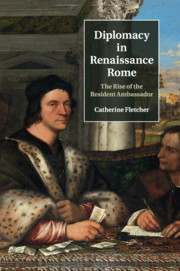
BOOK: Catherine FLETCHER, Diplomacy in Renaissance Rome. The Rise of the Resident Ambassador (Cambridge: University Press, 2020). ISBN: 9781107515789, £ 22.99

 Diplomacy in Renaissance Rome

(Source: CUP)

ABOUT THE BOOK

Diplomacy in Renaissance Rome is an investigation of Renaissance diplomacy in practice. Presenting the first book-length study of this subject for sixty years, Catherine Fletcher substantially enhances our understanding of the envoy's role during this pivotal period for the development of diplomacy. Uniting rich but hitherto unexploited archival sources with recent insights from social and cultural history, Fletcher argues for the centrality of the papal court - and the city of Rome - in the formation of the modern European diplomatic system. The book addresses topics such as the political context from the return of the popes to Rome, the 1454 Peace of Lodi and after 1494 the Italian Wars; the assimilation of ambassadors into the ceremonial world; the prescriptive literature; trends in the personnel of diplomacy; an exploration of travel and communication practices; the city of Rome as a space for diplomacy; and the world of gift-giving.

ABOUT THE AUTHOR

Catherine Fletcher is Lecturer in Public History at the University of Sheffield. Her first book, Our Man in Rome: Henry VIII and his Italian Ambassador, was published in 2012. Catherine graduated with a first-class degree in Politics and Communication Studies from the University of Liverpool and worked for the BBC Political Unit before studying for a PhD in History at Royal Holloway, University of London. She held fellowships at the Institute of Historical Research, the British School at Rome and the European University Institute before taking up her current post in 2012. She has published widely on aspects of early modern political culture and diplomacy. Catherine is a regular media contributor and has been a guest on two editions of BBC Radio 4's 'In Our Time' among other programmes. She has been a historical adviser to the new TV production of Wolf Hall and blogs at History Matters.

TABLE OF CONTENTS

Introduction
1. Rome and the rise of resident diplomacy
2. Conceptualising the resident ambassador
3. The ritual world of the curia
4. The personnel of diplomacy
5. Information and communication
6. Locating diplomacy in the city of Rome
7. 'Those who give are not all generous': the world of gifts
Conclusion
Bibliography
Index.

More information with the publisher.
(source: ESCLH Blog)

Friday, 14 August 2020

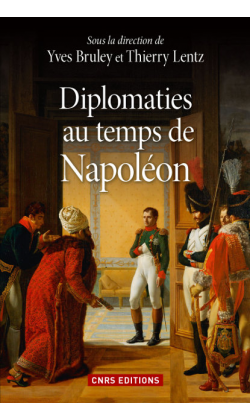
BOOK: Yves BRULEY & Thierry LENTZ (dir.), Diplomaties au temps de Napoléon (Paris: CNRS Editions, 2014), 376 p. ISBN 9782271082763

(image source: Fondation Napoléon)

Summary:
Cet ouvrage reprend les actes du colloque « Diplomates et diplomatie au temps de Napoléon » du 25 et 26 mars 2014, organisé par la Fondation Napoléon et l’Académie des Sciences morales et politiques, en collaboration avec les Archives diplomatiques, le Souvenir napoléonien et l’Association de commémoration du Bicentenaire de la Campagne de France 1814-2014. Au vu des guerres menées par l’Empereur, le rôle de la diplomatie et des diplomates à l’époque napoléonienne peut paraître marginal. Il n’en est rien : pour Napoléon, la guerre était bien la continuation de la politique. Du traité de Campo-Formio à celui de Tilsit, des accords territoriaux aux traités de commerce, les diplomates furent des acteurs essentiels de l’action extérieure du Consulat et de l’Empire. Si la question de la continuité ou de la rupture de la diplomatie napoléonienne avec celles de l’Ancien régime et de la Révolution française se pose d’emblée, celle de la contradiction entre l’idée de puissance, la volonté de paix, le désir de gloire, d’une part, et la nécessaire régulation de la vie internationale, d’autre part, est révélatrice d’ambiguïtés qu’il convient d’examiner. Qui animait la politique diplomatique et avec quels moyens ? Plus concrètement, quelle influence réelle eurent les cinq ministres des Relations extérieures – Reinhard, Talleyrand, Champagny, Maret et Caulaincourt – ou les chevilles ouvrières – la Besnardière, Hauterive, Bignon, etc.- face à la volonté de Napoléon lui-même ? Quelle était la conception du « droit international » de l’empereur et en quoi heurtait-elle ou se conformait-elle aux idées du temps ? Peu abordée par les historiens, la place de la diplomatie dans la politique impériale est révélée ici dans toute sa dimension.
(source: Fondation Napoléon)

Thursday, 13 August 2020

PODCAST: The Congress of Vienna (BBC In Our Time, 19 OCT 2017)

(image source: BBCFour)

Description:
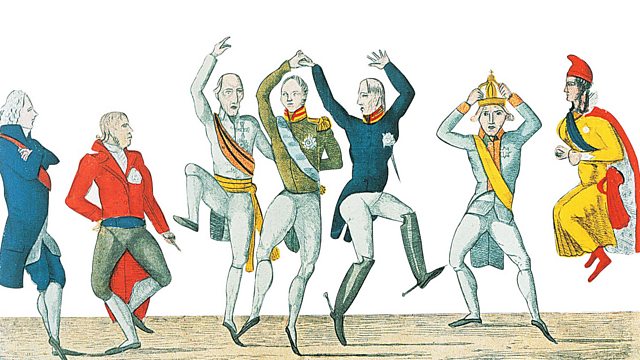
Melvyn Bragg and guests discuss the conference convened by the victorious powers of the Napoleonic Wars and the earlier French Revolutionary Wars, which had devastated so much of Europe over the last 25 years. The powers aimed to create a long lasting peace, partly by redrawing the map to restore old boundaries and partly by balancing the powers so that none would risk war again. It has since been seen as a very conservative outcome, reasserting the old monarchical and imperial orders over the growth of liberalism and national independence movements, and yet also largely successful in its goal of preventing war in Europe on such a scale for another 100 years. Delegates to Vienna were entertained at night with lavish balls, and the image above is from a French cartoon showing Russia, Prussia, and Austria dancing to the bidding of Castlereagh, the British delegate. With Kathleen Burk Professor Emerita of Modern and Contemporary History at University College London Tim Blanning Emeritus Professor of Modern European History at the University of Cambridge and John Bew Professor in History and Foreign Policy at the War Studies Department at King's College London Producer: Simon Tillotson.

Listen here.

Monday, 10 August 2020

JOURNAL: Perceptions du Congrès de Vienne: répercussions d'un événement européen (XIXe-XXIe siècle) (Herta Luise OTT & Eric LEROY du CARDONNOY (dir.)) Austriaca n° 84-85 (2015), ISBN : 979-10-240-0945-2, € 50

(image source: PURH)

Description:
Ce numéro double, qui constitue la seconde partie d’un projet consacré à la mémoire du congrès de Vienne (voir no 79, 2014), s’attache notamment à comprendre sa réception, celle de ses activités et de ses résultats dans des pays précis dont la plupart ont souvent été ignorés parce qu’on les a considérés comme des pays de second ordre. À bien des égards éclipsés lors des négociations viennoises, ils en ont néanmoins subi les conséquences. L’ouvrage aborde ainsi des questions d’histoire régionale et nationale en donnant la parole à des spécialistes des pays concernés. Les contributions offrent à la fois un panorama politique, historique, historiographique et culturel sur la question.
On the journal:
La revue Austriaca, Cahiers universitaires d’information sur l’Autriche, a été fondée en 1975 par Félix Kreissler, alors maître de conférences à l’université de Rouen, et un groupe de chercheurs spécialisés dans la recherche sur l’Autriche ou l’Europe centrale. Au fil des années, tous les spécialistes reconnus de l’Autriche ont été intégrés au comité de rédaction de la revue, signe d’une volonté de pluridisciplinarité et de fédérer les spécialistes reconnus de l’Autriche quel que soit leur lieu de rattachement universitaire. Aujourd’hui parmi le comité de rédaction sont représentées à côté de quatre universités parisiennes, celles de Bordeaux III, d’Amiens, de Cergy-Pontoise, de Rouen, point d’ancrage de la revue depuis sa fondation. La cooptation de nouveaux membres donne lieu au sein du comité de rédaction à de longues discussions sur la qualité des travaux et les capacités des collègues à s’investir réellement au service de la revue. Ce comité de rédaction décide des orientations de la revue, des thèmes à traiter. Tout au long de son histoire, la revue a laissé place à de jeunes chercheurs ou chercheuses ou à des collègues venant d’horizons différents ainsi qu’à ceux des États d’Europe centrale et orientale dont le passé les lie à l’Autriche. Austriaca paraît deux fois par an et a retenu depuis sa fondation le principe du cahier thématique. Ces cahiers depuis la fin des années 1990 ont tendance à devenir de plus en plus volumineux, dépassant parfois les 300 pages, néanmoins la moyenne se situe autour de 200 pages. L’allemand et le français sont les deux langues de la revue, des articles en anglais ont cependant été publiés.
List of contributors:
Michael Bregnsbo, Michal Chvojka, Sieglinde Cora, Pedro Alfonso de Diego González, Lucile Dreidemy, Irène Herrmann, Stephan Laux, Hannes Leidinger, Éric Leroy du Cardonnoy, Álvaro Fleites Marcos, Reiner Marcowitz, Herta Luise Ott, Alfred Prédhumeau, Marie-Pierre Rey, Jorge Martins Ribeiro et Anne Sommerlat.
Read the press release here.

Wednesday, 10 June 2020

YOUTUBE: Gilles MONTÈGRE, Bernis: grandeur de la diplomatie au XVIIIe siècle (StoriaVoce, 26 FEB 2020)


On the author:
historien, maître de conférences à l’université Grenoble-Alpes et spécialiste de la diplomatie à l’époque moderne. Il notamment signé un livre sur la Rome des Français au temps des Lumières en 2011 (Publication de l’École française de Rome) et Les circulations internationales en Europe. 1680-1780, avec Albane Cogné et Stéphane Blond (Atlande, 2011). Dans son dernier ouvrage, il nous propose un tour dans l’Europe des Lumières à travers la figure du Cardinal de Bernis : Le cardinal de Bernis, le pouvoir de l’amitié (2019, Tallandier/Publications de l’École française de Rome, 864 pages, 32.9 €).
(source: StoriaVoce)