ESIL Interest Group History of International Law

ESIL Interest Group History of International Law
Showing posts with label doctrine. Show all posts

Monday, 24 May 2021

BOOK: Martin P. SCHENNACH, Austria inventa? Zu den Anfängen der österreichischen Staatsrechtslehre (Frankfurt: Klostermann Verlag, 2020). ISBN 978-3-465-04414-7, 98.00 EUR


(Source: Klostermann)

Klostermann Verlag published “Austria inventa? Zu den Anfängen der österreichischen Staatsrechtslehre” at the end of last year.

ABOUT THE BOOK

This is the first work of its kind devoted to Austrian constitutional law, which has so far received little attention in (legal) historical research. It examines its origins, its authors, its connection with the “Reichspublizistik”, its sources and methods as well as its contents and, last but not least, its role in university teaching. Of all the particular state rights in the Holy Roman Empire, its subject was probably the one most intensively discussed. In the second half of the 18th century, Austrian constitutional law was a flourishing genre of literature promoted by the Habsburg dynasty. This is accounted for by its main themes: It flanked the process of internal integration of the heterogeneous Habsburg ruling complex and aimed at the discursive and legal construction of an Austrian state as a whole and the legitimation of absolutism.


The table of contents can be found here


More info here


(source: ESCLH Blog)

Thursday, 29 April 2021

BOOK: Dante FEDELE, The Medieval Foundations of International Law. Baldus de Ubaldis (1327-1400), Doctrine and Practice of the Ius Gentium [Legal History Library, 49; Studies in the History of International Law, 17, ed. Randall LESAFFER] (Leiden/Boston: Martinus Nijhoff/Brill, 2021). ISBN 978-90-04-44712-7

(image source: Brill)

On the book:

Dante Fedele’s new work of reference reveals the medieval foundations of international law through a comprehensive study of a key figure of late medieval legal scholarship: Baldus de Ubaldis (1327-1400). A student of Bartolus de Sassoferrato, Baldus wrote both extensive commentaries on Roman, canon and feudal law and thousands of consilia originating from particular cases. His writings dealt with numerous issues related to sovereignty, territorial jurisdiction, diplomacy and war, combining a rich conspectus of earlier scholarship with highly creative ideas that exercised a profound influence on later juristic thought. The detailed picture of the international law doctrines elaborated by a prominent medieval jurist offered in this study contributes to our understanding of the intellectual archaeology of international law. 

"Dr. Fedele’s monograph will no doubt become a necessary work of reference for any scholar interested in the history of international law. [...] Beyond the specific doctrines on particular areas of international law, Dr. Fedele’s study of Baldus shows how in the area of international governance, jurists sought to marshal different expressions of normativity." - Alain Wijffels, Foreword

 On the author:

Dante Fedele Ph.D. (2014), is Research Fellow at the CNRS (CHJ UMR 8025 - Lille). His publications on the history of diplomacy and international law include Naissance de la diplomatie moderne (XIIIe-XVIIe siècles). L’ambassadeur au croisement du droit, de l’éthique et de la politique (Nomos, 2017).

(read more with Brill

Friday, 4 September 2020

BOOK: Raphaël CAHEN & Nicolas LAURENT-BONNE (dir), Joseph-Marie Portalis. Diplomate, magistrat et législateur (Aix-en-Provence: PUAM, 2020), 244 p. ISBN 9782731411744, € 23


(image source: PUAM)

Abstract:

Fils du célèbre Portalis corédacteur du projet de code civil, Joseph-Marie est un personnage historique de premier rang : homme aux huit serments politiques à l’image d’un Talleyrand ou d’un Fouché, Portalis a traversé les bouleversements sociaux, économiques, technologiques, politiques et juridiques de la France et de l’Europe, de la fin de la Révolution au Second Empire. Ancien émigré, diplomate, conseiller d’État, pair de France, académicien, publiciste, ministre des Cultes par intérim, de la Justice, des Affaires étrangères, premier président de la Cour de cassation pendant plus de vingt ans et même sénateur au début du Second Empire, Portalis « fils » a laissé à la postérité une œuvre importante qui n’a pas suscité, jusqu’à présent, l’intérêt des historiens et des juristes à de rares exceptions près. Par le biais de sources inédites mais également des œuvres publiées et rarement étudiées de Joseph-Marie Portalis, ce livre entend proposer un aperçu de la vie et de l’œuvre de ce personnage.

Table of contents:

Avant-propos (Raphaël Cahen & Nicolas Laurent-Bonne)  
D’un Portalis à l’autre : la constance d’une lignée (Joël-Benoît d'Onorio)
4 janvier 1811, Portalis est chassé du Conseil d’État (Thierry Lentz)

Première partie: Portalis, haut magistrat

Joseph-Marie Portalis, premier président de la Cour de cassation (Xavier Prétot)
Joseph-Marie Portalis à la Chambre criminelle : les audaces d’une présidence (1824-1829) (Claire Bouglé-Le Roux)

Deuxième partie: Portalis, penseur et législateur

Joseph-Marie Portalis et le « milliard » des émigrés (Marion Narran-Finkelstein)
Joseph-Marie Portalis, législateur et théoricien de la science des lois (Sylvain Bloquet)
« Les limites des deux mondes », Portalis et l’historien (François Jankowiak)

Troisième partie: Portalis, diplomate et penseur des relations internationales

Avant-propos (Martine de Boisdeffre)
Joseph-Marie Portalis – penseur et acteur de la diplomatie napoléonienne (Raphaël Cahen)
Reconstruire le centre par la périphérie : le ministère Portalis et la guerre russo-ottomane de 1828-1829 (Gabriel Leanca)
Portalis le jeune et le droit des gens (Frederik Dhondt)

Quatrième partie: Portalis et les cultes

Portalis accompagne l’échec du Concordat de 1817 (Brigitte Basdevant-Gaudemet; Dominique Rodde)
Portalis et sa mission à Rome pour les affaires concordataires (Audrey Virot)
Les discours de Portalis à la chambre des pairs en matière religieuse (Cyrille Dounot)

More information with the publisher


Wednesday, 6 May 2020

PHD DEFENCE: Vile Kari (University of Helsinki), On the Classical Doctrine of Civil War in International Law (livestream, 14 MAY 2020)

(image source: Wikimedia Commons)

Vile Kari will defend his PhD in Law at the University of Helsinki on 14 May.
Opponents: Prof. Anne Orford (Melbourne), Prof. Jan Klabbers (Helsinki).

The defence will be livestreamed.

(source and more information: University of Helsinki)

Monday, 20 January 2020

BOOK: Fiammetta PALLADINI (transl. David SAUNDERS), Samuel Pufendorf Disciple of Hobbes For a Re-Interpretation of Modern Natural Law [Early Modern Natural Law: Studies & Sources, Volume: 2] (Leiden-New York: Brill, 2020). ISBN 978-90-04-38861-1, €124.00


(Source: Brill)

Brill has published an English translation of Fiammetta Palladini’s Samuel Pufendorf discepolo di Hobbes (1990).

ABOUT THE BOOK

Fiammetta Palladini’s work is one of the most important discussions of Pufendorf to appear in the latter part of the twentieth century. It cut through the existing field of Pufendorf studies, laying bare its inherited templates and tacit assumptions. Palladini was thus able to peel back the ‘Grotian’ commentary in which the great thinker had been shrouded, revealing a Pufendorf well-known in the 1680s—a formidable and dangerous natural jurist and political theorist—but doubly obscured in the 1980s and still today, by a philosophical history that flies too high to see him, and by a commentary literature that too often does not like what it sees. David Saunders’ remarkable translation carries Palladini’s argument into English with maximum fidelity.

ABOUT THE AUTHOR, TRANSLATOR AND EDITOR
   
Fiammetta Palladini graduated in Philosophy at the University of Rome – La Sapienza in 1965. Until her retirement she was Primo ricercatore at the National Council for Research, Rome, based in Berlin. She has published several books and many papers on Samuel Pufendorf, on Jean Barbeyrac, and on 17th century moral and political philosophy, including Discussioni seicentesche su Samuel Pufendorf(1978), Samuel Pufendorf discepolo di Hobbes (1990), La Biblioteca di Samuel Pufendorf (1999), and Die Berliner Huguenotten und der Fall Barbeyrac (2011).

David Saunders is Emeritus Professor, Griffith University, Australia. An Oxford graduate with a 1973 Grenoble doctorate in Italian, his works include Anti-lawyers: Religion and the Critics of Law and State (1997), “The natural jurisprudence of Jean Barbeyrac: translation as an art of political adjustment” ( Eighteenth-Century Studies, 2003) and, co-edited with Ian Hunter, Samuel Pufendorf, The Whole Duty of Man According to the Law of Nature (2003).

Ian Hunter is Emeritus Professor, Institute for Advanced Studies in the Humanities, University of Queensland. He was awarded his doctorate by Griffith University in 1987, and is the author of various works on natural law and the history of political thought. These includeRival Enlightenments (2001), The Secularisation of the Confessional State (2007), “Public Law and the Limits of Philosophy” ( Critical Inquiry, 2018) and, co-authored with David Saunders, “Bringing the State to England” ( History of Political Thought, 2003).

TABLE OF CONTENTS

Introduction (Ian Hunter)
A note from the translator (David Saunders)
Preface
Introduction

Part One: Pufendorf the Hobbesian
I. The theory of obligation
1. The hobbesian matrix of the theory
2. The re-thinking of the hobbesian principles
II. Nature of man and state of nature: the doctrine of sociality
1. Human nature
2. The state of nature
3. The hobbesian inheritance in the doctrines of sociality and the state of nature
4. Consequences of the force of Pufendorf’s anti-hobbesian arguments relating to the state of nature

Part Two: Why did Pufendorf pass for an anti-hobbesian?
I. Pufendorf’s place in the history of ethics according to Pufendorf
II. The role of Cumberland
1. The utilisation of Cumberland
2. Differences between the first and the second editions of the De iure
3. Cumberlandian paternity of these notions
4. Incompatibility of Cumberland’s system with that of Pufendorf
5. Other variants between the first and the second editions of the De iure
III. Anti-hobbesian aspects of the Elementa
1. The social nature of man in observation 3 of the Elementa
2. How this observation is utilised and transformed in the De iure
3. The origin of civil society in the Elementa and the De iure
4. Drawbacks of the utilisation of the Elementa in the De iure
5. What relation is there, according to Pufendorf, between law of nature and utility?
6. The evolution of Pufendorf’s thought
IV. The Barbeyrac factor Conclusion Leave-taking

More info here
(source: ESCLH)

Friday, 10 January 2020

BOOK: Albane GESLIN & Emmanuelle TOURME JOUANNET (dir). Le droit international de la reconnaissance, un instrument de décolonisation et de refondation du droit international ? (Nice: DICE, 2019), 204 p. ISBN 979-10-97578-07-7, OPEN ACCESS

(image source: DICE)

Book abstract:
Lorsqu’en 2011 est publié Qu’est-ce qu’une société internationale juste ? Le droit international entre développement et reconnaissance, d’Emmanuelle Tourme Jouannet, puis que paraît, l’année suivante son article « Le droit international de la reconnaissance », surgit dans le champ de la recherche française – et plus largement francophone – en droit international un nouveau paradigme, celui de la « reconnaissance ». Les réactions suscitées par ces publications furent vives. Il y eu quelques mécompréhensions du concept même de reconnaissance, et diverses critiques se firent entendre. C’est à l’occasion du premier workshop international du groupe de recherche Justice/Injustice Globale, les 8 et 9 septembre 2016, que fut abordée la question de savoir si le droit international de la reconnaissance pouvait être un instrument de décolonisation et de refondation du droit international.
On the editors:
Albane Geslin, Professeure de droit public. Sciences Po Aix - Aix Marseille Univ, Université de Toulon, Univ Pau & Pays Adour, CNRS, DICE, CERIC, Aix-en-Provence, France Emmanuelle Tourme Jouannet, Professeure de droit public, École de Droit, Sciences Po, Paris

Table of contents here.

Monday, 19 August 2019

BOOK: Koen STAPELBROEK & Antonio TRAMPUS (eds.), The Legacy of Vattel's Droit des gens (London: Palgrave, 2019), IX + 296 p. ISBN 978-3-030-23838-4, € 44,02

(image source: Palgrave)

Book abstract:
This edited collection offers a reassessment of the complicated legacy of Emer de Vattel’s Droit des gens, first published in 1758. One of the most influential books in the history of international law and a major reference point in the fields of international relations theory and political thought, this book played a role in the transformation of diplomatic practice in the eighteenth and nineteenth century. But how did Vattel’s legacy take shape? The volume argues that the enduring relevance of Vattel’s Droit des gens cannot be explained in terms of doctrines and academic disciplines that formed in the late nineteenth and twentieth centuries. Instead, the chapters show how the complex reception of this book took shape historically and why it had such a wide geographical and disciplinary appeal until well into the twentieth century. The volume charts its reception through translations, intellectual, ideological and political appropriations as well as new practical usages, and explores Vattel’s discursive and conceptual innovations. Drawing on a wide range of sources, such as archive memoranda and diplomatic correspondences, this volume offers new perspectives on the book’s historical contexts and cultures of reception, moving past the usual approach of focusing primarily on the text. In doing so, this edited collection forms a major contribution to this new direction of study in intellectual history in general and Vattel’s Droit des gens in particular.
About the editors:
Koen Stapelbroek is Associate Professor at Erasmus University Rotterdam, the Netherlands. His research focuses on intellectual history and political thought. Antonio Trampus is Professor of Modern History at Ca’ Foscari University Venice, Italy. His research focuses on cultural history and constitutionalism. 
Table of contents:
The Legacy of Vattel’s Droit des gens: Contexts, Concepts, Reception, Translation and Diffusion (Koen Stapelbroek & Antonio Trampus)

Vattel as an Intermediary Between the Economic Society of Berne and Poland
(Radoslaw Szymanski)

“A Poor Imitation of Grotius and Pufendorf?” Biographical Uncertainties and the Laborious Genesis of Vattel’s Droit des gens
(Frédéric Ieva)

The Citizen’s Right to Leave His Country: The Concept of Exile in Vattel’s Droit des gens
(Alberto Carrera)

The Foundations of Vattel’s “System” of Politics and the Context of the Seven Years’ War: Moral Philosophy, Luxury and the Constitutional Commercial State
(Koen Stapelbroek)

The French Reception of Vattel’s Droit des gens: Politics and Publishing Strategies
(Antonella Alimento)

‘Good Government’ and the Tradition of Small States: The Eighteenth- and Nineteenth-Century Reception of the Droit des gens
(Antonio Trampus)

Vattel in the Republic of Genoa: Between Theory and Practice
(Danilo Pedemonte)

Vattel in the Papal States: The Law of Nations and Anti-Prussian Propaganda in Italy at the Time of the Seven Years’ War
(Alberto Clerici)

Vattel’s System for Subjects in International Law, and the Establishment of Norway as a Nation in 1814
(Gert-Fredrik Malt)

The Legacy of Vattel’s Droit des gens in the Long Nineteenth Century
(Elisabetta Fiocchi Malaspina)

More on Palgrave's website.


Wednesday, 27 March 2019

READING GROUP: “Just dominion: whatever may have been the right and justice in the beginning”: Reading Course of Alonso de la Vera Cruz’ Relectio De dominio infidelium et iusto bello (Frankfurt am Main: MPIeR, 10-12 APR 2019)

(image source: ScienceSprings)

Abstract:
The project “The School of Salamanca. A Digital Collection of Sources and a Dictionary of its Juridical-Political Language” invites applications for its second Reading Course: The discovery and conquest of America in the Early Modern era gave rise to intense debate among European jurists, theologians, and philosophers. Due to the leading role played by the Spanish monarchy in this process of conquests and assimilation of American indigenous peoples, most of the Iberian ‘intellectuals’ took part in the polemic. One of the major figures of this debate – as well as of the School of Salamanca – was the Augustinian monk and professor of theology Alonso de la Vera Cruz († 1584).
While doctrines of authors such as Vitoria and Soto, considered by the historiography as founders of the School of Salamanca, are well known and have aroused the interest of the international scientific community, little attention has so far been paid to Alonso de la Vera Cruz. First holder of the chairs of Sacred Scripture and S. Thomas at the newly established University of Mexico, he can be considered as the teacher who first introduced western philosophy in America.
Vera Cruz wrote the Relectio De dominio infidelium et iusto bello for the inauguration of the University of Mexico (1553). The text is a polemical reflection about the dilemmas related to the process of conquest and subordination of native American peoples which was then still in progress. Having always in mind the famous Relectio De Indis (1539) held by Francisco de Vitoria at the University of Salamanca some years before (with Vera Cruz already overseas), we will discuss the similarities and differences between the legal and political thinking of both authors.
Vera Cruz focusses on two aspects of the Spanish colonial presence in America: the justification of Spanish rule and of the power change from the indigenous rulers to the king of Castile, and that of the legal and moral relations between Spanish settlers, the so-called encomenderos, and the indigenous population. We will analyse Vera Cruz’ juridical positions regarding political dominion, socio-economic domination and questions of private property in America, but we will also look at the religious elements inextricably linked to the political issues, and, in particular, at strategies of evangelization and conversion.
On a methodological level, we will discuss the structure of argumentation as well as the handling of authors, authorities, and citations. By approaching these quintessential features of early modern scholasticism, the participants will gain experience in handling the complex texts of early modern European academia.
The Reading Course addresses advanced students, doctoral students and post-docs from legal studies, philosophy, history, theology, and political sciences. Working language will be English.
Participants working on a research project of their own (master or doctoral thesis) are invited to present and discuss their work during a special section of the Reading Course.
Where
Max Planck Institute for European Legal History
Hansaallee 41
60323 Frankfurt am Main
Germany
More information
Please find the full Call for Applications with the program's draft, requirements, and more information here:https://blog.salamanca.school/en/2019/02/14/just-dominion-whatever-may-have-been-the-right-and-justice-in-the-beginning-reading-course-of-alonso-de-la-vera-cruz-relectio-de-dominio-infidelium-et-iusto-bello-10-12-a/ 

Contact
Project The School of Salamanca
Dr. Christiane Birr, Dr. José Luis Egío, Dr. Andreas Wagner
(source: dr. Andreas Wagner)
(source: ESCLH Blog)

Monday, 1 October 2018

CONFERENCE: Grotius on Contract and Force (Leuven: KULeuven, 15-16 NOV 2018)


(image source: goodreads)   

Legal Theory and Doctrine in Grotius’s De Jure Belli ac Pacis
Grotiana Conferences for the Preparation of the Quattrocentenary of De Jure Belli ac Pacis

GROTIUS ON CONTRACT AND ON FORCE
Organised by the Department of Roman Law and Legal History, University of Leuven
Auditorium Zeger Van Hee, Tiensestraat 41, B 3000 Leuven


PROGRAMME

Thursday, 15 November 2018: Grotius on Contract
Convener: Wim Decock

12.00-13.00                Registration and Lunch

13.00-13.30                Opening Session
Welcome by Randall Lesaffer
Introduction by Wim Decock

13.30-15.30                Suarez and Grotius
MARK SOMOS (Max Planck Institute for Comparative Public Law and International Law)
Suárez v Grotius: James Brown Scott’s Enduring Revival
SYDNEY PENNER (Asbury University)
Grotius and Suárez on Natural Law
ORAZIO CONDORELLI (University of Catania)
"Grotius' Doctrine of Alliances with Infidels and the Idea of Respublica Christiana"
FRANCESCA IURLARO (Ludwig Boltzmann Institute of Neo-Latin Studies)
The ‘Fate’ of Legal Voluntarism: Suárez and Grotius Reading Alexander of Aphrodisias on Fate and Free Will

15.30 – 16.00             Coffee Break

16.00 – 18.00             Grotius on Consent, Contract and the Polity
GIOVANNI CHIODI (University of Milano-Bicocca)
Jus Commune Origins of Grotius’ Contract Law
PAOLO ASTORRI (KU Leuven)
Grotius’ Contract Theory: Between Moral Theology and Natural Law
SÖREN KOCH (University of Bergen)
The Reception of Grotius’ Contract Law in Scandinavia
CHRISTOPH A. STUMPF (University of Halle)
Consent and the Ethics of International Law - Revisiting Grotius’ System of States in a Secular Setting

18.00 – 18.30             Grotius on the Use of Force: Perfect War
                                   VALENTINA VADI (Lancaster University)
Gentili on the Use of Force and the Early Modern law of Nations

Friday, 16 November 2018: Grotius on the Use of Force
Conveners: Viktorija Jakjimovska and Randall Lesaffer

9.00 – 10.30               Grotius on the Use of Force: Perfect War [continued]
CAMILLA BOISEN (New York University Abu Dhabi)
Grotius and Humanitarian Intervention
AGATHA VERDEBOUT (Université Catholique de Lille)
Grotius’s Impact on the 17th, 18th and 19th Centuries
GUGLIELMO VERDIRAME (King’s College London)
Is Grotius's Idea of Perfect War Relevant to International Law today?
           
10.30 – 11.00             Coffee Break

11.00 – 13.00             Grotius on the Use of Force: Imperfect War
PHILIPPINE VAN DEN BRANDE (KU Leuven)
The Pre-Grotian Development of Reprisals

RANDALL LESAFFER (Tillburg University/KU Leuven)
Reprisal in the Grotian System
ROTEM GILADI (University of Helsinki)
A Corporate History of the Laws of War: Corporate Belligerency from Grotius to the Delegation Theory
TOM RUYS (University of Ghent)
                                   Grotius on Self-Defence and Defensive War: A Contemporary Perspective

13.00 – 14.00             Lunch

14.00 – 16.00             Grotius on the Use of Force: Internal Strife and War
DANTE FEDELE (KU Leuven/Université d'Artois)
Before Grotius: Some Remarks on Rebellion and Civil Strife in the Late-Medieval Ius Commune
RAYMOND KUBBEN (Associate fellow at i-Hilt Tilburg)
A Prodigy Child of the Dutch Revolt or Eighty Years’ War: Immediate ‘Precursors’ to Grotius on War and Revolt
VILLE KARI (University of Helsinki)
Hugo Grotius and the Law of Civil War in De Jure Belli ac Pacis Libri Tres  
VIKTORIJA JAKJIMOVSKA (KU Leuven)
                                   From ‘Pirates’ to ‘Belligerents’: A Post-Grotian Reading of the Debate on Enmity​


(more information here)

Tuesday, 11 September 2018

CONFERENCE: XVIII Giornata Gentiliana: Alberico Gentili e lo jus post bellum. Prospettive tra diritto e storia (San Ginesio: Aula consiliare del Comune, 21-22 SEP 2018)


The Centro Internazionale Studi Gentiliani (San Ginesio) organises the 18th editions of the Gentili Days. The conference theme is "Alberico Gentili and just post bellum. Legal and historical perspectives".

Speakers include Alain Wijffels, Luigi Lacchè, Luigi Nuzzo, Samuel Wordsworth, Guilio Bartolini and Marco Pertile.

The program can be found in the images above.

Source: Rechtshistorische Courant, September 2018 (Ghent Legal History Institute).

Friday, 24 April 2015

BOOK: Benjamin STRAUMANN, Roman Law in the State of Nature. The Classical Foundations of Hugo Grotius' Natural Law [Ideas in Context] (Cambridge: CUP, 2015), 283 p. ISBN 9781107092907, £ 65

(image source: cambridge.org)


Benjamin Straumann (NYU) published a new work on roman law and the early modern law of nations at Cambridge University Press.

Abstract:
Roman Law in the State of Nature offers a new interpretation of the foundations of Hugo Grotius' natural law theory. Surveying the significance of texts from classical antiquity, Benjamin Straumann argues that certain classical texts, namely Roman law and a specifically Ciceronian brand of Stoicism, were particularly influential for Grotius in the construction of his theory of natural law. The book asserts that Grotius, a humanist steeped in Roman law, had many reasons to employ Roman tradition and explains how Cicero's ethics and Roman law – secular and offering a doctrine of the freedom of the high seas – were ideally suited to provide the rules for Grotius' state of nature. This fascinating new study offers historians, classicists and political theorists a fresh account of the historical background of the development of natural rights, natural law and of international legal norms as they emerged in seventeenth-century early modern Europe.
Table of Contents:
Introduction
1. Natural law in historical context
2. A novel doctrine of the sources of law: nature and the classics
3. Proving natural law: the influence of classical rhetoric on Grotius' method
4. Social instinct or self-preservation?
5. Justice for the state of nature: from Aristotle to the Corpus Iuris
6. Grotius' concept of the state of nature
7. Natural rights: Roman remedies in the state of nature
8. Natural rights and just wars
9. Enforcing natural law: the right to punish
Epilogue
Bibliography
Index.
 Free marketing excerpt here.

Monday, 9 February 2015

BOOK: Institut des Hautes Études Internationales (Paris II), Les sujets [Les grandes pages du droit international; 1], Paris: Pedone, 2015, 276 p. (€ 30, ISBN 978-2-233-00738-4)

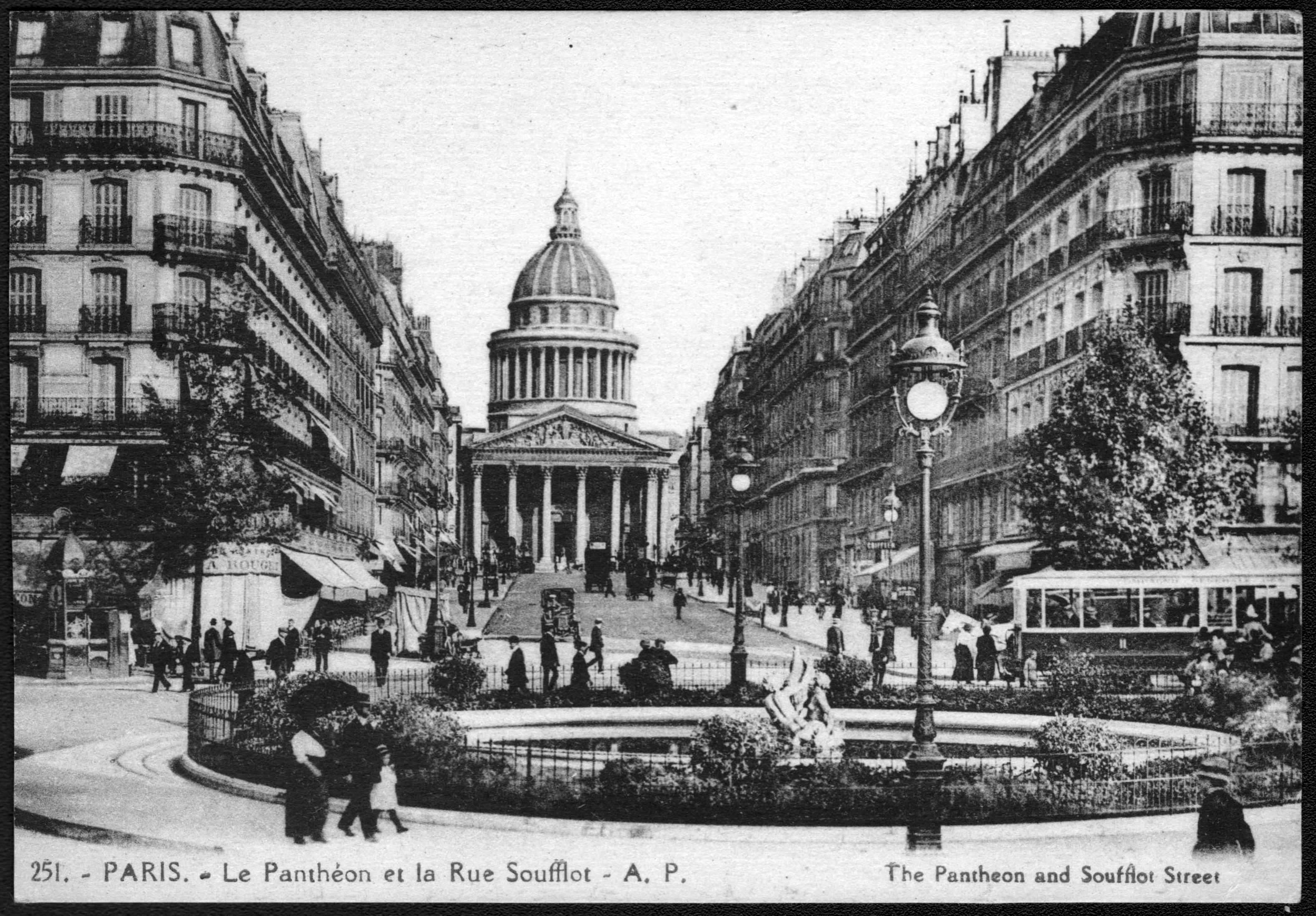
 (image: the Rue Soufflot in Paris, Belle Époque; source: Wikimedia Commons)

The Institut des Hautes Études Internationales (Université Paris II Panthéon-Assas) published the first volume of a new collection dedicated to the "Grandes pages du droit international".

Abstract:
Avec cette nouvelle collection consacrée aux Grandes pages du droit international, l’Institut des hautes études internationales a choisi d’entreprendre l’étude du passé de la doctrine  internationaliste, pour y partir à la recherche des pages qui permettraient de comprendre mieux le présent, mieux le penser et, idéalement, mieux nommer les choses.
 Il s’est représenté cette doctrine comme un vaste champ, laissant à chacun de ses membres le soin d’y cueillir des fleurs éparses, selon son propre choix et ses affinités personnelles.


Dans la composition de ce premier petit bouquet consacré aux sujets du droit international, on ne cherchera d’autre critère que le goût de l’Institut et celui de ses doctorants, docteurs et professeurs ayant conçu collectivement la journée d’études dont cet ouvrage est issu.
 Le lecteur y retrouvera, ou y découvrira, l’étonnante diversité doctrinale qui fait la richesse, et la difficulté, du droit international.


De Francisco de Vitoria à Rolando Quadri, d’Emer de Vattel à Louis Le Fur, en passant par Kelsen, Guggenheim, Anzilotti et Morelli, René-Jean Dupuy, Jellinek, Krylov, Lauterpacht, Scelle…, les plus éminents publicistes des grandes traditions juridiques ont pensé dans le temps la théorie des sujets du droit international, et continuent d’en éclairer l’actualité permanente.


Fondé au lendemain du premier conflit mondial, l’Institut des Hautes Etudes Internationales est aujourd’hui rattaché à  l’Université Panthéon-Assas et dirigé par le professeur Carlo Santulli. Les contributions du présent volume ont été recueillies avec le concours de Madame Claire Crépet Daigremont, maître de conférences de l’Institut.
 Table of contents:
 L'Etat
  • "Les sujets de droit, le rôle de la doctrine… et d’abord Rolando Quadri" (Carlo Santulli) 
  • "La reconnaissance d'Etat chez Hans Kelsen : étude d'un revirement doctrinal spectaculaire" (Hugo Meunier)
  • L’acquisition du titre territorial : la notion de terra nullius chez Francisco de Vitoria, Emer de Vattel et Lassa Oppenheim"(Charlotte Servant-Le Priol)
  • Normes et réalités dans la distinction entre Etat et fédération chez Paul Guggenheim" (Béatrice Trigeaud)
  • "Le concept de souveraineté chez Georg Jellinek"(Gérald Cahin)
  • "La spiritualisation de la souveraineté chez Louis Le Fur" (Pascale Martin-Bidou)
Les organisations internationales
  • "L’imputation de l’activité des organisations internationales dans la pensée de Dionizio Anzilotti et de Gaetano Morelli" (Lola Maze)
  • "Humanité et Organisation des Nations Unies dans la pensée de René-Jean Dupuy" (Jill Brumier)
  • "Quel rideau de fer ? L’individu comme sujet médiat du droit international chez Serge Krylov et Dionisio Anzilotti" (Nathalia Chaeva)
  • "Scelle et Hayek compagnons de route" (Yves Nouvel)
  • "L’individu, sujet matériel du droit international chez Giuseppe Sperduti" (Mathilde Frappier)
  • "L’individu, sujet d’obligations en droit international ? L’exemple du pirate chez Hersch Lauterpacht" (Jonathan Bourguignon)
  • L’individu, sujet du droit international selon Jean Spiropoulos" (Anne-Catherine Fortas)
  • "L’entreprise, sujet parmi d’autres du droit international chez Philip C. Jessup" (Lanah Kammourieh) 

More information on Pedone's website.