ESIL Interest Group History of International Law

ESIL Interest Group History of International Law
Showing posts with label podcast. Show all posts

Wednesday, 30 December 2020

PODCAST: War and Democracy, the case of Athens (France Culture: Concordance des temps, 19 DEC 2020)

(image source: France Culture)

Abstract:

On s’était bien trompé ! On avait nourri bien des illusions, dans les années 1990, chez ceux qui avaient annoncé qu’après l’effondrement de l’URSS, couplé avec la fin des conflits coloniaux, la démocratie était vouée, grâce à la paix, à triompher bientôt sur toute la planète. On se souvient que le professeur américain Francis Fukuyama avait ainsi prédit la « fin de l’Histoire », autrement dit le triomphe du modèle politique des États-Unis tout autour de la Terre, selon une logique incoercible. Hélas ! le XXIe siècle s’est déjà chargé de faire voler en éclats cette belle illusion en nous rappelant que les relations entre la guerre, la paix et la démocratie, qui vont nous occuper ce matin, étaient bien plus compliquées que cela. Certes, une défaite existentielle a raison de presque tous les régimes. Les cas récents de la France comme de l’Allemagne nous l’ont assez appris - pour ne pas parler du Japon en 1945 ou, plus près de nous, de l’Argentine, dans l’affaire des Malouines. Mais on ne peut pas s’en tenir à cette simple observation. Et afin d’approfondir la réflexion dans ce domaine, nous allons braquer l’attention sur un cas particulier, celui de la guerre dite du Péloponnèse, qui opposa Athènes à Sparte, au cours des trois dernières décennies du IVe siècle avant notre ère. On a accoutumé de parler d’Athènes comme de la « mère des démocraties ». Il est donc pertinent de considérer, en comparaison avec notre temps, quels effets ces hostilités ont eus sur la marche d’un régime qui demeure si prestigieux mais aussi quelle influence la nature même de ce régime a pu avoir sur la conduite de la guerre. Mon invité, Vincent Azoulay, directeur d’études à l’EHESS, appartient à une nouvelle génération d’historiens de l’Antiquité qui bousculent beaucoup d’idées reçues. Il a le goût manifeste des rapprochements entre le passé et le présent. Je me devais par conséquent de le convier. C’est chose faite. 

(more information here)

Friday, 18 December 2020

PODCAST: House of Wisdom with Dr. Inge van Hulle


(Source: House of Wisdom)


The House of Wisdom Podcast has recently talked to Dr. Inge van Hulle about her new book “Britain and International Law in West Africa: The Practice of Empire”.

"Anthea Roberts asked the question how international is international law? When we look back at the development of international law within West Africa during the 19th century we realise there were many voices involved, not just Britain.  

In this episode, we talk to Dr. Inge Van Hulle about her new book - Britain and International Law in West Africa: The Practice of Empire. We discuss the influence ex colonial powers have had on the development of the international legal system, changing narratives about our perceptions of West Africa, and whether we need to rethink how we teach and research international law.   

Dr. Inge Van Hulle is Assistant Professor of Legal History at Tilburg University, The Netherlands. Prior to joining Tilburg University she worked as a PhD research assistant at the department of Roman law and legal history at KU Leuven where she obtained her PhD in 2016. Her area of expertise is International Legal Theory and International Legal History, in particular colonialism and West Africa."

(Source: Houseofwisdompodcast.co.uk)

(source: ESCLH Blog)

Tuesday, 8 December 2020

PODCAST: Les 75 ans de l'ONU (interview with Olivier CORTEN by Radio Campus (ULB))


(image source: Wikimedia Commons)

Description:

Fondée sur les ruines de la Société des Nations (SDN), l'Organisation des Nations Unies pose ses bases durant la seconde guerre mondiale. Avec une volonté affichée d'assurer la paix partout où c'est nécessaire, où en est l'ONU après 75 ans d'existence. Avec Olivier Corten, professeur de droit international à l'ULB.

Listen here

Thursday, 13 August 2020

PODCAST: The Congress of Vienna (BBC In Our Time, 19 OCT 2017)

(image source: BBCFour)

Description:
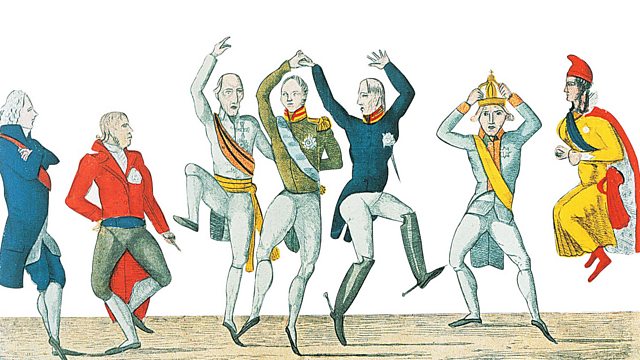
Melvyn Bragg and guests discuss the conference convened by the victorious powers of the Napoleonic Wars and the earlier French Revolutionary Wars, which had devastated so much of Europe over the last 25 years. The powers aimed to create a long lasting peace, partly by redrawing the map to restore old boundaries and partly by balancing the powers so that none would risk war again. It has since been seen as a very conservative outcome, reasserting the old monarchical and imperial orders over the growth of liberalism and national independence movements, and yet also largely successful in its goal of preventing war in Europe on such a scale for another 100 years. Delegates to Vienna were entertained at night with lavish balls, and the image above is from a French cartoon showing Russia, Prussia, and Austria dancing to the bidding of Castlereagh, the British delegate. With Kathleen Burk Professor Emerita of Modern and Contemporary History at University College London Tim Blanning Emeritus Professor of Modern European History at the University of Cambridge and John Bew Professor in History and Foreign Policy at the War Studies Department at King's College London Producer: Simon Tillotson.

Listen here.

Tuesday, 9 June 2020

PODCAST: How public international law has been made, found and proven from the 17th to the 21st century [Youard Lecture in Legal History 2011] (Oxford: Faculty of Law, 2011)

(image: Radcliffe Camera, Oxford; source: Wikimedia Commons)

Prof. Stefan Talmon (Bonn) delivered the Youard Lecture in Legal History 2011 at the Faculty of Law of Oxford University on the topic How public international law has been made, found and proven from the 17th to the 21st century.

Click here to listen.

Tuesday, 7 January 2020

PODCAST: Aristide Briand, prophète ou bateleur ? (France Culture: Concordance des Temps, 14 DEC 2019)

(image source: France Culture)

Podcast description:
Christophe Bellon, maître de conférences à l’Université catholique de Lille et chercheur associé au Centre d’histoire de Sciences Po, nous a donné une belle biographie d’Aristide Briand : nous allons évoquer avec lui cette personnalité considérable, ondoyante peut-être, mais plus déterminée dans ses habiletés mêmes que ses adversaires ne l’ont généralement dépeinte.
More information with France Culture.

Friday, 23 August 2019

PODCAST: Law, History and Global Governance (Dr Megan Donaldson) [Interventions. The Intellectual History Podcast]

(image source: interventions)

Interventions, the Intellectual History Podcast (Cambridge) published an episode with dr. Megan Donaldson on "Law, History and Global Governance".

Series description:
What do intellectual historians currently investigate? And why is this relevant for us today? These are some of the questions our podcast series, led by graduate students at Cambridge, seeks to explore. It aims to introduce intellectual historians and their work to everyone with an interest in history and politics. Do join in on our conversations!
Listen here.

Thursday, 20 June 2019

PODCAST: Une histoire des relations internationales [La Fabrique de l'Histoire/France Culture]

La Fabrique de l'Histoire, the daily broadcast on history on France Culture, picked the history of international organizations as its theme from 10 to 13 June.

Comment au XIXe siècle, les ouvriers se sont-ils organisés pour lutter contre la mondialisation du capital et la mise en concurrence des travailleurs ? Et ce à l'échelle internationale ? L'historien Nicolas Delalande retrace la naissance en 1864 de l’Association Internationale des Travailleurs.


Institution la plus ancienne du système des Nations Unies, l'O.I.T. fête cette année son centenaire. L'occasion de revenir sur l'histoire de l'organisation mondiale qui fait autorité pour le monde du travail et défend les droits des travailleurs depuis 1919.


Tuesday, 14 May 2019

VIDEO LECTURE: 1815. Année zéro. L'Europe à l'heure des restitutions d'œuvres d'art (Collège de France Podcasts)

(image source: Collège de France)

Art historian Bénédicte Savoy (TU Berlin/Collège de France) adresses the question of art restitutions ("looting") and the historical origins of the concept in her lectures at the Collège de France, available for all through the institution's website or iTunes.

Download the video for free here.

Friday, 26 April 2019

PODCAST: La Grande-Bretagne, l'Europe et les autres: Le choix du monde ? (France Culture/La Fabrique de l'Histoire, 27 MAR 2019)

France Culture's La Fabrique de l'Histoire made a broadcast on the British Empire, British internal politics and "Global Britain". With Pierre Singaravélou (Paris I), Guillemette Crouzet (Warwick) and Clarisse Berthezène.

Introduction:
En quelques siècles le Royaume-Uni s'est imposé comme une puissance coloniale, adoptant tour à tour le rôle de policier du monde faisant régner la Pax Britannica et la posture du "splendide isolement", en observateur détaché des guerres intestines européennes. Le Royaume-Uni ne s'est pourtant jamais construit sans l'Europe ou en dehors de l'Europe, loin s'en faut. Le Brexit n'est que la dernière occurrence d'une longue histoire de relations complexes et fluctuantes, une histoire elle-même sujette à de nombreuses polémiques et à autant de décentrages que l'Empire britannique compta de territoires.


More information with France Culture.

Friday, 13 July 2018

PODCAST: Did the Peace of Versailles really end the Great War ? (France Culture: La Fabrique de l'Histoire, 29 JUN 2018)

(image source: France Culture)

La Fabrique de l'Histoire, the emblematic history podcast of France Culture, terminates its 2017-2018 season with a special broadcast on the atypical end of the Great War, with Professors John Horn (UC Dublin) and Anne Lehoërff (Lille).

More below.

Saturday, 23 June 2018

PODCAST: Histoire de la justice: De La Haye à Bogoro, quand l'art et les sciences sociales travaillent la justice internationale [La Fabrique de l'Histoire] (France Culture)

(image source: France Culture)

La Fabrique de l'Histoire, France Culture's flagship history podcast, welcomed a series of legal historians to discuss the history of justice.

The penultimate episode focuses on art, social science and international criminal justice.


More information here.

Thursday, 14 May 2015

PODCAST: Is Jihadism a New Brigadism ? (France Culture, La Fabrique de l'Histoire, 1 May 2015)

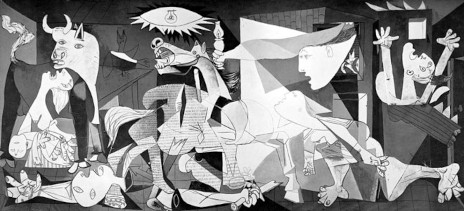
(Guernica by Pablo Picasso; source: Wikimedia Commons)

La Fabrique de l'Histoire, a radio show by and for historians, aired a debate held in the Sorbonne on 25 April on the problem of "alien enlistment". Professors Olivier Forcade (Paris IV-Sorbonne) and Jean-Pierre Filiu (Sciences Po Paris) debated with Hervé Mazurel (lecturer, University of Burgundy) and Gilles Pecout (Mediterranean historian) on parallels, recurrences and dissimilarities between the Syrian conflict and earlier episodes of European history. Particularly the Spanish Civil war and the liberal support for Greek independence, massively mobilising volunteers in France or Britain in the 20th and 19th centuries, come across when the problem of European Jihadi fighters appears in our newspaper columns today.

The full podcast can be found on France Culture's website (here).

Monday, 2 March 2015

PODCASTS: Workshop on Henri Lafontaine (ULB, October 2013)

 
 (image source: nobelprize.org)


The Centre for International Law at the Université Libre de Bruxelles (ULB) organized a workshop on peace activist and Nobel Peace Prize-winner Henri La Fontaine (1913), featuring inter alia Martti Koskenniemi and Robert Kolb. Extracts from this day are available on the Centre's website (click here).

Monday, 17 November 2014

PODCAST: Just war in canon law (Concordance des Temps, France Culture, 14 November 2014)

(Pope Urbanus II calls for the First Crusade at the Council of Clermont, 1095)

The French radio station France Culture broadcasted an episode of Jean-Noël Jeanneney's Concordance des Temps around the just war doctrine in medieval canon law and theology. Since the roots of present-day jus ad bellum lie in christian doctrine, the ESILHIL-blog thought this of sufficient interest to our members and readers. Jeanneney, former president of the Bibliothèque nationale de France, professor at Sciences Po Paris and former Secretary of State under François Mitterrand, invited medievist André Vauchez, member of the Institut de France and the Académie des inscriptions et des belles lettres, to discuss the Church's role as an actor in international relations and as a lawmaker. An erudite conversation on the (im)possible morality of the use of force, proportionality,  auctoritas, recta intentio, causa justa and sovereignty.

Podcast here.