ESIL Interest Group History of International Law

ESIL Interest Group History of International Law

Tuesday, 10 March 2015

CONFERENCE: "Dreaming of the International Rule of Law – A History of International Courts and Tribunals" - IG Workshop at ESIL's Annual Conference (Oslo, 10-12 September 2015)

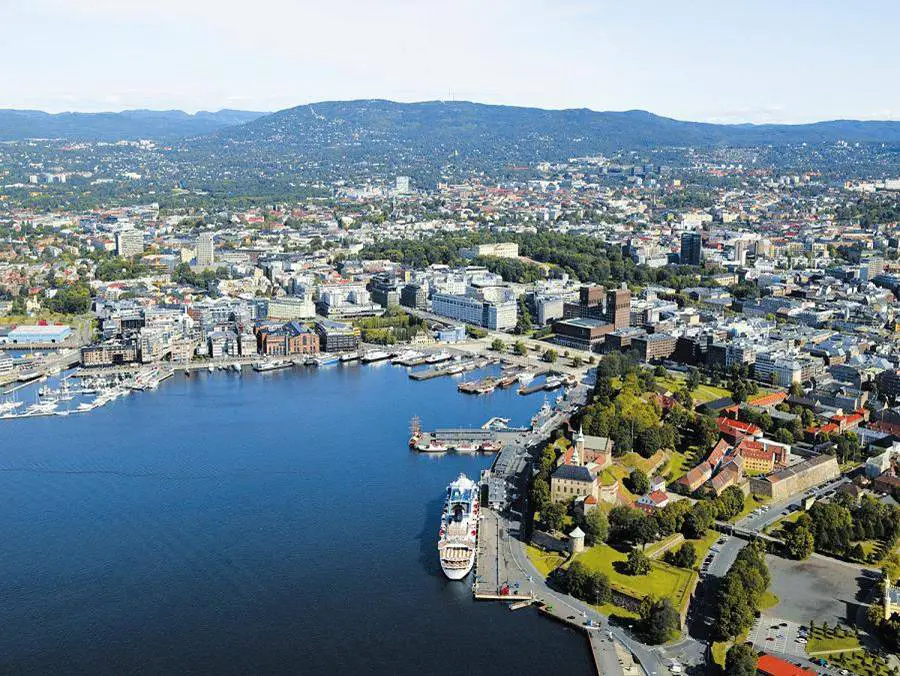
(image source: jus.uio.no)

The ESIL Interest Group History of International Law is happy to announce the composition of its workshop at the Upcoming XI ESIL Annual Conference in Oslo (10-12 September 2015, "The Judicialization of International Law - A Mixed Blessing?"). Two panels have been composed from over 30 submissions.

Panel I
“Une nouvelle vie de civilisation. Mixed Courts, Codes and International Politics in Nineteenth-Century Egypt"
Luigi Nuzzo is Professor of Legal History and History of International Law at the Law Faculty of the University of Salento (Lecce, Italy) and Global Research Fellow of New York University (NYU)

"A Service to Civilization and Mankind – The Dream of an International Prize Court"
Gabriela A. Frei is a British Academy Postdoctoral Research Fellow, University of Oxford and Junior Research Fellow in History, Jesus College University of Oxford. MSt in Historical Research, a DPhil in History, Oxford. Previously, Brandon Research Fellow at the Lauterpacht Centre for International Law at the University of Cambridge.


“Proliferation of Central American Courts of Justice: two down, one standing, one to go?”
Freya Baetens (Cand./Lic.Jur. (Ghent); LL.M. (Columbia); Ph.D. (Cambridge)) is Associate Professor of Law at Leiden University and Visiting Professor at the World Trade Institute (WTI) at Berne University. As an Associate Lawyer with VVGB Advocaten / Avocats (Brussels Bar), she regularly acts as counsel or expert in international disputes.

The First International War Crime Tribunal: the North Sea Incident Commission of 1905 (and the planned War Crimes Tribunals in the Versailles Treaty)
Jan Lemnitzer is a postdoctoral researcher in history, and works as a lecturer at Christ Church College, University of Oxford. PhD from the London School of Economics for a study of the 1856 Declaration of Paris (Palgrave Macmillan, forthcoming) which won the prize for the best thesis in international history in 2010 by the British International History Group

Panel II
"Detailing a New History of European Law: The Emergence of the European Court of Justice as a Perfect International Court?"
Morten Rasmussen is Associate Professor, University of Copenhagen. Principal Investigator of “The Copenhagen Project” Towards a New History of European Public Law, The Saxo Institute, University of Copenhagen & Bill Davies is Assistant Professor, Department of Justice, Law and Society, American University, Washington DC, USA

"International Judicialization in the Arab World: An Initial Assessment"
 Cesare Romano is Professor of Law and W. Joseph Ford Fellow at Loyola Law School, Los Angeles. Between 1997 and 2006, he created, developed and managed the Project on International Courts and Tribunals (www.pict-pcti.org). He is the co-editor among others of The Oxford University Press Handbook of International Adjudication, Oxford University Press (2014) and the Manual on International Courts and Tribunals, (OUP 2010)

"The Ideological Process of the Permanent Court of International Justice"
Yolanda Gamarra is Professor (“catedratico”) of International Law, Faculty of Law, University of Zaragoza (Spain). She has been Visiting Fellow at The Lauterpacht Centre for International Law, University of Cambridge and at the Royal Complutense College at Harvard as Fellow “Salvador de Madariaga”.


"Human Rights in Times of Trouble: the establishment of the Inter-American Court of Human Rights during the Dictatorship in Brazil"
Fabia Fernandes Carvalho Veçoso is Assistant Professor of International Relations, Federal University of São Paulo (UNIFESP), Brazil. PhD in International Law from the State University of São Paulo (USP), Brazil & João Henrique Ribeiro Roriz is Assistant Professor of International Relations, Federal University of Goiás (UFG), Brazil. PhD in International Law from the State University of São Paulo (USP), Brazil.

Tuesday, 3 March 2015

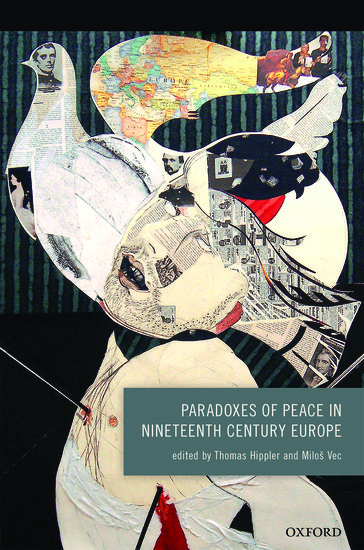
BOOK: T. HIPPLER & M. VEC (eds.), Paradoxes of Peace in Nineteenth Century Europe (Oxford: OUP, 2015), 304 p. ISBN 978-0-19-872799-6, £ 60

(image source: OUP)

Oxford University Press just published Paradoxes of Peace in Nineteenth Century Europe, edited by Thomas Hippler (Lyon/Sciences Po) and Miloš Vec (Vienna).

Book presentation:
'Peace' is often simplistically assumed to be war's opposite, and as such is not examined closely or critically idealized in the literature of peace studies, its crucial role in the justification of war is often overlooked. Starting from a critical view that the value of 'restoring peace' or 'keeping peace' is, and has been, regularly used as a pretext for military intervention, this book traces the conceptual history of peace in nineteenth century legal and political practice. It explores the role of the value of peace in shaping the public rhetoric and legitimizing action in general international relations, international law, international trade, colonialism, and armed conflict. Departing from the assumption that there is no peace as such, nor can there be, it examines the contradictory visions of peace that arise from conflict.

These conflicting and antagonistic visions of peace are each linked to a set of motivations and interests as well as to a certain vision of legitimacy within the international realm. Each of them inevitably conveys the image of a specific enemy that has to be crushed in order to peace being installed. This book highlights the contradictions and paradoxes in nineteenth century discourses and practices of peace, particularly in Europe.
Table of contents:
Introduction
 1: Thomas Hippler and Miloš Vec: Peace as a Polemic Concept: Writing the History of Peace in Nineteenth Century Europe
Part I: International Law
 2: Miloš Vec: From Invisible Peace to the Legitimation of War. Paradoxes of a Concept in 19th Century International Law Doctrine
 3: Eliana Augusti: Peace by Code: Draft Solutions for the Codification of International Law
 4: Kristina Lovric-Pernak: Aim: Peace - Sanction: War. International arbitration and the problem of enforcement
Part II: Economy
 5: Thomas Hopkins: The Limits of 'Cosmopolitical Economy': International Trade and the Nineteenth-Century Nation-State
 6: Niels P. Petersson: The Promise and Threat of Free Trade in a Globalising Economy: A European Perspective
 7: Lea Heimbeck: 4 Legal Avoidance as Peace Instrument. Domination and Pacification through Asymmetric Loan Transactions
Part III: Actors
 8: Matthias Schulz: Paradoxes of a Great Power Peace: The Case of the Concert of Europe
 9: Adrian Brisku: The Holy Alliance as 'An Order of Things Conformable to the Interests of Europe and to the Laws of Religion and Humanity'
 10: Thomas Hippler: From Nationalist Peace to Democratic War: The Peace Congresses in Paris (1849) and Geneva (1867)
 11: Susan Zimmermann: The Politics of Exclusionary Inclusion. Peace Activism and the Struggle on International and Domestic Order in the International Council of Women, 1899 - 1914
Part IV: Values
 12: Oliver Eberl: The Paradox of Peace with 'Savage' and 'Barbarian' Peoples
 13: Stefan Kroll: The Illiberality of Liberal International Law: Religion, Science, and the Peaceful Violence of Civilization
 14: Mustafa Aksakal: Europeanization, Islamization, and the New Imperialism of the Ottoman State
Epilogue
 15: Bo Stråth: Perpetual Peace as Irony, as Utopia, and as Politics
 More information on the publisher's website.

Monday, 2 March 2015

CONFERENCE: Eastern Europe and the History of International Law (Leipzig University/L'viv, 26-28 August 2015)/PROJECT: Juridification Processes in International Relations: Eastern European Conflicts and their Influence on International Law since 1850

 
 (image source: Leipzig University)


The Centre for Humanities and German and Eastern-Europan Culture (Prof. Stefan Troebst) at the University of Leipzig presented its multi-disciplinary research project 'Verrechtlichungsprozesse in den internationalen Beziehungen: Prägungen des Völkerrechts durch Konflikte im östlichen Europa seit 1850' on HSozKult.de. The project centres on a specific Eastern European lecture of the history of international law, focusing on a collective history of the actors.

Scientific events:
- 100 Years On: The Carnegie Report on the Causes and Conduct of the Balkan Wars of 1912/3, Geisteswissenschaftliches Zentrum Geschichte und Kultur Ostmitteleuropas, Leipzig, 4./5. Juli 2013. Publikation in Vorbereitung: Der ‚Carnegie Report on the Causes and Conduct of the Balkan Wars 1912/13’. Wirkungs- und Rezeptionsgeschichte im Völkerrecht und der Historiographie, hg. von Dietmar Müller und Stefan Troebst, Comparativ 6 (2014).
- GWZO-Ringvorlesung SS 2015 zum Thema „Ostmitteleuropäische Prägungen des modernen Völkerrechts“ von April bis Juli 2015, u.a. mit Prof. Dr. Lauri Mälksoo, Prof. Dr. Eric Weitz, Prof. em. Dr. Jost Dülffer, Dr. Cindy Daase, Prof. Dr. Martin Aust, Prof. Dr. Otto Luchterhandt
- East European Cataclysms and the Making of Modern International Law, Geisteswissenschaftlichen Zentrum Geschichte und Kultur Ostmitteleuropas zusammen mit der Nationalen Ivan Franko-Universität L’viv, L’viv 26.-28. August 2015.

Project description (in German):
Seit Januar 2014 arbeitet am Geisteswissenschaftlichen Zentrum Geschichte und Kultur Ostmitteleuropas an der Universität Leipzig (GWZO) unter der Leitung von Prof. Dr. Stefan Troebst und Dr. Dietmar Müller eine mehrköpfige Projektgruppe zum Thema „Verrechtlichungsprozesse in den internationalen Beziehungen: Prägungen des Völkerrechts durch Konflikte im östlichen Europa seit 1850“. Die Forschungen sollen in einem dreibändigen Handbuch münden, in dem die Geschichte von Kongressen, Verträgen und Gerichtsstatuten sowie die von Institutionen und internationalen Organisationen aus ostmitteleuropäischer Perspektive dargestellt werden. Ergänzt wird dies um eine akteurszentrierte, prosopographische Analyse. In der Projektgruppe sind eine Postdoc- sowie eine Doktorandenstelle vakant, die vorzugsweise mit Juristen aus dem Bereich des Völkerrechts und mit Politologen oder Historikern aus dem Bereich der Internationalen Beziehungen respektive der Internationalen Geschichte besetzt werden sollen. Darüber hinaus bietet die Projektgruppe verschiedene Anbindungs- und Finanzierungsmöglichkeiten für die Bearbeitung einschlägiger Themen an. Bewerbungen und inhaltliche Anregungen bitten wir an unten stehende Adresse zu schicken.

Die Verrechtlichung der internationalen Beziehungen in Gestalt des sich dynamisch entwickelnden Völkerrechts ist ein universell angelegtes Projekt der europäischen Moderne. Dennoch weist seine Entstehungsgeschichte einer Reihe von Prinzipien, Regelungsfelder und Regime eine starke regionale Prägung auf. Zuvörderst gilt dies für die Wirkungen des Konfliktgeschehens im östlichen Europa im Zeitalter von Nationalismus und Nationalstaatsbildung. Das Projekt untersucht die Geschichte internationaler Beziehungen und ihrer Verrechtlichung in Form des Völkerrechts sowie zugleich die Geschichte des Völkerrechts als Wissenschaftsgeschichte aus einer ost(mittel)europäischen Prägungsperspektive. Ausgangspunkte dabei sind die Teilungen Polens 1774-1795, der den Krim-Krieg beendende Pariser Friedensschluss von 1856 und der Berliner Kongress von 1878, Untersuchungsschwerpunkte die Pariser Vorortverträge von 1919/20 und die Gründung des Völkerbunds 1920. Ebenfalls im Zentrum des Forschungsinteresses steht die auf den osmanischen Genozid an den Armeniern sowie auf den Holocaust zurückgehende Genozid-Konvention der Vereinten Nationen 1948 sowie die Entwicklung des Völkerstrafrechts von Nürnberg bis Den Haag. Den Schlusspunkt bildet die Herausbildung einer Schutzverantwortung der Staatengemeinschaft (Responsibility to Protect), wie sie als Folge des Eingreifens der NATO in Serbien 1999 zur Anwendung kam und 2008 in der Gründung des neuen Staates Kosova resultierte. Aufgrund ihrer historischen Strukturmerkmale war im östlichen Europa die Konfliktdichte zur Zeit des Übergangs vom klassischen zum modernen Völkerrecht sowie das gesamte 20. Jahrhundert hindurch außerordentlich hoch. Die wiederholten und häufig dramatischen Veränderungen der politischen Landkarte, bedingt durch imperialen Zerfall, zeitverschobene Nations- und Nationalstaatsbildung, Großmachteinfluß, diktatorische Herrschaft, religiöse Pluralität, sprachliche Vielfalt und ethnische Diversität, bewirkten unmittelbar erhöhten regionalen Regelungsbedarf, der sich mittelbar in Neuerungen im Völkerrecht niederschlug. Dieser Kausalzusammenhang ist zugleich Grund dafür, dass ein hoher Anteil an prominenten Theoretikern wie Praktikern des Völkerrechts aus der Osthälfte Europas, hier vor allem aus Minderheitengruppen, stammt.
Das Projekt verknüpft Fragestellungen der Disziplinen Völkerrechtsgeschichte, Geschichte der internationalen Beziehungen sowie Ost- und Südosteuropäische Geschichte mit dem Ziel, die zentrale Arbeitshypothese von einer maßgeblich ost-, ostmittel- und südosteuropäisch geprägten Völkerrechtsentwicklung von der Internationalisierung der Orientalischen Frage bis zum postjugoslawischen Staatenbildungsschub zu überprüfen. Das Projekt weist dabei Berührungspunkte zur Völkerrechts- und Diplomatiegeschichtsschreibung, weiterhin zu „New Approaches to International Law“, zu „Critical Legal Studies“ und zur osteuropabezogenen Teildisziplin der Geschichtswissenschaft sowie darüber hinaus zu aktuellen Forschungsansätzen wie einer „New International History“ und einer Kulturgeschichte des Politischen auf. Zudem gibt es der geschichtsregionalen Konzeption „Ostmitteleuropa“ eine neue Dimension, nämlich diejenige einer auf nationale Akteure, transnationale Institutionen und Völkerrechtsregime fokussierte historischen Kulturwissenschaft.
 Researchers involved:
Stefan Troebst: Die jüdisch-deutsche Völkerrechtlersymbiose im Ostmitteleuropa der Zwischenkriegszeit
Dietmar Müller: Forschungen zur Institutionalisierung des Völkerrechts. Akteure, Normen und internationale Organisationen
1) Die Europäische Donaukommission (1856–1945) in der Völkerrechtsgeschichte
2) Anfänge des Völkerstrafrechts in der Zwischenkriegszeit. Vespasian Pella und Raphael Lemkin
Adamantios Skordos: Südosteuropa als völkerrechtsprägende Geschichtsregion: Nationale Homogenisierungsprozesse – ethnopolitische Gewalt – internationale Konfliktregulierung (19.-21. Jahrhundert)
Arno Trültzsch: Jugoslawien als Mitinitiator der Blockfreien-Bewegung – Völkerrechtsinnovationen, Institutionalisierungsversuche und außenpolitische Identität (1948–1991)
Cindy Daase (assoziiert): Warfare und Lawfare - Völkerrechtschlachten am Verhandlungstisch. Völkerrechtsrhetorik in der Beilegung und Aufrechterhalten von (eingefrorenen) Konflikten im östlichen Europa seit dem Ende des Kalten Krieges
Stephan Stach (assoziiert): Misslungene Staatsgründungen und das Selbstbestimmungsrecht der Völker im östlichen Europa, 1918–1923
 Find out more here, as well as on the project's website.

PODCASTS: Workshop on Henri Lafontaine (ULB, October 2013)

 
 (image source: nobelprize.org)


The Centre for International Law at the Université Libre de Bruxelles (ULB) organized a workshop on peace activist and Nobel Peace Prize-winner Henri La Fontaine (1913), featuring inter alia Martti Koskenniemi and Robert Kolb. Extracts from this day are available on the Centre's website (click here).

Monday, 23 February 2015

CONFERENCE: Networks and Practices of Diplomacy after 1919 (Brussels, Royal Academy, 20-21 March 2015)


(Image: Academy Palace, Brussels; source: Wikimedia Commons)


The Francophone Royal Academy of Belgium for Science, Letters and Art hosts a two-day colloquium on "Diplomatic networks and practices in Europe, from 1919 on", organized by Vincent Dujardin (UCLouvain), Vincent Genin (ULg), Tomas Raineau (Paris-Sorbonne) and Matthieu Osmont (Tübingen).

Program:
VENDREDI 20 MARS 2015
08h45 Accueil des participants

09h00 Discours d’ouverture
Michel Dumoulin (Professeur émérite à l’Université catholique de Louvain, membre de l’Académie royale de Belgique)


09h15 Introduction du colloque par les organisateurs :
Vincent Genin (Université de Liège)
Thomas Raineau (Paris IV-Sorbonne/Institut universitaire européen)
Matthieu Osmont (Institut culturel franco-allemand de Tübingen)

09h45 Conférence inaugurale : Pratiques diplomatiques et « nouvelles relations internationales »
Laurence Badel (Professeur à Paris I - Panthéon Sorbonne)
10h15 Pause-café

La diplomatie traditionnelle remise en question
Présidence : John Keiger (Université de Cambridge)

10h45 L’ambassade de France à Berlin au lendemain de la Première Guerre mondiale : bastion de la tradition diplomatique à l’heure de la «nouvelle diplomatie» ? (1919-1933)
Marion Aballea (IEP Strasbourg)

11h30 Les diplomates français et l’opinion publique dans l’entre-deux-guerres : le cas de la non-intervention dans la guerre civile espagnole
Renaud Meltz (Université de Polynésie)

12h15 Diplomacy : Building Europe through Family and Friends
Albu Comanescu (Université de Cluj-Napoca)

13h00 Pause déjeuner

Nouveaux acteurs et réseaux
Présidence : Philippe Raxhon (Université de Liège)
14h15 D’une politique européenne partisane à une diplomatie d’État : sociabilités, réseaux et pratiques diplomatiques des socialistes français entre 1971 et le début des années 1980
Judith Bonnin (Université Paris VII)

15h00 Diplomates publics entre Est et Ouest : les Associations d’amitié avec l’URSS en Europe occidentale
Sonja Grossmann (Université de Tübingen)

15h45 Le Mouvement européen contre la dictature franquiste (1962). Une diplomatie européenne parallèle ?
Victor Soriano (Université libre de Bruxelles)

16h30 Pause-café

17h00 Table-ronde sur les mutations post-1989 des diplomaties d’Europe centrale et orientale
Sous la présidence de Christian Lequesne (Sciences Po/CERI)
Et en présence de diplomates :
Pavel Fischer, András Balogh et S. E. Raoul Delcorde

SAMEDI 21 MARS 2015
Les nouvelles enceintes européennes et internationales

Présidence : Éric Bussière (Paris IV Sorbonne)
09h15 Éduquer à l’Europe ? Le Conseil européen comme instrument de socialisation des chefs de gouvernement aux rouages de la CEE/UE (1974-1992)
Emmanuel Mourlon-Druol (Université de Glasgow)

10h00 The European Commission as a Cold War
player. The case of EEC-Yugoslav relations
during the 1970s
Benedetto Zaccaria (Université de Padoue)

10h45 Pause-café

Deuxième partie
Présidence : Catherine Lanneau (Université de Liège)

11h15 Le Groupe des Sept et les deux Europes :« grandes » et « petites » diplomaties européennes face aux impératifs de la gouvernance gobale (années 1970-1980)
Noël Bonhomme (Paris IV Sorbonne)

12h00 Le Conseil d’aide économique mutuelle (CAEM) et la construction d’une diplomatie économique parallèle dans l’Europe socialiste (1962-1989)
Simon Godard (Paris I Panthéon Sorbonne)

12h45 Déjeuner

D’autres voies de la diplomatie
Présidence : Michel Dumoulin (Université catholique de Louvain)

14h15 Les diplomates du Saint-Siège : un corps singulier en mutation ? (1919-2005)
Olivier Sibre (Institut catholique de Paris)

15h00 Représenter les droits de l’homme : les diplomates français et la promotion des droits de l’homme au sortir de la Seconde Guerre mondiale
Alexandre Boza (Sciences Po)

15h45 Conclusions du colloque
Vincent Genin
Thomas Raineau
Matthieu Osmont

For practical information, see the colloquium's brochure.

Monday, 16 February 2015

ESIL CONFERENCE 2015 (OSLO): CALL FOR PAPERS CLOSED

(image source: goodlifereport.com)

The ESIL Interest Group History of International Law is pleased to have received numerous submissions in response to the call for papers posted on its website.

The deadline of 15 February 2015 has now passed. The organizing committee will examine all proposals on their merits and make a selection. The result will be announced on this blog, as well as on the ESIL conference website.

Monday, 9 February 2015

BOOK: Institut des Hautes Études Internationales (Paris II), Les sujets [Les grandes pages du droit international; 1], Paris: Pedone, 2015, 276 p. (€ 30, ISBN 978-2-233-00738-4)

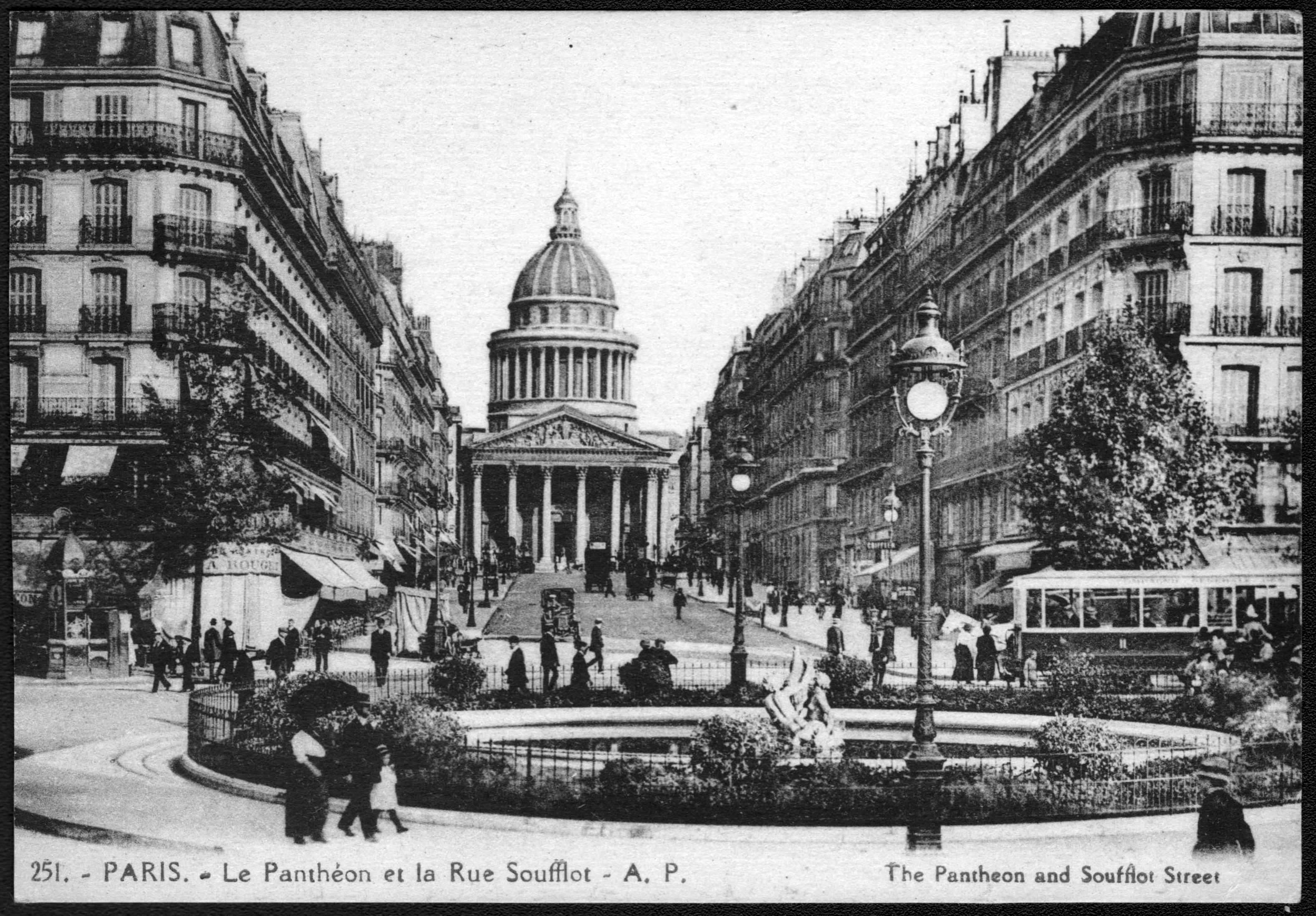
 (image: the Rue Soufflot in Paris, Belle Époque; source: Wikimedia Commons)

The Institut des Hautes Études Internationales (Université Paris II Panthéon-Assas) published the first volume of a new collection dedicated to the "Grandes pages du droit international".

Abstract:
Avec cette nouvelle collection consacrée aux Grandes pages du droit international, l’Institut des hautes études internationales a choisi d’entreprendre l’étude du passé de la doctrine  internationaliste, pour y partir à la recherche des pages qui permettraient de comprendre mieux le présent, mieux le penser et, idéalement, mieux nommer les choses.
 Il s’est représenté cette doctrine comme un vaste champ, laissant à chacun de ses membres le soin d’y cueillir des fleurs éparses, selon son propre choix et ses affinités personnelles.


Dans la composition de ce premier petit bouquet consacré aux sujets du droit international, on ne cherchera d’autre critère que le goût de l’Institut et celui de ses doctorants, docteurs et professeurs ayant conçu collectivement la journée d’études dont cet ouvrage est issu.
 Le lecteur y retrouvera, ou y découvrira, l’étonnante diversité doctrinale qui fait la richesse, et la difficulté, du droit international.


De Francisco de Vitoria à Rolando Quadri, d’Emer de Vattel à Louis Le Fur, en passant par Kelsen, Guggenheim, Anzilotti et Morelli, René-Jean Dupuy, Jellinek, Krylov, Lauterpacht, Scelle…, les plus éminents publicistes des grandes traditions juridiques ont pensé dans le temps la théorie des sujets du droit international, et continuent d’en éclairer l’actualité permanente.


Fondé au lendemain du premier conflit mondial, l’Institut des Hautes Etudes Internationales est aujourd’hui rattaché à  l’Université Panthéon-Assas et dirigé par le professeur Carlo Santulli. Les contributions du présent volume ont été recueillies avec le concours de Madame Claire Crépet Daigremont, maître de conférences de l’Institut.
 Table of contents:
 L'Etat
  • "Les sujets de droit, le rôle de la doctrine… et d’abord Rolando Quadri" (Carlo Santulli) 
  • "La reconnaissance d'Etat chez Hans Kelsen : étude d'un revirement doctrinal spectaculaire" (Hugo Meunier)
  • L’acquisition du titre territorial : la notion de terra nullius chez Francisco de Vitoria, Emer de Vattel et Lassa Oppenheim"(Charlotte Servant-Le Priol)
  • Normes et réalités dans la distinction entre Etat et fédération chez Paul Guggenheim" (Béatrice Trigeaud)
  • "Le concept de souveraineté chez Georg Jellinek"(Gérald Cahin)
  • "La spiritualisation de la souveraineté chez Louis Le Fur" (Pascale Martin-Bidou)
Les organisations internationales
  • "L’imputation de l’activité des organisations internationales dans la pensée de Dionizio Anzilotti et de Gaetano Morelli" (Lola Maze)
  • "Humanité et Organisation des Nations Unies dans la pensée de René-Jean Dupuy" (Jill Brumier)
  • "Quel rideau de fer ? L’individu comme sujet médiat du droit international chez Serge Krylov et Dionisio Anzilotti" (Nathalia Chaeva)
  • "Scelle et Hayek compagnons de route" (Yves Nouvel)
  • "L’individu, sujet matériel du droit international chez Giuseppe Sperduti" (Mathilde Frappier)
  • "L’individu, sujet d’obligations en droit international ? L’exemple du pirate chez Hersch Lauterpacht" (Jonathan Bourguignon)
  • L’individu, sujet du droit international selon Jean Spiropoulos" (Anne-Catherine Fortas)
  • "L’entreprise, sujet parmi d’autres du droit international chez Philip C. Jessup" (Lanah Kammourieh) 

More information on Pedone's website.