ESIL Interest Group History of International Law

ESIL Interest Group History of International Law
Showing posts with label ESIL conference. Show all posts

Thursday, 25 June 2020

ESIL ANNUAL CONFERENCES 2021, 2022, 2023

(image: Aix-en-Provence (1753); source: Wikimedia Commons)

The European Society of International Law/Société européenne de droit international decided to host its annual conferences:
- for 2021 in Stockholm (9-11 september)
- for 2022 in Utrecht
- for 2023 in Aix-en-Provence

More information on the 2021 conference on esil2021.se.

Monday, 9 September 2019

PRE-CONFERENCE MEETING: New Histories of Sovereigns and Sovereignties (Athens: ESIL 2019 Annual conference, 12 SEP 2019)

European Society of International Law

Interest Group on the History of International Law

New Histories of Sovereigns and Sovereignties
ESIL Athens 2019 Meeting


Faculty Club, Academias 48, 10672 Athens

(for directions see: https://esilathens2019.gr/venues/)


08.15-08.30
Welcome and Introduction

8.30-10.30
Panel One: Sovereignty before the Twentieth Century

Greg Ablavsky (Stanford) — ‘Species of Sovereignty: Native American Nationhood, the United States, and International Law, 1783–1795’

Connor McBain (Glasgow) — ‘Parcel of Rogues in a Nation: The Story of the Darien Company and the Forgotten Role of Corporate Sovereignty in Scots Colonisation of the “New World”’

Commentator: Markus Beham (Passau)

————
10.30-11.00 Coffee break

11.00-13.00
Panel Two: Sovereignty in the Twentieth Century

Diane Marie Amann (Georgia) — ‘Intersectional Sovereignties: Dr Aline Chalufour, Woman at Nuremberg — and at Paris, Ottawa, and Dalat’

Tsvetelina van Benthem (Oxford) — ‘Sovereignty, Sanctions and Functionalism’

Commentator: Jan Lemnitzer (University of Southern Denmark)

13.00-13.30
Future IG events


Thursday, 27 June 2019

ESIL ANNUAL CONFERENCE ATHENS 2019: IG History of International Law Event (12 SEP 2019): New Histories of Sovereigns and Sovereignties


European Society of International Law

Interest Group on the History of International Law

New Histories of Sovereigns and Sovereignties
ESIL Athens 2019 Meeting

(image source: ESIL)


Amphitheatre, Law Library, 17-19 Mavromichali str. Athens
(for directions see: https://esilathens2019.gr/venues/)

08.15-13.30


Panel One: Sovereignty before the Twentieth Century

Greg Ablavsky (Stanford) — ‘Species of Sovereignty: Native American Nationhood, the United States, and International Law, 1783–1795’

Connor McBain (Glasgow) — ‘Parcel of Rogues in a Nation: The Story of the Darien Company and the Forgotten Role of Corporate Sovereignty in Scots Colonisation of the “New World”’

Commentator: Markus Beham (Passau)

————

Panel Two: Sovereignty in the Twentieth Century

Diane Marie Amann (Georgia) — ‘Intersectional Sovereignties: Dr Aline Chalufour, Woman at Nuremberg — and at Paris, Ottawa, and Dalat’

Tsvetelina van Benthem (Oxford) — ‘Sovereignty, Sanctions and Functionalism’


Commentator: Jan Lemnitzer (University of Southern Denmark)

Amphitheatre, Law Library, 17-19 Mavromichali str. Athens
(for directions see: https://esilathens2019.gr/venues/)

08.15-13.30


Panel One: Sovereignty in before the Twentieth Century

Greg Ablavsky (Stanford) — ‘Species of Sovereignty: Native American Nationhood, the United States, and International Law, 1783–1795’

Connor McBain (Glasgow) — ‘Parcel of Rogues in a Nation: The Story of the Darien Company and the Forgotten Role of Corporate Sovereignty in Scots Colonisation of the “New World”’

Commentator: Markus Beham (Passau)

————

Panel Two: Sovereignty in the Twentieth Century

Diane Marie Amann (Georgia) — ‘Intersectional Sovereignties: Dr Aline Chalufour, Woman at Nuremberg — and at Paris, Ottawa, and Dalat’

Tsvetelina van Benthem (Oxford) — ‘Sovereignty and Functionalism’

Commentator: Jan Lemnitzer (Southern Denmark)

(see conference website)

Thursday, 25 October 2018

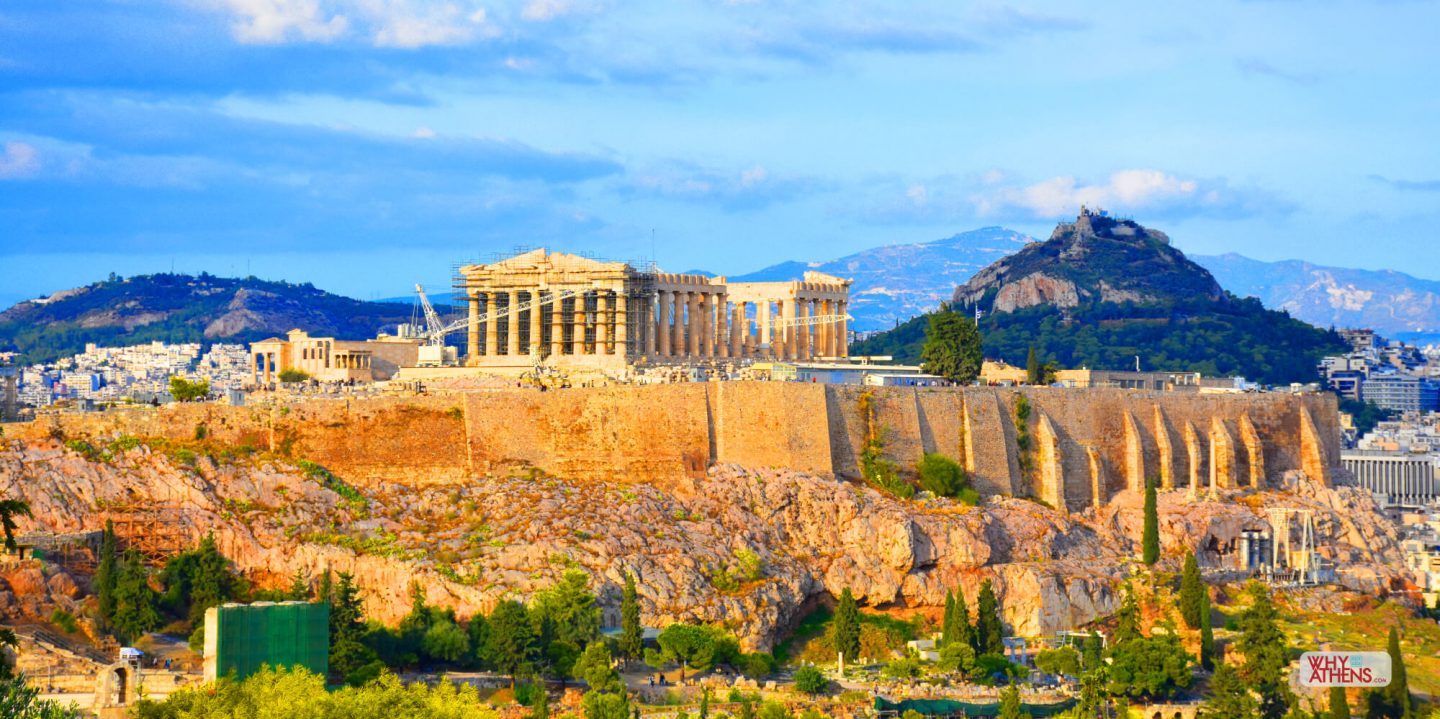
CALL FOR PAPERS AND INTEREST PROPOSALS: ESIL Annual Conference Sovereignty: A State of Flux?/Souveraineté: un concept en mouvenement ? (Athens, 12-14 SEP 2019); DEADLINE 31 JAN 2019


(image source: whyathens)
The time is ripe to revisit sovereignty, a concept so broad and yet instrumental to the current structure of the international legal order. The aim of the conference is to encourage a vigorous and fruitful exchange of ideas that will appeal to academics, researchers, students, and practitioners. The Society invites the submission of papers (and panel proposals from ESIL Interest Groups) addressing the following topics:

  • Agora I: Beyond Sovereignty: ABNJ and the Law of the Sea
  • Agora II: Exercising Sovereignty: Managing Migratory Flows
  • Agora III: Expanding Sovereignty: Extraterritoriality as a Tool
  • Agora IV: Apportioning Sovereignty: Delimitation as a Sovereignty Exercise
  • Agora V: Questing Sovereignty: The Role of Non-State Actors
  • Agora VI: Extending Sovereignty: Space Activities and New Frontiers
  • Agora VII: Enforcing Sovereignty: The Rapidly Expanding International Tax Law
  • Agora VIII: Defending Sovereignty: Protectionism in International Trade and Investment
  • Agora IX: Attacking Sovereignty: Security, Terrorism and the Use of Force
  • Agora X: Circumventing Sovereignty: The Challenges of Environmental Regulation

In addition, all ESIL Interest Groups will be invited to arrange pre-conference events on Thursday 12 September and Calls for Papers for those events will be available in 2019.


Abstracts by e-mail to: esilathens2019@law.uoa.gr. (Important: indicate clearly the agora for which the abstract is to be considered e.g. Athens 2019: submission for agora VII).  The deadline for submissions is 31 January 2019.

(source: ESIL Secretariat)

More information here.

Tuesday, 18 September 2018

CONFERENCE REPORT: Interest Group Pre-Conference Event "Consumers or Producers of International Law" at the ESIL Annual Conference on the "Universality of International Law" (Manchester, 12 SEP 2018)

(IG session presenters and conveners; credits M. Beham (Passau)/L. Castellanos (Asser))

The ESIL Interest Group History of International Law held its pre-conference event workshop on "Consumers or Producers of international law? Non-European experiences with the law of nations in comparative perspective" at the University of Manchester on 12 September 2018.

The first presenter, Lys Kulamayadil (PhD candidate, Graduate Institute) presented a paper using the notion of "Fairy-tale international law" to contextualise the debate on the Bandung Conference and New International Economic Order. Her presentation focused on the interplay between sovereignty and property, natural ressources and the 1973 oil crisis. In a response, Markus Beham (IG convener) questioned the role of oil elites highlighted in Kulamayadil's contribution. During the public debate, Leon Castellanos (Asser Institute) enquired whether the novel linking up of two strands (the New International Economic Order and Development studies) would have any further consequences. The presenter stated that the decolonisation of the economy counts as an indispensable precondition to studying the NIEO.

The second presenter, Aiko Nakai (Assistant Professor, Kyoto) expounded on "Latin American International Law as the First Regional International Law: The First Step of Irreversible Relativisation of European International Law". Using a well-illustrated powerpoint presentation, dr. Nakai emphasized the differences with European diplomatic practice and legal theory perceived by several international law authors from Latin America in the long 19th century. Frederik Dhondt (IG convener) replied to this paper, asking the presenter to link up her work with diplomatic practice and power issues. Liliana Obregon (University of the Andes) intervened in a lively exchange, moderated by Martin Clark (IG convener) on the label of Latin American tradition in international law: was "Latin American" international law just a label ?

The third presenter, Aleksandr Vodiannikov (OSCE) linked up Michel Foucault, decolonisation and the legal history of "Intermarium", or Eastern Europe between the Black Sea and the Baltic. In his analysis, the construction of identity against an "other" is a necessary methodological tool to debunk Soviet era-histories of the Russian Empire, Ukraine or the Polish-Lithuanian commonwealth. Vodiannikov highlighted the role of in his eyes neglected princely testamentary charters. Jan Lemnitzer (IG convener) highlighted the novel and stimulating character of this approach, but wondered whether the distinction between core and periphery could be seen as static, especially in view of the relatively long period concerned by the presenter. Notions of Moscow as the "Third Rome" or the enduring dominance of Byzantium nuance the idea of a "periphery" in Eastern Europe, at least if one takes the self-image of the parties concerned into account.

The session ended with a presentation of the IG's intention to take part in the following ESIL events:
- Research Forum on the "Rule of Law" (Göttingen, April 2019)
- Annual Conference on "Sovereignty" (Athens, September 2019)

Members will be contacted in the future by the ESIL Secretariat, and not longer by the conveners directly, due to the recent evolution of European data legislation. This should not withhold members from proposing initiatives organised at their home institutions, or announcing calls/publications/job advertisements on the blog.

Any member of the IG Steering Committee can be contacted to this end.

The conference can be revived on twitter by browsing the hashtag #ESIL2018.

Tuesday, 28 August 2018

ESIL ANNUAL CONFERENCE MANCHESTER - PRE CONFERENCE EVENT : Non-European experiences with the law of nations in comparative perspective (Manchester, 13 Sep 2018)

(image source: Travelodge)

The path from the European law of nations to a universal system of international law has attracted wide scholarly attention in the past decade. A variety of approaches have challenged the narrative of a European system that simply expands and covers most of the planet in the late 19th century. For example, scholars identifying with the TWAIL movement (Third world approaches to international law) have criticized modern international law as a product of western imperialism and colonialism. Building from this critique, other scholars have begun to ask how non-European conceptions and influences shaped and re-formed the European law of nations on its path towards becoming a global system. How can we read non-European jurists, lawyers, state leaders and peoples as producers, not just consumers, of international law?

Politicians, lawyers and activists from non-European countries are now seen as more than mere vessels through which the tradition of the European law of nations was stamped into new contexts. Rather, scholars now explore the impact of local elites in shaping the way international law was received into their regions. But to what extent were they successful in shaping international law as a whole? We need a stronger analytical framework to explore the broader picture and a more precise understanding of how each region’s or nation’s encounter with international law shaped both their own experience and aspects of the international system. 

After a double blind peer review-process, the ESIL Interest Group History of International Law selected the following papers:

Prof. dr. Aiko Nakai (Kyoto University, Kyoto): Latin American International Law as the First Regional International Law: The First Step of Irreversible Relativisation of European International Law
dra. Lys Kulamadayil (Graduate Institute, Geneva): Fairy-Tale International Law
Dr. Oleksandr Vodyannikov (OSCE): Forgotten Europe’s Borderland: the Rise and Fall of Indigenous System of ius gentium intermariae (X – XVII centuries) and postcolonial histories of Eastern Europe

The Steering Committee warmly invites all members and conference attendants to join us for the discussion.

Steering Committee
Jan Lemnitzer (president) (University of Southern Denmark)
Markus Beham (Vienna/Passau)
Martin Clark (LSE)
Frederik Dhondt (VUB/UAntwerpen)
Hossein Piran (Iran/US Claims Tribunal)

 More information (including registration) on the ESIL Conference's main page.

Monday, 8 January 2018

ESIL CONFERENCE PRE-CONFERENCE CALL: Consumers or Producers of international law? Non-European experiences with the law of nations in comparative perspective (DEADLINE 15 MAR 2018)

(image source: Travelodge)

The path from the European law of nations to a universal system of international law has attracted wide scholarly attention in the past decade. A variety of approaches have challenged the narrative of a European system that simply expands and covers most of the planet in the late 19th century. For example, scholars identifying with the TWAIL movement (Third world approaches to international law) have criticized modern international law as a product of western imperialism and colonialism. Building from this critique, other scholars have begun to ask how non-European conceptions and influences shaped and re-formed the European law of nations on its path towards becoming a global system. How can we read non-European jurists, lawyers, state leaders and peoples as producers, not just consumers, of international law?

Politicians, lawyers and activists from non-European countries are now seen as more than mere vessels through which the tradition of the European law of nations was stamped into new contexts. Rather, scholars now explore the impact of local elites in shaping the way international law was received into their regions. But to what extent were they successful in shaping international law as a whole? We need a stronger analytical framework to explore the broader picture and a more precise understanding of how each region’s or nation’s encounter with international law shaped both their own experience and aspects of the international system. 

The Interest Group for the History of International Law wants to support this emerging interest in contrasting and comparing regional experiences and invites scholars at every stage of their career to share insights on any angle of these developments, without geographic or temporal limitation.

Possible questions include:
  • What were the legacies of those regions and civilisations that had their own systems and traditions of law prior to the imperial encounter with Europe and its law of nations? Are there common patterns in how regional or imperial systems responded to their encounter with European international law, perhaps shaped by shared history, culture or religion, or was each experience specific and unique?
  •  If elements of Roman law or the European feudal order are recognized as precursors to features of modern international law, should extra-European legal systems be looked at in a similar way?
  • Can we detect a difference between international legal doctrine and state practice in analyzing these encounters?
  • What were the roles of specific fields of law, be it the acquisition or transfer of territory, the settlement of international disputes, the norms and expectations regarding the conduct of war and the conclusion of peace agreements, the legal status and experiences of foreign merchants, officials or travelers or the process of entering the emerging universal system of public and secret diplomacy?

Abstracts must be submitted no later than 15 March 2018 to esilighil@gmail.com on behalf of the Steering Committee of the Interest Group, which shall collectively supervise the blind peer-review process of the abstracts. Applicants will be notified on the outcome of the selection process by 30 March 2018.

Friday, 12 May 2017

SYMPOSIUM: Evaluating the Turn to History of International Law (ESIL Conference, Naples, 6 Sep 2017)

ESIL 2017 Annual Conference

Symposium of the 
Interest Group on the History of International Law

“Evaluating the Turn to History of International Law” 

Naples, Wednesday, 6 September 2017
13:00-17:00, Venue TBA


13:00: Welcome and Opening Remarks
Thomas Skouteris (The American University in Cairo)

13:00-14:30: Session 1
Martin Clark (London School of Economics): “Ambivalences, anxieties / Adaptations, advances”
Valentina Vadi (Lancaster University): “International Law and its Microhistories”
Amrita Mukherjee (University of Leeds): “Subaltern Studies & International Law”
DiscussantGerry Simpson (London School of Economics)
ModeratorThomas Skouteris (The American University in Cairo)

15:00-16:30: Session 2
Miriam Bak Mackenna (Lund University) & Matilda Arvidsson (Lund University): “The ‘turn to history’ and the sources doctrine in international law: disruption, democratization, and distress
Jan Martin Lemnitzer (University of Southern Denmark): “Writing a new history of international criminal law – where do we start?
Immi Tallgren (University of Helsinki)A turn to women? Histories of ‘international criminal lawyers
DiscussantIgnacio de la Rasilla del Moral (Brunel University)
ModeratorInge van Hulle (Tilburg University)

16:30: Closing remarks and discussion on future activities of the IGHIL

Symposium Conveners/ IGHIL Coordinating Committee Members
Frederik Dhondt, Inge van Hulle, Ignacio de lRasilladel Moral, and Thomas Skouteris

Saturday, 11 February 2017

CALL FOR PAPERS: Evaluating the ‘Turn to History’ in International Law - ESIL CONFERENCE 2017 (Naples, 7-9 Sep 2017); DEADLINE 15 MAR 2017

(image source: Wikimedia Commons)

On the occasion of the ESIL 13th Annual Conference (Naples, 7-9 September 2017) the ESIL Interest Group on the History of International Law hereby invites submissions, in English or in French, for its annual Workshop.

Call for Papers

During the past two decades the history of international law has evolved from a relatively marginal enterprise into a core professional concern and, in certain fields, a controlling vocabulary. The phenomenon, which is often captioned as a “turn to history”, is marked both by an exponential growth in publications and activities (journals, conferences, interest groups, blogs) and a re-invention of historical work as mode of critical analysis. One could begin to list several characteristics of the turn to history: the move away from trans-historical evolutionary accounts towards global, micro-, and subaltern histories; critiques of Eurocentrism; the emergence of histories of sub-fields of international law; socio-historical accounts of the international law profession; a renewed interest in archival work; an unprecedented interest in methodological questions; the role of historical accounts in judicial decisions; and so on. The purpose of the Workshop of the ESIL Interest Group on the History of International Law is to trace these disciplinary developments and evaluate their impact on contemporary international law scholarship and practice.

In this context, the IGHIL invites submissions by scholars working within the fields of international law, history, and politics on the following inter-related themes:

·       The impact of the historical turn on the methods of international legal history
·       The impact of the historical turn in sub-fields of international law (e.g. human rights, international criminal law, diplomatic history etc)
·       The impact of the historical turn on evaluating the historical function of international courts and tribunals
·       The impact of the historical turn on Eurocentrism
·       The impact of global, micro, subaltern, and other histories on international law historiography

Each submission should include
a)     An abstract of no more than 400 words;
b)     The intended language of presentation;
c)     A short curriculum vitae containing the author’s name, institutional affiliation, contact information and e-mail address.

Abstracts must be submitted no later than 15 March 2017 to esilighil@gmail.com on behalf of the Steering Committee of the Interest Group, which shall collectively supervise the blind peer-review process of the abstracts. Applicants will be notified on the outcome of the selection process by 30 March 2017.

Selection will be based on scholarly merit and with regard to producing an engaging workshop, without prejudice to gender, seniority, language or geographical location. Please note that the ESIL Interest Group on the History of International Law is unable to provide funds to cover the conference registration fee or related transport and accommodation costs.

The IG currently investigates publication possibilities for selected abstracts. The European Society of International Law has its own SSRN Paper series for every conference or research forum (http://www.esil-sedi.eu/node/82), which can maximise the visibility of your research.

See also ESIL website.

Sunday, 11 September 2016

ESIL IG History of International Law Workshop "Writing Crisis in the History of International Law" (Riga, 7 September 2016)

 (Prof. Peters starting her response to the papers presented)

The Interest Group invited its members (latest ESIL secretariat count: 377) for an engaging and stimulating workshop on the theme "Writing Crisis in the History of International Law" within the Annual ESIL conference, organised in Riga (Latvia). 

Four papers were presented by Monica García Salmones (Helsinki, "Universal Solutions for Exceptional Times: Vitoria and Grotius"), Eric Loefflad (Kent, "‘The Stunted ‘Science’ of Statehood as a Technology of Crisis Disavowal: Three ‘Gentle Civilizers’, The Blindspots of International Institutionalism, and Explanations of the Third Reich’"), Paolo Amarosa (Helsinki; "Diverging Reconstructions: the American international law of Alejandro Álvarez and James Brown Scott during World War I") and Ingo Venzke (Amsterdam; "The Economic Crisis in the 1970s: Possibilities for Change in the Past to Feed the Future"). Prof. Anne Peters (MPI Heidelberg) responded to the proposed texts.

The Interest Groups thanks all participants for a stimulating exchange on topics of doctrine, theory and the life of the law, ranging from 16th century theology to 21st century critical legal studies.


(view from the Latvian National Library, main site of the conference)

We point to the open call for abstracts for the workshop at the upcoming ESIL Research Forum in Granada (30-31 March 2017), which can be found here. We hope to welcome you again in Spain !

Tuesday, 5 April 2016

ESIL Conference 2016 (Riga): Interest Group Workshop: "Writing Crisis in the History of International Law" Line-up (7 Sep 2016)

 (image: M.C. Escher, "Writing Hands"; source: MC Escher)

The ESIL Interest Group History of International Law is delighted to announce the line-up for its workshop "Writing Crisis in the History of International Law" at the upcoming ESIL Annual Conference, held at the Riga Law School (8-10 Sep 2016).

This event will take place ahead of the Conference, on 7 September 2016.

The Interest Group expresses its thanks to the 19 submitters of abstracts (cf. call for papers). Unfortunately, it was not possible to include all interesting paper proposals we received. After a process of double blind peer review by independent assessors, the following five papers have been retained:
"The Economic Crisis in the 1970s"
Dr. Ingo Venzke
Associate Professor at the Department of International and European Law of the University of Amsterdam

"The Stunted 'Science' of Statehood"
Eric Loefflad
Phd candidate at the University of Kent at the Centre for Critical International Law.

"Diverging Reconstructions"
Paolo Amorosa

Phd candidate at the Erik Castrèn Institute, University of Helsinki.

"The Emergence of the 'Indifference'-Narrative"
Agathe Verdebout
Phd candidate at ULB Belgium at the Centre for International Law

"Universal Solutions for Exceptional Times"
Dr. Monica Garcia-Salmones
Postdoctoral researcher at the Erik Castrèn Institute, University of Helsinki.
 We welcome all persons interested at the Workshop in Riga !

Saturday, 11 July 2015

IMPORTANT ! Practical information regarding the ESIL conference: Workshop (9 September, 14:00-17:00) and General Assembly (10 September, 14:00-17:00)


(image source: uio.no)

Please find below a message of Assist. Prof. dr. I. De la Rasilla y del Moral (Brunel) on behalf of ESILHIL:

All information related to the conference - registration, accommodation ... as offered by the organizers is available on the website: please refer to this link for all logistical information: http://www.jus.uio.no/pluricourts/english/news-and-events/events/2015/esil-2015-en/

Unfortunately, the IGHIL cannot provide you with any more information than the one made generally available by the organizers.

The program of the workshop is the one available on the website: http://esilhil.blogspot.de/p/blog-page.htmlThe workshop in accordance with the program will take place on the 9th of September 14.00-17.00

On the 10th September from 17.30-18.15, we have a general meeting of the IGHIL.
The location is Auditorium 6 in Domus Academica building, with
capacity for 100 persons.

Map: http://www.uio.no/om/finn-fram/omrader/sentrum/se02/
Picture of the Auditorium:
https://www.admin.uio.no/ta/PDF_fra_Pythagoras_bygningsvis_public/universitetet/sentrum/se02/se0222901.jpg

Tuesday, 10 March 2015

CONFERENCE: "Dreaming of the International Rule of Law – A History of International Courts and Tribunals" - IG Workshop at ESIL's Annual Conference (Oslo, 10-12 September 2015)

(image source: jus.uio.no)

The ESIL Interest Group History of International Law is happy to announce the composition of its workshop at the Upcoming XI ESIL Annual Conference in Oslo (10-12 September 2015, "The Judicialization of International Law - A Mixed Blessing?"). Two panels have been composed from over 30 submissions.

Panel I
“Une nouvelle vie de civilisation. Mixed Courts, Codes and International Politics in Nineteenth-Century Egypt"
Luigi Nuzzo is Professor of Legal History and History of International Law at the Law Faculty of the University of Salento (Lecce, Italy) and Global Research Fellow of New York University (NYU)

"A Service to Civilization and Mankind – The Dream of an International Prize Court"
Gabriela A. Frei is a British Academy Postdoctoral Research Fellow, University of Oxford and Junior Research Fellow in History, Jesus College University of Oxford. MSt in Historical Research, a DPhil in History, Oxford. Previously, Brandon Research Fellow at the Lauterpacht Centre for International Law at the University of Cambridge.


“Proliferation of Central American Courts of Justice: two down, one standing, one to go?”
Freya Baetens (Cand./Lic.Jur. (Ghent); LL.M. (Columbia); Ph.D. (Cambridge)) is Associate Professor of Law at Leiden University and Visiting Professor at the World Trade Institute (WTI) at Berne University. As an Associate Lawyer with VVGB Advocaten / Avocats (Brussels Bar), she regularly acts as counsel or expert in international disputes.

The First International War Crime Tribunal: the North Sea Incident Commission of 1905 (and the planned War Crimes Tribunals in the Versailles Treaty)
Jan Lemnitzer is a postdoctoral researcher in history, and works as a lecturer at Christ Church College, University of Oxford. PhD from the London School of Economics for a study of the 1856 Declaration of Paris (Palgrave Macmillan, forthcoming) which won the prize for the best thesis in international history in 2010 by the British International History Group

Panel II
"Detailing a New History of European Law: The Emergence of the European Court of Justice as a Perfect International Court?"
Morten Rasmussen is Associate Professor, University of Copenhagen. Principal Investigator of “The Copenhagen Project” Towards a New History of European Public Law, The Saxo Institute, University of Copenhagen & Bill Davies is Assistant Professor, Department of Justice, Law and Society, American University, Washington DC, USA

"International Judicialization in the Arab World: An Initial Assessment"
 Cesare Romano is Professor of Law and W. Joseph Ford Fellow at Loyola Law School, Los Angeles. Between 1997 and 2006, he created, developed and managed the Project on International Courts and Tribunals (www.pict-pcti.org). He is the co-editor among others of The Oxford University Press Handbook of International Adjudication, Oxford University Press (2014) and the Manual on International Courts and Tribunals, (OUP 2010)

"The Ideological Process of the Permanent Court of International Justice"
Yolanda Gamarra is Professor (“catedratico”) of International Law, Faculty of Law, University of Zaragoza (Spain). She has been Visiting Fellow at The Lauterpacht Centre for International Law, University of Cambridge and at the Royal Complutense College at Harvard as Fellow “Salvador de Madariaga”.


"Human Rights in Times of Trouble: the establishment of the Inter-American Court of Human Rights during the Dictatorship in Brazil"
Fabia Fernandes Carvalho Veçoso is Assistant Professor of International Relations, Federal University of São Paulo (UNIFESP), Brazil. PhD in International Law from the State University of São Paulo (USP), Brazil & João Henrique Ribeiro Roriz is Assistant Professor of International Relations, Federal University of Goiás (UFG), Brazil. PhD in International Law from the State University of São Paulo (USP), Brazil.