ESIL Interest Group History of International Law

ESIL Interest Group History of International Law
Showing posts with label warfare. Show all posts

Wednesday, 7 July 2021

BOOK: Andrew CLAPHAM, War [Clarendon Law Series] (Oxford: Oxford University Press, 2021), 624p. ISBN 9780198810476, GBP 29,99


(image source: OUP)

Book abstract:
How relevant is the concept of war today? This book examines how notions about war continue to influence how we conceive rights and obligations in national and international law. It also considers the role international law plays in limiting what is forbidden and legitimated in times of war or armed conflict. The book highlights how, even though war has been outlawed and should be finished as an institution, states nevertheless continue to claim that they can wage necessary wars of self-defence, engage in lawful killings in war, imprison law-of-war detainees, and attack objects which are said to be part of a war-sustaining economy. The book includes an overall account of the contemporary laws of war and delves into whether states should be able to continue to claim so-called 'belligerent rights' over their enemies and those accused of breaching expectations of neutrality. A central claim in the book is as follows: while there is general agreement that war has been abolished as a legal institution for settling disputes, the time has come to admit that the belligerent rights that once accompanied states at war are no longer available. The conclusion is that claiming to be in a war or an armed conflict does not grant anyone a licence to kill people, destroy things, and acquire other people's property or territory.

 On the author:

Andrew Clapham is Professor of International Law at the Graduate Institute of International and Development Studies in Geneva, which he joined in 1997. He has been a member of the UN Commission on Human Rights in South Sudan since October 2017. He is an Honorary Member of the International Commission of Jurists. In 2003 he was an Adviser on International Humanitarian Law to Sergio Vieira de Mello, Special Representative of the UN Secretary-General in Iraq.

(read more with OUP)

Thursday, 18 February 2021

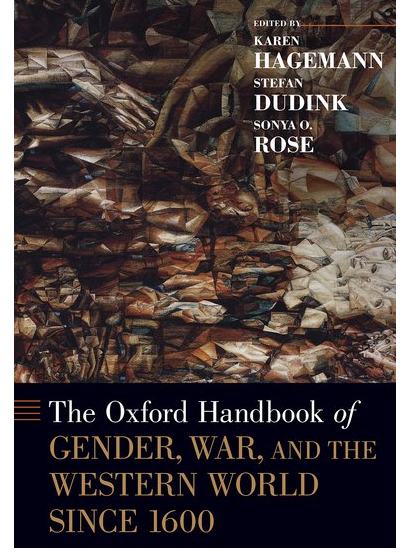
ONLINE SEMINAR: Transatlantic Roundtable to Launch the Oxford Handbook of Gender, War, and the Western World since 1600 (University of North Carolina; 5 MAR 2021)


(image source: UNC)

Event description:

This transatlantic roundtable launches the publication of The Oxford Handbook of Gender, War, and the Western World since 1600 a comprehensive historical overview of the entangled relationships between gender, war and military culture, and remembers one of its three editors, Sonya O. Rose (1935-2020), who sadly died weeks before the book was published.

The roundtable will focus on the intersection of gender, war and citizenship, which is not only one of the major themes of the Oxford Handbook, but also of Sonya Rose’s work. It starts from her suggestion, to think of citizenship as ‘’a framework that serves as a basis for claims-making.” Citizenship, she wrote, is a discursive framework that enables people to make various political and other claims and shapes political subjectivities that get enacted in the process of claims-making. Deeply marked by gender, race and class, this framework of citizenship produces exclusions—and offers tools to contest these. War often comes with a particularly intense discourse and politics of citizenships, in which claims made by, and on, people get linked to the issue of national survival. The roundtable will explore the politics of citizenship in the context of military and war and ask how transformations of modern warfare have affected notions of citizenship and gender, and vice versa how historical and changing notions of citizenship and gender shaped military and war.

The participants of the roundtable will explore the wartime politics of citizenship in various historical and geographical contexts, ranging from late eighteenth-century Wars of Revolution and Independence to Word War II. Three sets of questions are central to their exploration:

  1. How have specific gender orders informed specific historical wars and types of war? How have, vice versa, specific historical wars and types of war shaped gender orders and gendered politics of citizenship in particular?
  2. How have wartime politics of citizenship been shaped by the intersection of categories of difference and inequality such as gender, race, and class?
  3. What were the long-term effects on gender orders of wartime politics of citizenship? What explains the persistence or subsiding of wartime reconfigurations of gender and citizenship?

Program:

Program

  • Welcome
    Berit Ebert, 
    Vice President, American Academy Berlin
    Jan Willem Duyvendak,
     Director, Netherlands Institute for Advanced Study in the Humanities and Social Sciences
  • IntroductionThe Oxford Handbook of Gender, War, and the Western World since 1600—A Global Project
    Karen Hagemann,
     University of North Carolina at Chapel Hill
  • Commemorative Address: Sonya O. Rose: A Transatlantic Gender Historian
    Susan Grayzel, Utah State University

Roundtable: Gender, War and Citizenship

  • Moderation: Karen Hagemann, University of North Carolina at Chapel Hill
  • Participants
    • Gender, War and Citizenship
      Thomas Kühne,
       Clark University
    • Masculinity, War and Citizenship in 18th and 19th Century Europe
      Stefan Dudink
      , Radboud University Nijmegen
    • Colonial Soldiers, Empire, and Male Citizenship  in the Age of the World Wars
      Richard Smith, Goldsmiths, University of London
    • The North American Home Front, Race and Citizenship
      Kimberly Jensen, Western Oregon University

(source: UNC

Wednesday, 25 November 2020

BOOK: Emmanuelle CRONIER & Benjamin DERUELLE (Eds.), Argumenter en guerre. Discours de guerre, sur la guerre et dans la guerre de l'Antiquité à nos jours (Villeneuve d'Ascq: Presses Universitaires du Septentrion, 2019). ISBN: 102757424580, pp. 420, € 28,00


ABOUT THE BOOK

L'art de l’argumentation ne cède pas ses droits en situation de guerre. Au contraire, la préparation des conflits, la conduite des opérations et la reconstruction de la paix sont d’intenses moments de persuasion, de négociation et de confrontation dans lesquels l’art oratoire occupe toute sa place. Fruit d’une collaboration active entre historiens et juristes, cet ouvrage propose, au travers d’un parcours s’étendant de la guerre antique aux conflits contemporains, une réflexion riche, passionnante et novatrice sur les usages et les fonctions du discours en situation de conflit armé. Il nous transporte des plaines du Péloponnèse et de l’Italie romaine au Tribunal international, en passant par les guerres d’Attila et des ducs de Bourgogne, par les conflits religieux et de la monarchie absolue des temps modernes, ou encore par les guerres de sécessions et les deux conflits mondiaux. S’y découvrent alors les modalités et les enjeux de la parole en guerre, qu’il s’agisse de justifier ou de contester l’engagement, la violence ou les buts de guerres ; de convaincre les autorités politiques et l’opinion publique d’entrer dans le conflit ou les combattants de sacrifier leur vie ; ou encore d’implorer le pardon et de réparer des exactions, mais aussi de s’emparer de la gloire d’une victoire ou de repousser la honte d’une défaite.

ABOUT THE EDITORS

Emmanuelle Cronier est maîtresse de conférences en histoire contemporaine à l'Université de Picardie-Jules Verne et chercheuse au Centre d’Histoire des Sociétés, des Sciences et des Conflits (CHSSC, EA4289).

Benjamin Deruelle est professeur d'histoire moderne à l’Université du Québec à Montréal. Agrégé d’histoire et docteur de l’Université Paris 1 Panthéon-Sorbonne, il est chercheur à l’IRHIS (Institut de Recherches Historiques du Septentrion UMR 8529-CNRS-Université de Lille).

TABLE OF CONTENTS

Introduction

Emmanuelle Cronier & Benjamin Deruelle

Partie 1

Dire, justifier, contester la guerre

Justifier ou restreindre la violence de la guerre : arguments juridiques et arguments moraux dans l'Antiquité tardive

Hervé Huntzinger

Justifier et légitimer l’engagement : la guerre de Candie (1645-1669) et la France

François Pugnière

L’argumentation juridique dans les guerres de sécession

Emanuel Castellarin

Les arguments juridiques contemporains de l’intervention en guerre

Marie-Clotilde Runavot

Partie 2

Convaincre, adhérer, mobiliser

Quand les femmes parlent de la guerre : le dossier des apophtegmes laconiens

Jean-Manuel Roubineau

La guerre, ultima ratio des ducs de Bourgogne ? Argument guerrier et autorité du prince législateur (fin XIVe – début XVe siècle)

Jean-Baptiste Santamaria

L’argument de la guerre dans la négociation fiscale, le cas valdôtain au XVIIe siècle

Julien Alerini

Monarchie absolue et monarchie limitée face à la guerre : les stratégies argumentatives françaises et anglaises à la fin du XVIIe siècle

Solange Rameix

Illustrer ou persuader ? 

Schémas et dessins dans la réflexion militaire de la France des Lumières

Arnaud Guinier

Le théâtre de la guerre révolutionnaire : Cris, harangues et discours des généraux à l’armée des Pyrénées orientales (1793-1795)

Laurent Cuvelier

Partie 3

Argumenter au cœur du combat

Argumenter en plein combat : 

Formes et fonctions de l’exhortation au combat dans les batailles rangées romaines à la fin de la République

Xavier Lapray

Le contrôle de la parole dans la cité assiégée selon Énée le Tacticien (IVe siècle av. J.-C.)

Jonathan Andujar & Christian Bouchet

Argumenter en guerre civile : les partis de la guerre et de la paix au Conseil du roi pendant les premières guerres de Religion (1563-1570)

Antoine Rivault

Haranguer ses capitaines ? 

Le duc de Guise, chef de guerre et stratège de mots à Châlons-en-Champagne (26 mars 1585)

Xavier Le Person

Le Mercure François entre en guerre

Virginie Cerdeira

La déportation de civils en vue du travail forcé – le discours normatif de l’occupant allemand, d’une guerre à l’autre

Michel Erpelding

Partie 4

Mémoire, appropriation et droit

« Poure compaignon de guerre » ou « meschant homme » ? 

La représentation du soldat dans les lettres de rémission des ducs de Bourgogne (1386-1482)

Quentin Verreycken

L’affaire d’Hastenbeck, la relation de bataille en tant qu’instrument de diffamation

Antoine Roussel

L’œuvre de mémoire en Europe après la Seconde Guerre mondiale : l’appropriation de la Guerre par le Droit

Marion Larché

Conclusion

Émilie Dosquet

Les auteurs

Résumés

Index


More information with the publisher.

(source: ESCLH Blog)

Wednesday, 2 September 2020

ARTICLE: Gavin DALY, 'Anglo-French Sieges, the Laws of War, and the Limits of Enmity in the Peninsular War, 1808–1814' (English Historical Review)


(image source: OUP)

Abstract:

The many sieges of the Napoleonic Wars remain a relatively neglected area of historical study, especially in the context of the history of customary laws of war, where sieges played a central role. This article explores an important but largely forgotten episode in the infamous British storm and sack of the French-held Spanish towns of Ciudad Rodrigo, Badajoz and San Sebastián during the Peninsular War: mercy to the French garrisons, who, in obstinately defending against storming parties, had forfeited their protective rights under prevailing laws of war. Combining military, legal and cultural history, and drawing upon British soldiers’ letters, diaries and memoirs, the article focuses on three interrelated issues: siege capitulation and surrender rituals, attitudes to obstinate defences, and British mercy to the French garrisons. The article highlights sieges as a privileged site for examining laws of war, cultures of war, and moral sensibilities. In doing so, it sheds further light on historical debates about changes and continuities in practices and cultures of war over the long eighteenth century. There has been considerable recent interest in the history of atrocity, massacre and enmity during the French Revolutionary–Napoleonic Wars. Yet the Anglo-French case-studies examined here highlight the persistence of restraint, honour codes, civility and humanity between regular soldiers, even in the seemingly most barbarous of wartime theatres, and despite laws of war that sanctioned violence in these very circumstances.

Read more here (DOI 10.1093/ehr/ceaa190)

Friday, 28 August 2020

BOOK: Nicolas BOURGUINAT & Gilles VOGT, La guerre franco-allemande de 1870. Une histoire globale [Champs Histoire] (Paris: Flammarion, 2020), 528 p. ISBN 9782081510555, € 15


(image source: Flammarion)

Abstract:
La guerre de 1870 est méconnue. Un affrontement localisé, mené sur le seul territoire français par deux puissances rivales ; une Prusse dirigée d’une main de fer par l’habile chancelier Bismarck, qui met à genoux une France affaiblie par les errements d’un Second Empire en déclin et d’une République encore mal assurée ; la perte traumatique de l’Alsace-Lorraine sous les yeux indifférents d’une Europe muette : tels sont les traits qu’en a retenus notre mémoire nationale. Dans cette synthèse issue de travaux de première main, Nicolas Bourguinat et Gilles Vogt la peignent sous un nouveau visage. Mettant en lumière ses multiples résonances internationales, dans les chancelleries et les opinions publiques, ils montrent que l’affrontement de 1870 fut non seulement une étape clé de la question nationale mais aussi une date majeure pour le droit des conflits armés et les initiatives humanitaires face aux guerres. Faisant la part belle aux sources du for privé, ils font entendre les voix des individus qui l’ont vécu, soldats, assiégés, francs-tireurs ou simples civils éloignés des combats, pour éclairer d’un jour nouveau ce conflit déterminant dans l’histoire contemporaine.

(source: Flammarion


Friday, 27 March 2020

BOOK: Patrick O. HEINEMANN, Rechtsgeschichte Der Reichswehr 1918–1933 (Brill, 2018). ISBN 978-3-506-78785-9


(Source: Brill)

Brill published a legal history of the Reichswehr during the Weimar Republic back in 2018.

ABOUT THE BOOK

Der Autor zeigt mit der Rechtsgeschichte der Reichswehr 1918–1933 das Spannungsverhältnis auf, in dem die Weimarer Republik zum Militär als Ganzem wie auch dem einzelnen Soldaten stand.
Wie und warum die Integration der Streitkräfte in die erste deutsche Republik aus juristischer Perspektive misslang, belegt diese archivalisch fundierte Rechtsgeschichte der Reichswehr erstmals anhand verschiedenster Themenfelder wie der Militärstrafjustiz, dem Ehren- sowie dem Disziplinar- und Beschwerderecht. Das überlieferte Bild vom »Staat im Staate« bildete sich rechtlich gesehen in einer Tendenz der Reichswehr zur »Paralegalität« ab. Sie hatte ihre Wurzeln vor allem im überkommenen preußisch-deutschen Sonderstatus des Militärs im Staatsaufbau, in exzessiven ausnahmerechtlichen Einsätzen im Innern sowie im fortgesetzten Völkerrechtsbruch der Geheimrüstung. 

ABOUT THE AUTHOR

Patrick Oliver Heinemann hat in Berlin und Freiburg Rechtswissenschaft studiert. Heute ist er Rechtsanwalt in Freiburg.

TABLE OF CONTENTS

Preliminary Material
Pages: 1–7
Vorwort zur Reihe
By: Stig Förster, Bernhard R. Kroener, Bernd Wegner and Michael Werner
Pages: 9–10
Zum Geleit
By: Manfred Messerschmidt
Pages: 11
Dank
By: Patrick O. Heinemann
Pages: 13
Einleitung
Pages: 15–27
Entstehung der Weimarer Wehrverfassung
Pages: 28–112
Grundlagen des Soldatischen Dienstverhältnisses
Pages: 113–173
Politische und Bürgerliche Grundrechte
Pages: 174–234
Militärstrafrecht
Pages: 235–285
Das Disziplinarstrafrecht als Prothese
Pages: 286–309
Ehrenschutz
Pages: 310–336
Rechtsschutz
Pages: 337–352
Spätphase und Untergang der Republik
Pages: 353–388
Fazit
Pages: 389–397
Abkürzungen
Pages: 398–400
Literatur und Veröffentlichte Quellen
Pages: 401–417
Archivalische Quellen
Pages: 418
Personenregister
Pages: 419–424

More info here

(source: ESCLH Blog)

Thursday, 16 January 2020

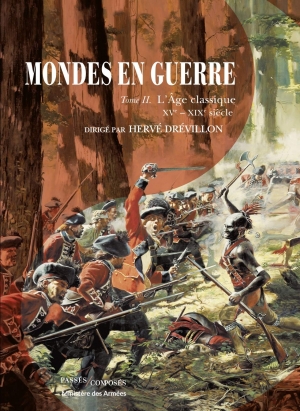
BOOK: Hervé DRÉVILLON (dir.), Mondes en Guere. T. 2: L'Âge Classique, XVe-XIXe siècle (Paris: Passés Composés, 2019), 784 p. ISBN 978-2-3793-3247-0, € 39

(image source: Gregoiredetours)

Book abstract:
Explorer la diversité des pratiques guerrières sur tous les continents depuis la préhistoire jusqu’à nos jours, telle est l’ambition des Mondes en guerre. Dès l’Antiquité, la formation d’empires alimenta un vaste processus de confrontations et d’échanges militaires, avant que l’ère des Grandes Découvertes ne déclenche l’intégration de tous les continents dans un espace martial unifié. Ce second tome est celui de l’Âge classique de la guerre, celui de l’âge de la raison militaire, où l’essor de l’imprimé contribue à la normalisation des pratiques, sans effacer la dimension religieuse des conflits. Depuis les premières apparitions des arquebuses sur les champs de bataille au XVe siècle, jusqu’au développement d’une puissance militaire industrialisée au XIXe, les conditions de la guerre sont également marquées par l’avènement de la puissance de feu, sur terre comme sur mer. Des guerres civiles aux expéditions coloniales, en passant par la guerre navale, les sièges ou la guérilla, ce sont ainsi toutes les formes d’une guerre mondialisée qui sont ici explorées
On the editor:
Professeur d’histoire à l’université Paris-I, Hervé Drévillon est directeur de l’Institut des Études sur la Guerre et la Paix et directeur de la recherche au Service Historique de la Défense.
(see earlier on this blog)

Thursday, 3 October 2019

SEMINAR: Ian CAMPBELL, "Warfare and the Intellectual Culture of the Universities in Early Modern Europe" (Queen's University Belfast, 4 OCT 2019)

(image source: QUB)
We are pleased to welcome Dr Ian S. Campbell (QUB) to the Centre for Early Modern Studies on 4th October. Ian’s talk, “Warfare and the Intellectual Culture of the Universities in Early Modern Europe,” is open to all and will take place at 3pm in the Kate O’Brien room (C1079), Main Building, UL. Ian is Senior Lecturer in Early Modern Irish History and Principal Investigator of War and the Supernatural in Early Modern Europe.
Abstract
Warfare is that area of human politics where most is at stake, and the great intellectuals of medieval and early modern Europe carefully analysed the rights and wrongs of it. But the histories of this political thinking about war that are currently available in English are flawed. They peddle crazy ideas about the Calvinist love of warfare, and ignore important areas of Catholic intellectual life, in order to tell a reassuring story about the origins of the modern, liberal, secular order. If we revise that view of Catholic and Protestant thinking on warfare, and we will be able to perceive some often neglected aspects of the modern world.
Historians of political thought pay considerable attention to the Dominican and Jesuit theologians of the sixteenth and seventeenth centuries, because these theologians distinguished between nature and supernature. Quentin Skinner, for example, understands the “natural” category to be very close to our modern, secular one – an area of human life drained of the divine. These theologians can thus be seen to be preparing the way for liberal philosophers like Thomas Hobbes and John Locke. The Dominican and Jesuit rejection of holy war, moreover, is often used as a token of the strength of this natural category. But both Skinner and Richard Tuck ignore the early modern Franciscan tradition which did not distinguish between nature and supernature in the same way, and did not reject wars fought for evangelisation. More strangely, both Skinner and Richard Tuck largely ignore the Protestant scholastics, Lutheran and Reformed, who treated warfare with distinctively Protestant accents (to use Michael Becker’s term). When this range of Catholic and Protestant perspectives, excluded by Skinner and Tuck, are included in our history, it becomes easier to see why the Italian scholar Paolo Prodi saw the development of the European state in the early-modern period not as a process of secularisation, but as a process of sacralisation. For Prodi, what mattered most was not the creation of areas of life free from God, but the absorption by the State of that sacred power previously confined within the Church. Prodi’s vision offers a more life-like portrait of the world in which we live.
(source: QU Belfast)

Friday, 7 September 2018

BOOK: Will SMILEY, From Slaves to Prisoners of War - The Ottoman Empire, Russia, and International Law (Oxford: Oxford University Press, 2018). ISBN 9780198785415, £65.00


(Source: OUP)

Oxford University Press has published a book on the concept of prisoners of war in the context of the 18th century Ottoman-Russian wars.

ABOUT THE BOOK

The Ottoman-Russian wars of the eighteenth century reshaped the map of Eurasia and the Middle East, but they also birthed a novel concept - the prisoner of war. For centuries, hundreds of thousands of captives, civilians and soldiers alike, crossed the legal and social boundaries of these empires, destined for either ransom or enslavement. But in the eighteenth century, the Ottoman state and its Russian rival, through conflict and diplomacy, worked out a new system of regional international law. Ransom was abolished; soldiers became prisoners of war; and some slaves gained new paths to release, while others were left entirely unprotected. These rules delineated sovereignty, redefined individuals' relationships to states, and prioritized political identity over economic value. In the process, the Ottomans marked out a parallel, non-Western path toward elements of modern international law. Yet this was not a story of European imposition or imitation-the Ottomans acted for their own reasons, maintaining their commitment to Islamic law. For a time even European empires played by these rules, until they were subsumed into the codified global law of war in the late nineteenth century. This story offers new perspectives on the histories of the Ottoman and Russian Empires, of slavery, and of international law.

ABOUT THE AUTHOR

Will Smiley, Assistant Professor of History & Humanities, Reed College
Will Smiley is a historian of the Middle East and of international and Islamic law, with a particular interest in the Ottoman Empire. He is Assistant Professor of History and Humanities at Reed College in Portland, Oregon. He received his PhD from the University of Cambridge and his JD from Yale Law School, and previously held fellowships in Near Eastern Studies at Princeton University, and in Legal History at New York University.

TABLE OF CONTENTS

Introduction
1: Into Captivity
2: Slavery and Ransom
3: From the Law of Ransom to the Law of Release
4: Defining the Law of Release
5: Prisoners of War
6: Negotiating the Prisoner-of-War System
7: The Rules Expand
8: Those Left Out
9: Reform and Reciprocity
10: Humanitarianism and Legal Codification
Conclusion

More information with the publisher

(source: ESCLH Blog)

Thursday, 26 July 2018

BOOK: Laurent JALABERT, Les prisonniers de guerre, XVe-XIXe siècle : entre marginalisation et reconnaissance (Rennes: Presses universitaires de Rennes, 2018),

(image source: PURennes)

Book abstract:
La thématique des prisonniers de guerre reste peu connue pour l’époque moderne, au moment où les armées connaissent massification et nationalisation de leurs effectifs. Le présent livre aborde divers aspects de cette question et le cheminement jusqu’au moment où se développent et s’institutionnalisent droits et statuts des prisonniers de guerre, du XVe au XIXe siècle.
 On the editor:
Laurent Jalabert est maître de conférences habilité en histoire moderne (université de Lorraine, CRULH EA 3945). Ses recherches initiales concernent l’histoire confessionnelle du XVIIe au XIXe siècle dans l’Empire et s’orientent à présent vers l’histoire militaire et celle des petits États, ainsi que les questions de mémoire et d’identité.
Table of contents (here), information on contributors (here) and introduction (here) available.

More information: publisher's website.

Friday, 1 June 2018

CONFERENCE: War as Contact Zone in the Nineteenth Century (Paris: DHI/IEA), 28-29 JUN 2018

(image source: IEA Paris)

Summary:
The workshop seeks to encourage further debate on the mechanics of encounter and transfer processes in war during the "long nineteenth century" (1789-1914). It wiil also explore how historians working on this subject can use new digital methods and impact case studies to make their findings accessible to the public. The choice of period is informed by this era’s manifold innovations in such fields as communication, mass transport, weaponry, international law and the conduct of war, which have generated fruitful dialogue on the question whether the nineteenth century set the path for a totalitarianisation of warfare or should instead be evaluated on their own terms.
Long description: 
Military history has come a long way in the last fifty years. Popular media such as the History Channel and the biographies of great generals on the shelves of many bookstores might suggest at first glance that the field is still dominated by ‘drum and trumpet historians’ that speak to audiences well on the right of the political spectrum. However, the ascendancy of ‘new military history’/’nouvelle histoire-bataille’ and the ‘cultural history of war’ has in fact advanced our understanding of human conflict enormously. We know more than ever before about the multilayered webs of entanglement that connect army and society, as well as the way in which soldiers and civilians experience violence. Work in this vein has shown that instead of being an exceptional state and thus marginal to society’s ‘true’ concerns, war has been implicated in some of history’s most far-reaching changes, such as the evolution of the modern idea of citizenship. While military conflicts are undeniably destructive in terms of their human and material cost, they also have unintended creative consequences. The German historian Ute Frevert has aptly termed wars ‘inter- and transnational events par excellence’ because no other phenomenon - with the possible exception of migration - brings so many people in such close contact with each other. Napoleon may have failed to establish a lasting European empire, but the veterans of the Grande Armée could boast familiarity with all parts of Europe after having marched across the Continent for almost a quarter of a century. Of course, when such large bodies of men fuse together or interact with civilian populations, the nature of these encounters differs widely. Some manifestations are benign, including the bonds of comradeship that can blossom into ‘fictive kinship’ (Jay Winter) among soldiers, whereas atrocities and genocidal mass exterminations represent the opposite form of encounter. Both extremes of the spectrum have been the subject of extensive scholarship in recent decades, thanks to a process of analytical cross-fertilisation through interdisciplinary borrowing. Just as it is no longer good practice to write about morale and combat effectiveness without attention to sociological or anthropological theories that explain unit cohesion, investigations into the causes of war crimes have underscored the benefits that accrue from close analytical attention to the psychological triggers of violence and the spaces in which these acts take place. Finally, the fruits of transnational history and global history remind us that any attempt to explain war-as-encounter must have a firm grounding in cultural studies, especially with a view to uncovering how patterns of communication evolve and the transfer of knowledge occurs. Building on these insights, the workshop seeks to encourage further debate on the mechanics of encounter and transfer processes in war during the ‘long nineteenth century’ (1789-1914). In a second step we wish to explore how historians working on this subject can use new digital methods and impact case studies to make their findings accessible to the public. The choice of period is informed by this era’s manifold innovations in such fields as communication, mass transport, weaponry, international law and the conduct of war, which have generated fruitful dialogue on the question whether the nineteenth century set the path for a totalitarianisation of warfare or should instead be evaluated on their own terms.
 Programme:
Thursday, 28 June
Institut d'études avancées de Paris
  • 15h30 - 15h40 Welcoming words Gretty Mirdal (Directrice de l’IEA Paris) and Stefan Martens (Directeur adjoint de l’IHA)
  • 15h40 - 16h10 Introduction Jasper Heinzen, Mareike König, Odile Roynette
16h15 - 17h45  Session 1: Rencontres rapprochées entre ennemis
Chair: Odile Roynette
  • When soldiers met the locals: the Balkan Wars as a contact zone among combatants and non-combatants, Panagiotis Delis (Athens/Burnaby)
  • Confrontation of “formless” formations? Thinking and making physical contact on the post-Franco-Prussian War “modern” battlefieldJean-Philippe Miller-Tremblay (Paris)
17h45 - 18h00 Break
18h - 19h10 Keynote: War as contact zone: a useful concept of analysis? Jasper HeinzenFriday, 29 June
Institut historique allemand
9h00 - 10h30 Session 2: Souffrances partagées en temps de guerre
Chair: Mareike König
  • Rencontres entre militaires blessés et civils à l’époque napoléonienne, Nebiha Guiga (Paris)
  • Les hôpitaux maritimes français pendant la guerre de Crimée : Des espaces de contacts (1854-1856), Benoît Pouget (Aix-Marseille)
10h30 - 11h00 Break
11h00 - 12h30 Session 3 : Mobiliser une société pour la guerre : le cas italien
Chair: Jürgen Finger
  • Defeat as opportunity. The debate on the need for a militarised society in Italy from the Risorgimento to the First World War, Marco Mondini (Trient)
  • The armée comes to town. Social problems of military presence and barracks supplying in the Napoleonic Kingdom of Italy (1805-1814), Vittoria Princi(Oxford)
12h30 - 14h00 Lunch Break
14h00 - 15h30 Session 4: Rencontres asymétriques dans la guerre impériale
Chair: Jasper Heinzen
  • Inter-imperial contact zones and military occupations in Boxer-War China: Beijing and Baoding (1900 – 1901), Dominique Biehl (Basel)
  • Closing Pandora’s Box? Anglo-French cooperation to contain the sinews of war in the Caribbean, 1803–1810, Flavio Eichmann (Bern)
15h30 - 16h00 Break
16h00 - 17h00 Roundtable

(source: Calenda)