ESIL Interest Group History of International Law

ESIL Interest Group History of International Law
Showing posts with label postcolonial studies. Show all posts

Wednesday, 13 October 2021

BOOK REVIEW: Romain BERTRAND, Dipesh CHAKRABARTY, Provincialiser l'Europe. La pensée postcoloniale et la différence historique (transl. O. RUCHET & N. VIEILLESCAZES (Paris: ED. Amsterdam, 2009 [2000], 381 p.) (Annales. Histoire, Sciences Sociales LXXV (2021), N° 3-4, 821-826


(image source: Cambridge Core)

First paragraph:
Aussi bien à l’occasion de sa parution en anglais que lors de sa traduction en français, Provincialiser l’Europe a souvent été considéré comme un manifeste anti-européocentriste, sinon même comme un brûlot relativiste. Son titre claquait comme une injonction – à mi-chemin de la nécessité théorique et de l’impératif moral. Au sein de l’espace de réception qui se dessina autour d’une certaine idée du livre, réduit à son intitulé, le propos de l’auteur fut tenu pour l’expression d’un programme fort des études postcoloniales – ce qu’il était, mais selon des voies qui déjouaient ses appropriations les plus radicales. Il convient ainsi, pour rendre pleinement justice au propos de Dipesh Chakrabarty, non seulement de suivre pas à pas son argument, mais aussi de rattacher chaque temps fort théorique de son texte aux éléments les plus déterminants de sa trajectoire intellectuelle.

(read more on Cambridge Core: DOI  10.1017/ahss.2021.21)


Tuesday, 15 December 2020

BOOK: Sigrid BOYSEN, Die postkoloniale Konstellation - Natürliche Ressourcen und das Völkerrecht der Moderne (Tübingen: Mohr Siebeck, 2020). ISBN 978-3-16-157564-8, 99.00 EUR


(Source: Mohr Siebeck)

Mohr Siebeck has published a new book on post-colonial international environmental law.

ABOUT THE BOOK

Die Begründung des internationalen Umweltrechts suchen die meisten in der Ortlosigkeit seines Gegenstands: Die ökologische Frage kann im Alleingang souveräner Staaten nicht bewältigt werden. Die etwa im Klimaschutzrecht evidenten regulatorischen Probleme lassen sich hiernach nur durch mehr Verrechtlichung und Konstitutionalisierung lösen. Doch das internationale Umweltrecht ist keineswegs ortlos, sondern hat eine sehr konkrete Geographie. Es ist keine Überwindung des Staatenvölkerrechts, sondern die Ausgestaltung der zentralen weltpolitischen Verschiebung im 20. Jahrhundert – der Auflösung des klassischen Imperialismus. Sigrid Boysen rekonstruiert die Begriffe und Institute des heutigen internationalen Umweltrechts genealogisch. Was einst dazu diente, die handelspolitischen Unsicherheiten nach Ablösung der kolonialen Herrschaft zu stabilisieren, teilt die Erde auch heute ein in industrialisierte Zonen und deren äußere Natur.

ABOUT THE AUTHOR

Sigrid Boysen Geboren 1972; Studium der Rechtswissenschaft in Göttingen, Bristol und Hamburg; 2005 Promotion; 2018 Habilitation; seit 2014 Professorin für Öffentliches Recht, Völker- und Europarecht an der Helmut-Schmidt-Universität.

https://orcid.org/0000-0003-2361-0162


More info here


(source: ESCLH Blog)

Friday, 13 November 2020

BOOK: Carlos Miguel HERRERA, Albane GESLIN & Marie-Claire PONTHOREAU (dir.), Postcolonialisme et droit. Perspectives épistémologiques (Paris: Kimé, 2020), ISBN 9782841749881, € 20


(image source: Editions Kimé; click on the image to enlarge the table of contents)

Book abstract:
Les études postcoloniales ont, depuis quelques années, largement irrigué les divers champs disciplinaires des sciences humaines et sociales. Force est néanmoins de constater que, en France à tout le moins, le droit n'a pas été conduit à s'interroger en profondeur sur les perspectives épistémologiques ouvertes par le tournant postcolonial. Notre livre offre plusieurs parcours pour analyser l'impact du postcolonialisme sur le droit, en associant de manière étroite des juristes avec des chercheurs venants d'autres disciplines, en particulier historiens et philosophes. L'interrogation épistémologique qui traverse tous ses chapitres, s'exprime par deux grands questionnements, le premier touchant au droit, le deuxième aux disciplines juridiques. La première partie de l'oeuvre se concentre sur les rapports existants entre les institutions juridiques et l'expérience coloniale. Ce volet est abordé d'un point de vue historique (à partir des expériences du colonialisme français en Algérie et anglais en Inde), certes mais aussi dans une perspective actuelle (la question de la Nouvelle Calédonie). Et c'est ici que la pluridisciplinarité de l'ouvrage se fait plus fortement sentir. Dans le second versant du livre, notre travail cherche à confronter les perspectives postcoloniales à trois disciplines juridiques : l'histoire du droit, le droit constitutionnel et le droit international. Ici la réflexion est davantage le fait des juristes, qui explorent ce que le postcolonialisme fait à la rationalité juridique. Une confrontation qui modifierait dorénavant la pensée juridique, dans un contexte de globalisation. L'ouvrage conclut, comme il ne peut pas être autrement, sur une réflexion sur les rapports entre savoir et politique.
Papers by F. Dumassy, A. Geslin, L. Havard, C. M. Herrera, A. Imbert, A. Virmani & R. Ivekovic.

(source: Unithèque)

Tuesday, 25 August 2020

ADVANCE ARTICLE: Vanessa OGLE, ‘Funk Money’: The End of Empires, The Expansion of Tax Havens, and Decolonization as an Economic and Financial Event', Past & Present, 2020 (OPEN ACCESS)


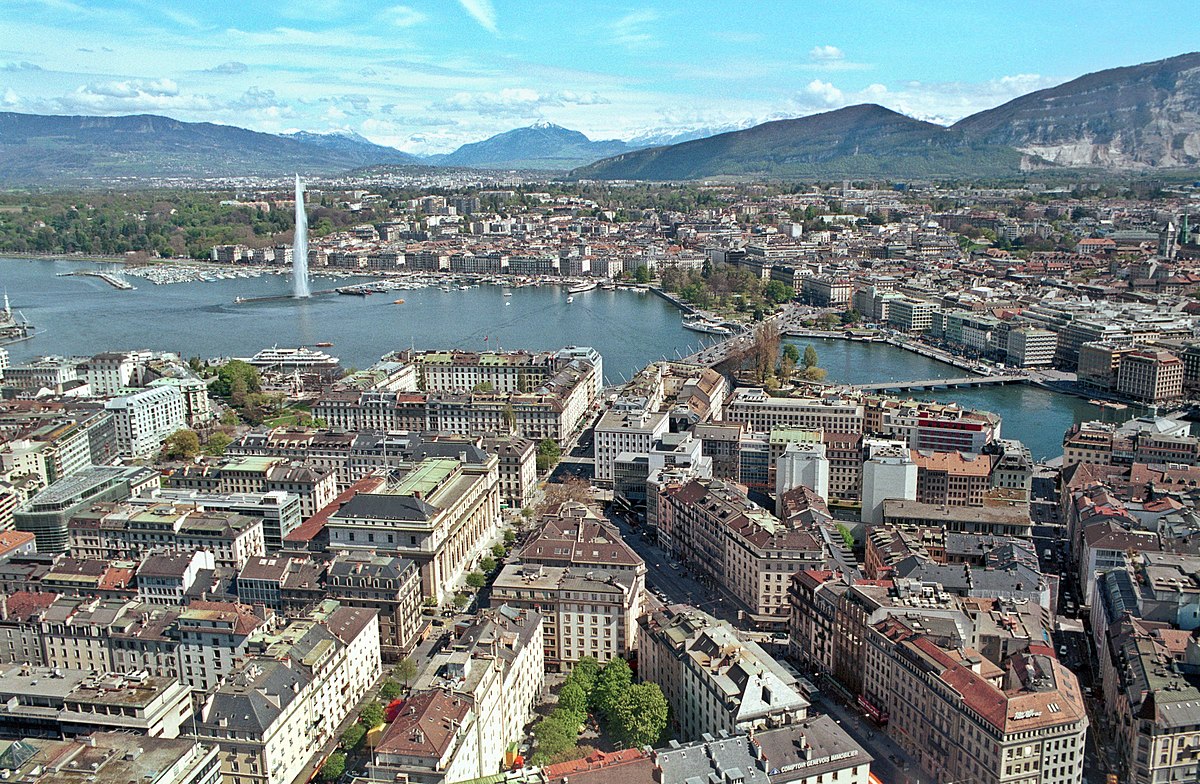
(image: Geneva; source: Wikimedia Commons)

Abstract:

This article traces the emergence of an archipelago-like landscape of distinct legal and economic spaces throughout the long midcentury. Consisting of tax havens, offshore financial markets, flags of convenience, and economic free zones, this archipelago allowed free-market capitalism to flourish on the sidelines of a world increasingly dominated by more sizable and interventionist nation-states. It argues that certain characteristics of the rise of free-market capitalism since the 1970s and 1980s were previously practiced in the offshore archipelago, only to move back to Europe and North America with the rise of neoliberalism.

Read more with OUP (DOI 10.1093/pastj/gtaa001). 

Thursday, 20 August 2020

BOOK: A. Dirk MOSES, Marco DURANTI, and Roland BURKE, Decolonization, Self-Determination, and the Rise of Global Human Rights Politics (Cambridge: Cambridge University Press, 2020). ISBN 9781108479356, 90.00 GBP

(Source: CUP)

Cambridge University Press is publishing an edited collection on the global history of human rights politics in the age of decolonization.

ABOUT THE BOOK

This volume presents the first global history of human rights politics in the age of decolonization. The conflict between independence movements and colonial powers shaped the global human rights order that emerged after the Second World War. It was also critical to the genesis of contemporary human rights organizations and humanitarian movements. Anti-colonial forces mobilized human rights and other rights language in their campaigns for self-determination. In response, European empires harnessed the new international politics of human rights for their own ends, claiming that their rule, with its promise of 'development,' was the authentic vehicle for realizing them. Ranging from the postwar partitions and the wars of independence to Indigenous rights activism and post-colonial memory, this volume offers new insights into the history and legacies of human rights, self-determination, and empire to the present day.

ABOUT THE EDITORS

A. Dirk MosesUniversity of Sydney

A. Dirk Moses is Professor of Modern History at the University of Sydney. He is Senior Editor of the Journal of Genocide Research.

Marco DurantiUniversity of Sydney

Marco Duranti is Senior Lecturer in Modern European and International History at the University of Sydney. He is the author of The Conservative Human Rights Revolution (2017).

Roland BurkeLa Trobe University, Victoria

Roland Burke is Senior Lecturer in World History at La Trobe University. He is the author of Decolonization and the Evolution of International Human Rights (2010).

TABLE OF CONTENTS
Introduction. Human rights, empire, and after Roland Burke, Marco Duranti and A. Dirk Moses
Part I. Anti-colonial struggles and the right to self-determination:
1. Seeking the political kingdom: universal human rights and the anti-colonial movement in Africa Bonny Ibhawoh
2. Decolonizing the United Nations: Anti-colonialism and human rights in the French Empire Marco Duranti
3. The French Red Cross, decolonization, and humanitarianism during the Algerian War Jennifer Johnson
4. Connecting indigenous rights to human rights in the Anglo settler states: Another 1970s story Miranda Johnson
5. Privileging the Cold War over decolonization: The US emphasis on political rights Mary Ann Heiss
Part II. Post-colonial statehood and global human rights norms:
6. Cutting out the ulcer and washing away the incubus of the past: genocide prevention through population transfer A. Dirk Moses
7. Codifying minority rights: postcolonial constitutionalism in Burma, Ceylon, and India Cindy Ewing
8. Between ambitions and caution: India, human rights, and self-determination at the United Nations Raphaëlle Khan
9. 'From this era of passionate self-discovery': Norman Manley, human rights, and the end of colonial rule in Jamaica Steven L. B. Jensen
10. Re-entering histories of past imperial violence: Kenya, Indonesia, and the reach of transitional justice Michael Humphrey
Part III. Colonial and neo-colonial responses
11. The inventors of human rights in Africa: Portugal, late colonialism, and the UN human rights regime Miguel Bandeira Jerónimo and José Pedro Monteiro
12. 'A world made safe for diversity': Apartheid and the language of human rights, progress, and pluralism Roland Burke
13. Between humanitarian rights and human rights: René Cassin, architect of universality, diplomat of French Empire Jay Winter
14. The end of the Vietnam War and the rise of human rights Barbara Keys
15. Decolonizing the Geneva Conventions: national liberation and the development of humanitarian law Eleanor Davey
16. Liberté sans frontières, French humanitarianism, and the neoliberal critique of Third Worldism Jessica Whyte.

More info here
(source: ESCLH Blog)

Wednesday, 13 November 2019

CALL FOR PAPERS: Decolonial Comparative Law Workshop (6 October 2020, Johannesburg) (DEADLINE: 6 February 2020)


We learned of a call for papers for a new collaborative research project on decolonial comparative law by the Max Planck Institute for Comparative and International Private Law in Hamburg. Here the call:

Call for papers: Decolonial Comparative Law Workshop 6 October 2020

Johannesburg, South Africa

Abstract submission deadline: 6 February 2020 Draft paper submission deadline: 20 August 2020
The Max Planck Institute for Comparative Law (Hamburg) and the University of the Witwatersrand
School of Law will host a one-day workshop on decolonial comparative law on 6 October 2020 at the University of Witwatersrand (Johannesburg). The workshop precedes the International Academy of Comparative Law Thematic Congress on “Diversity and Plurality in Law,” which takes places 7-9 October in Pretoria (South Africa). (Our workshop is not connected to the International Congress and participation in our workshop is not limited to or dependent on attendance of the International Congress.)

THEME: Although traditional comparative law methods have been criticized for several decades now, a clear alternative has not emerged. Debates between doctrinal, functionalist, and culturalist comparatists remain unresolved. One reason may be that despite such differences, a deeper, and problematic, agreement remains intact: agreement on certain ideas of law (as a matter of expertise) and of society (as either already or seeking to be liberal/democratic) that emerged within a European colonial context. Conventional comparative law—with all its valuable methodological and theoretical disagreements—remains mired within a Eurocentric paradigm encompassing the objects of comparison (too often civil vs common law) and theoretical and methodological presuppositions (the concept of law, the role of the state and of community, the mode of thought, etc.). Because conventional comparative law is mired in colonial epistemologies, we seek to explore decolonial comparative law. Decolonial theory is a school of critical theory developed by scholars (primarily in South America) engaging with the epistemological distinctiveness of coloniality in settler-colonies, as compared to colonies. (Decolonial theory is related to, but different from, decolonization, a historical process by which colonized states become formally independent. By way of example, whereas decolonization necessitates redistribution of property, decolonial theory necessitates a radical rethinking of property.) Decolonial scholars emphasize that modernity and coloniality are inseparable, such that the world today is dominated by the epistemic assumptions of modernity/coloniality. To overcome the hegemony of modernity, decolonial theorists call for pluriversality. Pluriversality rejects universality and emphasizes the simultaneous legitimacy of multiple traditions and social orderings from intellectual—not only geographic—borderlands. A basic presumption of decolonial theory is that the native/indigenous societies that were nearly eradicated by settler-colonialism are important sources of resistance to European epistemological hegemony. Our project brings together the broad insights and challenging ideas of decolonial theory to the field of comparative law. We are interested in both identifying the colonial structures and presuppositions in conventional comparative law and examining what a decolonial comparative law could look like and what it could achieve. Such a program operates both on a theoretical and a practical level, bringing together concrete case studies and theoretical considerations. Most importantly, decolonial comparative law is a pluriversal project that includes multiple voices and perspectives, rather than reinforcing coloniality through a European-dominated effort of decolonization. To that end, our project emphasizes giving voice and authority to legal scholars in the global South. (We invite those interested to view and to suggest additions to our work-inprogress bibliographies of decolonial theory and decolonial legal studies: http://www.mpipriv.de/decolonial)

We invite papers that address any aspect of decolonial comparative law, including: • How was the development of the modern discipline of comparative law in nineteenthcentury Europe intertwined with European colonialism? • How do legal transplants manifest coloniality? • How do both functionalist and culturalist methods reflect particular colonial ideas of the relation between law and society? • What were the premodern precursors to the modern discipline of comparative law? • How is the bifurcation between secular law and religious law implicated in coloniality? • How do neo-colonial relationships of power continue to shape conventional comparative law? • How can indigenous and native legal traditions transform the conventional discipline of comparative law? • How can a decolonial comparative law be theorized and practiced? • What are the decolonial alternatives to the use of the modern nation-state as the key analytical category of comparison in conventional comparative law?

Attendance in the workshop is open. We ask those interested in attending to register as engaged listeners by emailing decolonial@mpipriv.de with “Decolonial comparative law, engaged listener registration” in the subject line. Please indicate your full name, your institutional affiliation (if any), and your preferred email address. (Engaged listeners are asked to attend the entire workshop and read all the papers in advance.)

ABSTRACT SUBMISSION: Please send your title and abstract in any language of no more than 750 words (including a bibliography of up to five entries) to decolonial@mpipriv.de as an attachment by 6 February 2020. Authors of accepted papers will be asked to submit a draft paper by 20 August 2020. Please indicate if you will need funding in order to attend the workshop. (MPI will provide two-nights of accommodation for participants; some needs-based reimbursement for travel will also be available.)

ORGANIZERS: The Decolonial Comparative Law Workshop is co-organized by Tshepo Madlingozi (tshepo.madlingozi@wits.ac.za), Ralf Michaels (michaels@mpipriv.de), Lena Salaymeh (salaymeh@mpipriv.de), and Emile Zitzke (emile.zitzke@wits.ac.za). ABOUT the University of the Witwatersrand School of Law : Wits School of Law is based in Johannesburg, South Africa. Alongside equipping students with critical thinking skills across our undergraduate and postgraduate teaching offerings, we host three Centres – the Wits Law Clinic, the Mandela Institute and the Centre for Applied Legal Studies (CALS). Our centres help us to produce locally significant and globally important interventions, research and advice. We are based at Wits University’s Faculty of Commerce Law and Management on West Campus. Our roots go back to 1922 when our initial offering was the Law Certificate for attorneys and the Civil Service Lower Law Examination. As we approach 100 years of existence our modern day offering is vast. We teach a variety of undergraduate programmes, specialised master’s degrees, PhD programmes and international exchanges.

ABOUT the Max Planck Institute for Comparative and International Private Law: The MPI in Hamburg is dedicated to performing foundational research and promoting the transfer of knowledge in the field of comparative law. The results of the Institute’s research are reflected in academic publications as well as in the recommendations and expert opinion papers prepared for commissions, governments and courts. Additionally, the scholars employed at the Max Planck Institute for Comparative Law regularly play a role in the formulation of laws at both the national and international level. MPI is committed to international partnerships and the establishment of academic networks with domestic and foreign research institutes and universities in order to foster new directions in scholarly inquiry.

More info with the Max Planck Institute
(source: ESCLH Blog)