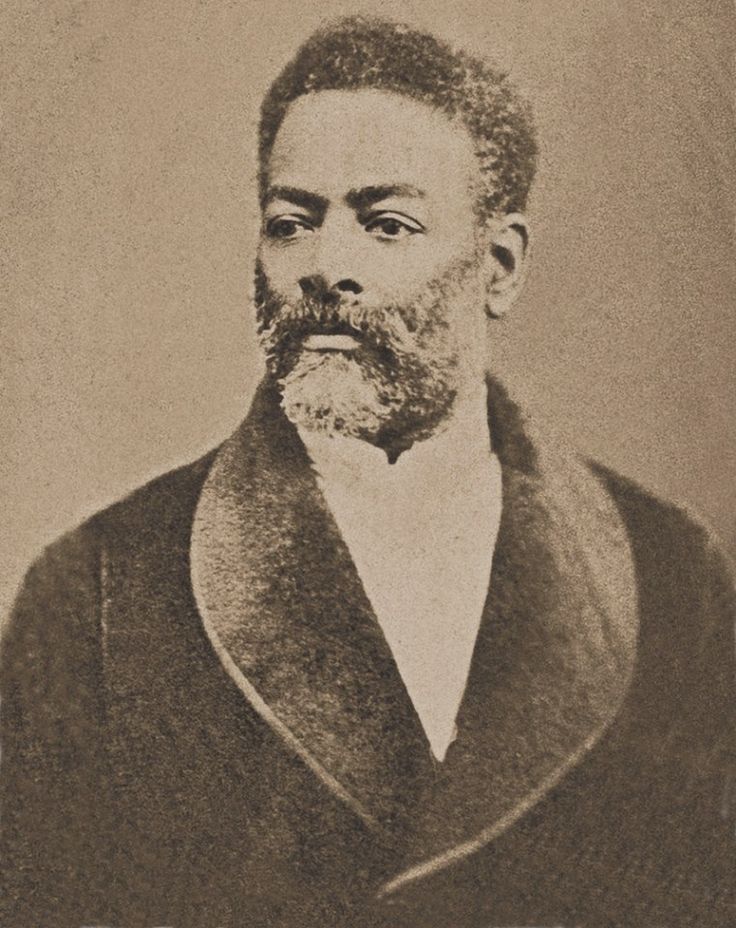
In 1847, fourteen years after escaping slavery in Kentucky (USA), William Wells Brown published an autobiography that soon became a best-seller and a landmark in the abolitionist propaganda. The epigraph of Brown’s famous Narrative brought about an existential question. Or, rather, a plea, that reflected the author’s state of mind:
This is the story of the cannon as a tool to delimit maritime space in the history of the law of the sea. It is a story that spans from the 17th to the 20th century – it is a story about a state practice that became legal theory, technological progress and Western dominance in international law.
Today, lack of regional representation in international law practice and academia is a well-known problem. International law is still Western, old, male, and white. Despite efforts to reduce these disparities, they prevail in pretty much every area of international law, including e.g. academic publications, where double-blind peer review would, at least in principle, prevent personal characteristics such as regional origin from playing a role in selection processes.
Gouverner la mondialisation par le droit implique de construire un état de droit sans État mondial, donc de repenser l’outil que représente le droit, traditionnellement identifié à l’État, face aux interdépendances nées de la mondialisation et aux défis qu’elles engendrent. Crises économiques et financières ; crises sociales ; terrorisme global ; désastre humanitaire des migrations ; crise climatique et, pour couronner le tout, si l’on ose dire, la crise sanitaire du « coronavirus ». Il serait temps de les prendre au sérieux, à mesure que s’accélère la cacophonie née de cette polycrise. Comme si l’indignation citoyenne face aux dérives sécuritaires, la colère des gilets jaunes face aux inégalités sociales, la révolte des jeunes générations et l’appel des scientifiques face au changement climatique n’avaient pas suffi, il aura fallu un simple virus, plus petit qu’une aile de papillon, pour faire trembler le monde, au point d’ébranler enfin les certitudes de nos dirigeants. Les grandes puissances, ou qui se croient telles, fières de leurs nouvelles technologies et convaincues de leur pouvoir politique et/ou économique, se révèlent incapables de se coordonner à l’échelle de la planète. Comme si ce minuscule être vivant était venu en messager pour défier notre humanité mondialisée et révéler son impuissance, lui offrant une dernière chance pour prendre conscience de sa communauté de destin.
After studying law in Paris, Mireille Delmas-Marty received her
PhD (1969), then became a Professor of private law and criminal
sciences (in 1970).
Her teaching career, after a brief assistantship at the Law
Faculty of Paris (1967-1970), has led her to teach in the universities
of Lille-II (1970-1977), Paris-XI (1977-1990) and Paris-I (1990-2002).
Member of the Institut Universitaire de France (1992-2002), she was
elected to the Collège de France, where she occupied the Chair in
Comparative Legal Studies and Internationalization of Law. In 2007, she
was elected member of the Académie des Sciences Morales et Politiques.
Mireille Delmas-Marty has been a visiting professor in most major
European universities, and, notably, the United States, Latin America,
China, Japan and Canada.
In addition to her teaching, Mireille Delmas-Marty has devoted
to research in the Ecole des Hautes Etudes en Sciences Sociales and the
Association de Recherches Pénales Internationales she has created, then
the UMR de droit comparé de Paris (University of Paris-I/CNRS) she
directed from 1997 to 2002. She manages, since 1984, the Revue de science criminelle et de droit pénal comparé and participates in the editorial boards of various legal journals both national (Archives de Politique Criminelle, Revue trimestrielle des droits de l’homme) and international (European
Journal of Crime, Criminal Law and Criminal Justice, LSN International,
Transnational & Comparative Criminal Law Abstracts and Journal of
International Criminal Justice).
Finally, Mireille Delmas-Marty has held numerous expert
missions including: nearby the President of the Republic, for example,
the revision of the Constitution in 1992, with the Minister of Justice
for the reform of the Penal Code in 1981 and the reform of criminal
procedure in 1988, and with the European Union, under the Penal Project
said Corpus Juris (1996-1999) and the Supervisory Committee of European Anti-Fraud Office (1999-2005).
2018 marks the 325th anniversary of the publication of William Penn’s Essay towards the Present and Future Peace of Europe, which proposed, among other things, the establishment of a European Parliament. Best remembered as the founder of Pennsylvania, Penn spent most of his life in England and remained deeply concerned about the fate of religious and political liberty across Europe. He proposed his “European Diet, Parliament, or Estates” as a way of promoting peaceful coexistence and breaking out of the cycle of nearly constant European war. A fresh look at Penn’s Essay is a task well worth undertaking, as refugee crises, fears of autocracy in Hungary and Poland, and the future of Brexit continue to roil European waters.
Diverging views and perspectives on international law are unavoidable. The global span of this body of law and the different geographical, cultural, religious and educational backgrounds of those who work with it contribute importantly to the understanding of its normative frameworks. Multiperspectivism and situatedness thus somewhat seem to be inherent to the DNA of international law (see e.g. here; see also this recent book). The fact that scholars from different countries and continents see and assess differently violations of international law is telling of that. And this pluralism of perspectives is not only unavoidable, it is in fact also desirable and represents the plurality of the world as it exists. Nonetheless, the question arises whether and how different perspectives on international law can be reconciled with international law’s claim to universality and the ideal of intersubjective comprehensibility, at the heart of which arguably lies the very question of the scientific value of international legal scholarship. In times of growing nationalism and populism, when also international law and international legal scholarship increasingly come under pressure, this seems even more pressing (see on this recently here).
Opinio Iuris has an extended interview with Martti Koskenniemi, following his lecture on 29 November 2018 in The Hague on "International Law and the Far Right."
First paragraph:
Last week in the Peace Palace, Prof. Martti Koskenniemi spoke about international law and the rise of the far right for the Hague-based T.M.C. Asser Instituut. “Economic reforms are of no concern to these protesters. And the more you try to reform, the more you will appear like a hopeless idiot.” An interview with Prof. Martti Koskenniemi on the backlash against globalism, fake expertise and the smoking gun in his historical work by Dimitri van den Meerssche & Pascal Messer. At the Fourth Asser Annual Lecture you spoke about the current ‘backlash’ against international law and its institutions and the rise of the extreme right. You seem to have your own analysis on the nature of this backlash and where it stems from. Yes. I am critical of this liberal understanding which tries to establish a sympathetic relationship with people who are assumed to have been, as the cliché goes, ‘left behind’, those lost somewhere in an ‘unavoidable process of globalisation’. This sociological and economic account looks at the way in which the economic benefits from globalisation have not reached a group of people. These people would be reacting to their relative deprivation, by being critical of elites and of life in the city. And by Brexit and by voting for Trump, and by kicking in the ass those people who they think are responsible for their deprivation and marginalisation.
Prof. Koskenniemi's lecture was announced earlier on this blog.
See the video of the original lecture below (Youtube):
The Blog of the Journal of the History of Ideas has published an interview with Martti Koskenniemi.
First paragraph:
Anne: Your work has long explored the nature of governance through international law—in the past as much as in the present. The book project you have been working on over the past years, which explores the correlation of sovereignty and property in international law, is no different in this regard. As you seek to illustrate, sovereignty arises from an often hidden foundation of private property relations, while these exact relations are bound to be delimited by what we call ‘public power’—meaning we ultimately have been, and continue to be, governed by both. This argument re-emphasizes some of the questions your earlier work has tackled with regard to the critical role of international law in politics—or, to be more accurate, international law asinternational politics. But it also appears to address a more fundamental problem in the conceptualization of international law by suggesting that seemingly benign relations of private property are intrinsically connected to the realm of international power struggles. In your mind, how does this project depart from, or perhaps even in part revise, your prior work on the origins of modern international law?
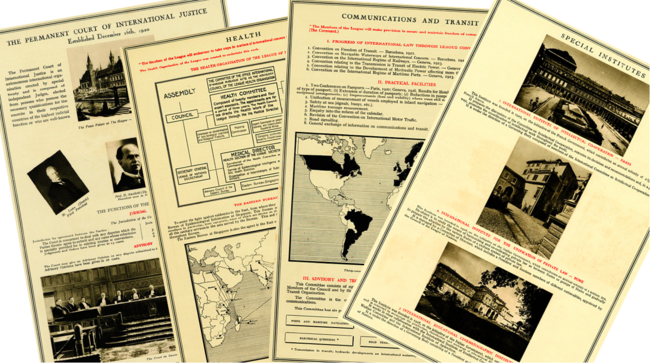
In recent years, the League of Nations has been examined as a ‘harbinger of global norms’ for the following UN system[1], rather than as a failed attempt at the world’s first collective security organization. Accordingly, scholars’ attention has shifted from diplomats, politicians and military officers to the experts who were in charge of the various norm-making projects of the League. One could even claim that the League was the first inter-governmental organization that began to consolidate the work of experts for the governing of the world. It mobilized experts, their ‘non-governmental’ expert organizations, and their networks across the globe.[2]
The blog of the American Journal of International Law hosts an online-symposium on the Sykes-Picot Treaty, a landmark in the history of the Middle East with far-reaching consequences.
The introduction by Prof. Anthonie Anghie can be found here. Two contributions have already been published: "Palestine and the Secret Treaties" by dr. Victor Kattan (here) and "Textual Settlements: The Sykes–Picot Agreement and Secret Treaty-Making" by Megan Donaldson (here).